 (No Ratings Yet)
 Loading...
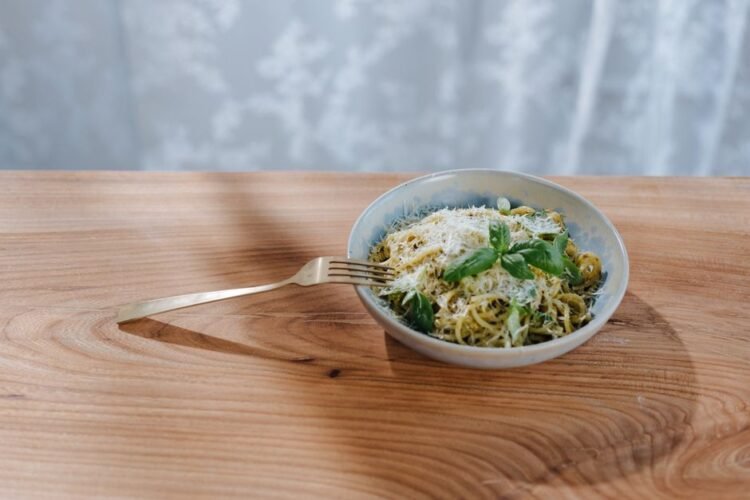
Tiny twisted noodles hand-rolled from a simple egg-and-flour dough are tossed with bright basil pesto, tender green beans, and aged Parmigiano for the signature dish from Genoa. The dough takes only two eggs and a couple cups of flour, and the pesto comes together in minutes when basil is at its peak.
Prep Time35 mins
Cook Time20 mins
Total Time55 mins
Servings4
Yield4 servings
Nutrition Facts
Per serving (estimated)
- 640 kcalCalories
- 32 gFat
- 8 gSaturated Fat
- 64 gCarbs
- 4 gFiber
- 3 gSugar
- 22 gProtein
- 620 mgSodium
- 460 mgPotassium
- 290 mgCalcium
- 4 mgIron
- 18 mgVitamin C
- 260 mcgVitamin A
Ingredients
For the pasta dough
- 1 1/2 cups (185 g) Italian 00 flour, plus more for dusting
- 2 large eggs, lightly beaten
- 1 tablespoon extra virgin olive oil
- 1/2 teaspoon fine sea salt
For the basil pesto
- 3 cups (60 g) loosely packed fresh basil leaves, preferably Genoese
- 1/3 cup (35 g) pine nuts, lightly toasted
- 1 small garlic clove, peeled
- 1/2 teaspoon fine sea salt
- 1/2 cup (120 ml) extra virgin olive oil
- 1/3 cup (30 g) grated Parmigiano-Reggiano
- 2 tablespoons grated Pecorino Sardo
For finishing the dish
- 6 oz (170 g) haricots verts, trimmed and halved
- 1 small Yukon Gold potato (4 oz/115 g), peeled and cut into 1/2-inch cubes
- 2 tablespoons unsalted butter
- 1/4 cup (25 g) additional grated Parmigiano-Reggiano, for serving
- Coarse sea salt, for the pasta water
Directions
- Make the pasta dough: Mound the flour on a clean surface and form a well in the center. Add the eggs, olive oil, and salt to the well and gradually incorporate the flour with a fork until a shaggy dough forms. Knead with the heels of your hands for 8 to 10 minutes until smooth and elastic, then wrap in plastic and rest at room temperature for 30 minutes.
- While the dough rests, prepare the pesto: In a food processor, pulse the basil, toasted pine nuts, garlic, and salt until coarsely chopped. Scrape down the sides, then with the motor running, slowly stream in the olive oil until smooth. Transfer to a bowl and stir in both cheeses; set aside.
- Roll the trofie: Cut the rested dough into 4 pieces and keep the unused portions covered. On a lightly floured surface, roll each piece into a rope about 1/4 inch thick. Cut the rope into 3/4-inch pieces. To shape each piece, press and roll it against the work surface with the palm of one hand while pulling gently toward you to create a small twisted spindle. Transfer to a floured tray as you go.
- Bring a large pot of generously salted water to a rolling boil. Add the potatoes and green beans and cook for 4 minutes until just tender. Scoop out the vegetables with a slotted spoon and set aside.
- Add the fresh trofie to the same boiling water and cook for 3 to 4 minutes until they float and are tender with a slight bite. Reserve 1 cup of pasta water before draining.
- Return the drained trofie to the warm pot off the heat. Add the butter, reserved vegetables, and half the pesto, tossing gently to coat. Loosen with a few tablespoons of reserved pasta water until the sauce clings to each noodle.
- Divide among four warm bowls, top with the remaining pesto, an extra shower of Parmigiano, and serve immediately while still steaming.
Cook’s Notes
- For the brightest green pesto, blanch the basil leaves in boiling water for 5 seconds, then shock in ice water before processing.
- Traditional pesto is pounded in a marble mortar; the food processor works quickly but produces a slightly darker, more rustic sauce.
- If 00 flour is unavailable, use a fine all-purpose flour with a protein content around 9 percent – avoid high-protein bread flour, which makes tough noodles.
- Dried trofie from a reputable Italian brand can substitute for fresh; cook them for 12 to 14 minutes in well-salted water and skip the dough-making steps.
- Toast the pine nuts in a dry skillet over medium heat for 2 to 3 minutes, watching constantly – they burn quickly once they begin to color.