 (No Ratings Yet)
 Loading...
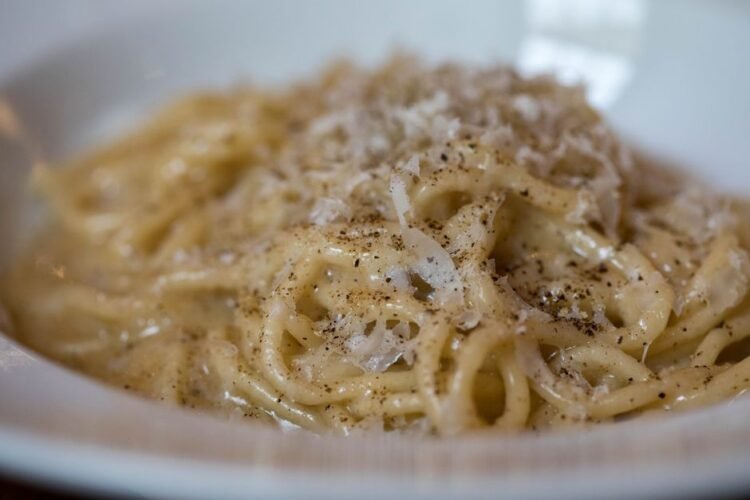
Pici is a thick, hand-rolled noodle from the Tuscan countryside near Siena, traditionally shaped by rolling each strand between the palm and a wooden board. When tossed with aged Tuscan Pecorino and freshly cracked black pepper, it becomes one of the simplest yet most luxurious pasta dishes in the Italian repertoire. The magic lies in the emulsion: starchy pasta water and finely grated cheese bind into a silky, peppery sauce that clings to every chewy, rustic noodle.
Prep Time50 mins
Cook Time15 mins
Total Time65 mins
Servings4
Yield4 servings
Nutrition Facts
Per serving (estimated)
- 510 kcalCalories
- 19 gFat
- 8 gSaturated Fat
- 62 gCarbs
- 2 gFiber
- 1 gSugar
- 21 gProtein
- 620 mgSodium
- 130 mgPotassium
- 380 mgCalcium
- 3 mgIron
- 0 mgVitamin C
- 180 mcgVitamin A
Ingredients
For the pici dough
- 2 cups (250 g) '00' or all-purpose flour, plus more for dusting
- 1/2 cup + 2 tablespoons (140 ml) warm water
- 2 tablespoons extra-virgin olive oil
- 1/2 teaspoon fine sea salt
For the sauce and finishing
- 1 1/2 cups (150 g) aged Tuscan Pecorino, finely grated
- 2 teaspoons whole black peppercorns, coarsely crushed
- 2 tablespoons extra-virgin olive oil
- 1 tablespoon unsalted butter
- 1 tablespoon coarse sea salt for the pasta water
Directions
- Mound the flour on a clean work surface or in a large bowl and make a wide well in the center. Add the warm water, olive oil, and salt to the well, then gradually draw in the flour with a fork until a shaggy dough forms.
- Knead the dough by hand for 8 to 10 minutes until it is smooth, elastic, and only slightly tacky. Wrap tightly in plastic wrap and rest at room temperature for 30 minutes to relax the gluten.
- Pinch off small walnut-sized pieces of dough and roll each between a floured wooden board and the palm of your hand (or roll with your fingertips on the counter) into a thick rope about 1/4 inch (6 mm) in diameter and 10 to 12 inches long. Set the rolled pici on a floured tray, dusting lightly with flour to prevent sticking.
- Bring a large pot of water to a rolling boil, add the coarse sea salt, and gently drop the pici in. Fresh pici cooks quickly, usually in 4 to 5 minutes, until tender but still pleasantly chewy. Reserve 1 1/2 cups of the starchy pasta water before draining.
- While the pasta cooks, warm the olive oil and butter in a large skillet over medium-low heat. Add the crushed black peppercorns and toast gently for 1 to 2 minutes until fragrant, then remove the skillet from the heat.
- In a wide mixing bowl, combine the grated Pecorino with about 3/4 cup of the warm reserved pasta water and whisk vigorously with a fork until a smooth, thick paste forms. Stir in the toasted pepper and its flavored oil.
- Add the drained pici to the bowl and toss vigorously with tongs or a pasta fork, adding more reserved pasta water a tablespoon at a time, until the cheese sauce coats each strand in a glossy, clinging emulsion.
- Divide the pici among four warmed bowls, finish with an extra grating of Pecorino and a generous crack of black pepper, and serve immediately while hot.
Cook’s Notes
- Always grate the Pecorino by hand on a Microplane; pre-shredded cheese is coated with anti-caking starch and will turn grainy instead of melting into a smooth sauce.
- Build the sauce off the direct heat or with only very gentle residual warmth. High heat causes the cheese proteins to seize and the sauce to clump into a stringy mess.
- Toast the peppercorns in the butter and oil before adding them to the sauce; this releases their aromatic oils and gives the finished dish a deeper, almost smoky warmth.
- If your pasta water is not particularly starchy, dust the rolled pici lightly with semolina before cooking so the sauce has enough starch to emulsify properly.
- Hand-rolling pici takes a little practice – aim for uniform thickness so all the noodles finish cooking at the same time, and embrace the rustic, uneven shapes as part of the dish's charm.