 (No Ratings Yet)
 Loading...
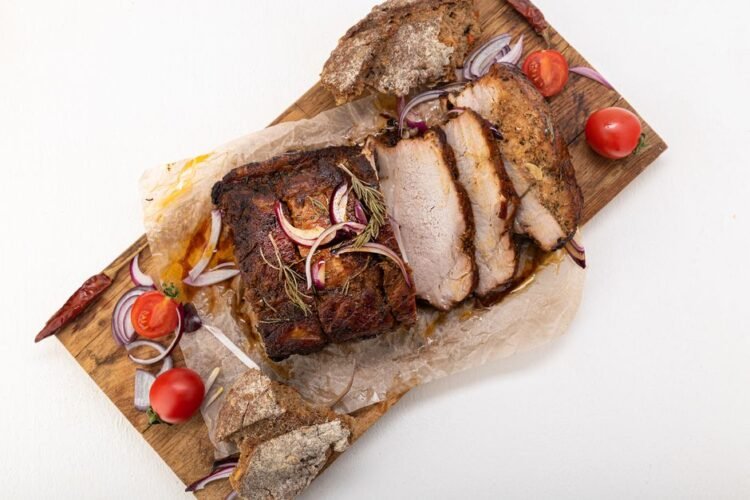
Arista di Maiale is one of Tuscany's most iconic Sunday lunches: a bone-in pork loin rubbed with a fragrant paste of garlic, rosemary, and sage, seared, then slow-roasted until the crust is burnished and the interior is just blushing pink. A quick pan sauce of wine and stock finishes the dish, soaking into the meat and turning the resting juices into pure silk.
Prep Time20 mins
Cook Time75 mins
Total Time95 mins
Servings8
Yield8 servings
Nutrition Facts
Per serving (estimated)
- 420 kcalCalories
- 26 gFat
- 8 gSaturated Fat
- 5 gCarbs
- 1 gFiber
- 2 gSugar
- 38 gProtein
- 520 mgSodium
- 640 mgPotassium
- 55 mgCalcium
- 2 mgIron
- 6 mgVitamin C
- 85 mcgVitamin A
Ingredients
For the herb paste
- 6 cloves garlic, minced
- 3 tablespoons fresh rosemary leaves, finely chopped
- 1 tablespoon fresh sage leaves, finely chopped
- 1 tablespoon fresh thyme leaves
- 1 1/2 teaspoons kosher salt
- 1 teaspoon freshly ground black pepper
- 3 tablespoons extra-virgin olive oil
- Zest of 1 lemon
For the pork and roasting
- 4 lb bone-in pork loin roast, backbone frenched and tied at 1-inch intervals
- 1 large yellow onion, peeled and quartered
- 2 carrots, cut into 2-inch pieces
- 2 celery stalks, cut into 2-inch pieces
- 2 tablespoons extra-virgin olive oil
For the pan sauce
- 3/4 cup dry white wine
- 1 1/2 cups low-sodium chicken stock, warm
- 2 tablespoons unsalted butter, cold and cubed
- 1 teaspoon all-purpose flour
- 1 tablespoon fresh parsley, finely chopped
- Salt and freshly ground black pepper, to taste
Directions
- Make the herb paste: mash the garlic, rosemary, sage, thyme, salt, pepper, olive oil, and lemon zest together in a mortar until a coarse paste forms. (Alternatively, pulse in a small food processor.) Rub the paste evenly over the entire pork loin, slipping some under the twine. Let stand at room temperature for 30 minutes, or refrigerate uncovered for up to 24 hours for deeper flavor.
- Position a rack in the lower third of the oven and preheat to 450°F (230°C). Pat the pork dry with paper towels, reserving any herb bits that fall off.
- Heat 2 tablespoons olive oil in a large heavy roasting pan set over two burners (or a large ovenproof skillet) over medium-high heat until shimmering. Add the pork and sear until deep golden brown on all sides, about 2 minutes per side. Scatter the onion, carrots, and celery around the roast.
- Pour the white wine into the pan and let it bubble for 1 minute to burn off the alcohol, scraping up any browned bits. Add 1 cup of the warm chicken stock. Transfer the pan to the oven and roast at 450°F for 20 minutes.
- Reduce the oven temperature to 325°F (165°C) and continue roasting, basting every 15 minutes with the pan juices, until an instant-read thermometer inserted into the thickest part (not touching bone) registers 140°F, about 45 to 60 minutes more.
- Transfer the pork to a cutting board, tent loosely with foil, and rest for at least 15 minutes (the temperature will climb to 145°F). Meanwhile, set the roasting pan over medium heat, sprinkle in the flour, and whisk for 1 minute. Pour in the remaining 1/2 cup stock and simmer until the sauce thickens and reduces to about 1 cup, 4 to 5 minutes. Strain into a small saucepan, whisk in the butter, and season with salt and pepper. Stir in the parsley.
- Remove the twine and slice the pork into 1/2-inch-thick medallions. Arrange on a warm platter or individual plates and spoon the pan sauce over the top. Serve immediately with roasted potatoes or warm cannellini beans.
Cook’s Notes
- Use an instant-read thermometer – true medium pork pulls at 145°F after resting, which keeps the loin juicy and gently blushing.
- Tie the roast snugly with butcher's twine at 1-inch intervals so it holds a round shape and cooks evenly.
- For the best crust, pat the rubbed pork dry before searing; surface moisture is the enemy of browning.
- The herb paste can be made up to 3 days ahead and stored in a jar covered with a thin layer of olive oil.
- Traditional Tuscan accompaniments are cannellini beans dressed with olive oil and a crisp green salad with radicchio and pecorino.