 (No Ratings Yet)
 Loading...
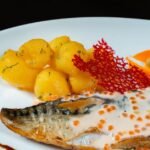
Rakfisk is a centuries-old Norwegian delicacy made from freshwater trout or char that has been lightly salted and cold-fermented for two to three months. The result is a silky, intensely savory fillet with a sharp, tangy aroma that is traditionally paired with buttery flatbread, sharp onion, and a generous spoonful of sour cream. This recipe guides you through serving rakfisk the classic Valdres way, once the long fermentation is complete.
Prep Time20 mins
Cook Time25 mins
Total Time45 mins
Servings4
Yield4 servings
Nutrition Facts
Per serving (estimated)
- 510 kcalCalories
- 28 gFat
- 9 gSaturated Fat
- 38 gCarbs
- 3 gFiber
- 4 gSugar
- 30 gProtein
- 760 mgSodium
- 820 mgPotassium
- 95 mgCalcium
- 2.5 mgIron
- 14 mgVitamin C
- 110 mcgVitamin A
Ingredients
For serving the fermented trout
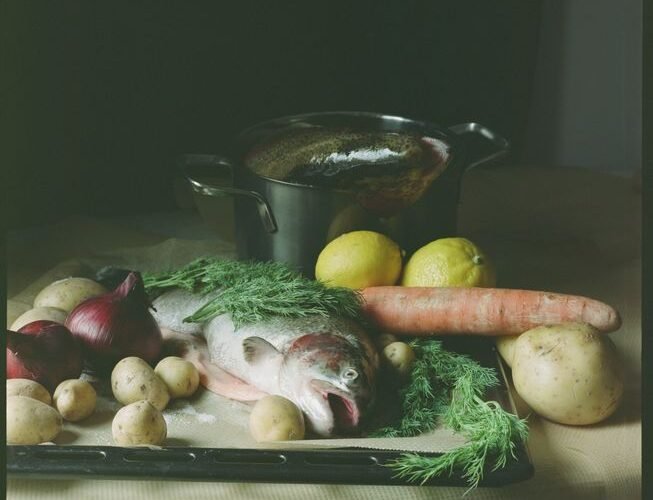
- 1 whole fermented trout (about 700 g), bones removed
- 120 g Norwegian flatbread (lefse) or soft potato flatbread
- 200 ml sour cream
- 1 small red onion, very thinly sliced
- 1 bunch fresh dill, finely chopped
- Flaky sea salt and freshly ground black pepper, to taste
For the warm potato accompaniment
- 600 g waxy potatoes (Jersey Royal or baby Yukon Gold), halved
- 30 g unsalted butter
- 2 tablespoons chopped chives
- 1 teaspoon white vinegar
- Pinch of salt
Optional garnishes
- 2 hard-boiled eggs, peeled and quartered
- 1 tablespoon crushed juniper berries
- Thinly sliced radishes, for crunch
Directions
- Rinse the fermented trout briefly under cold water and pat dry with paper towels. Using a sharp, thin knife, slice the flesh on a diagonal into 2 to 3 mm translucent pieces, working carefully around the pin bones.Arrange the sliced trout on a chilled platter, cover loosely, and return to the refrigerator while you prepare the sides.Place the potatoes in a saucepan, cover with cold salted water, add the vinegar, and bring to a gentle boil. Simmer for 18 to 22 minutes until a knife slides through easily, then drain and return to the hot pan.
- Steam the potatoes dry for 1 minute, then add the butter and chives. Crush lightly with a fork so they remain rustic and uneven, season with salt, and keep warm.
- Warm the flatbread one piece at a time in a dry skillet over medium heat for 20 to 30 seconds per side, or until pliable and just heated through. Stack and keep covered with a clean tea towel.
- Spread each warm flatbread with a thick layer of sour cream, then top with overlapping slices of the fermented trout, a scatter of red onion, and a generous pinch of chopped dill.
- Serve immediately with the crushed buttered potatoes, quartered eggs, radishes, and juniper berries on the side, encouraging guests to build open-faced sandwiches and season to taste with flaky salt and pepper.
Cook’s Notes
- Rakfisk is fermented, not cooked, so it is always served cold; keep the sliced fish refrigerated until the last moment and bring it to the table just before eating.
- Buy rakfisk only from a reputable producer or fishmonger who can confirm proper temperature-controlled fermentation of at least 8 to 12 weeks; the fish should smell pungent but never ammoniated or rotten.
- Lefse or soft potato flatbread is traditional, but good substitutes include thin Scandinavian-style rye crispbread or warm pita brushed with butter.
- Always pair rakfisk with a strong, cold aquavit or a crisp lager, which cut through the richness and complement the funky depth.
- Leftover rakfisk can be stirred into scrambled eggs or folded into a buttery omelette the next morning for a classic Norwegian breakfast.