 (No Ratings Yet)
 Loading...
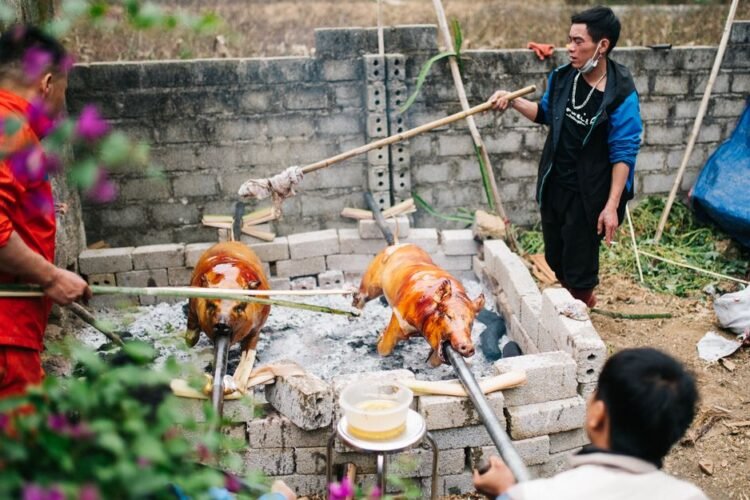
Cochinillo Asado is the crown jewel of Castilian cuisine, made famous by the old mesones of Segovia where whole milk-fed piglets are roasted in wood-fired ovens until the skin shatters like glass. The secret is simplicity: just water, coarse salt, and slow heat to render the fat under the skin until it crackles, leaving the meat underneath silkily tender. Served with golden roasted potatoes and pan juices, this is celebratory Spanish cooking at its most elemental.
Prep Time20 mins
Cook Time120 mins
Total Time140 mins
Servings6
Yield6 servings
Nutrition Facts
Per serving (estimated)
- 680 kcalCalories
- 42 gFat
- 15 gSaturated Fat
- 18 gCarbs
- 2 gFiber
- 1 gSugar
- 52 gProtein
- 580 mgSodium
- 820 mgPotassium
- 40 mgCalcium
- 2.8 mgIron
- 8 mgVitamin C
- 10 mcgVitamin A
Ingredients
For the pig
- 1 whole suckling piglet (about 3-3.5 kg / 6.5-8 lb), cleaned and patted very dry
- 2 tablespoons coarse sea salt
- 1.5 cups water
- 1 tablespoon lard or olive oil, for rubbing
For the potatoes
- 4 medium Yukon Gold potatoes, peeled and cut into thick wedges
- 3 tablespoons olive oil
- 1 teaspoon fresh thyme leaves
- 1 teaspoon coarse sea salt
- 2 garlic cloves, smashed
To serve
- Flaky sea salt, to finish
- Fresh flat-leaf parsley, chopped
- Spoonful of pan juices
Directions
- Position a rack in the lower third of the oven and place a large deep roasting pan on it. Preheat the oven to 220°C (425°F).
- Pat the piglet completely dry inside and out with paper towels – any moisture will prevent the skin from crisping. Rub the entire skin with lard or olive oil, then season generously all over with coarse sea salt, pressing it into the skin.
- Place the piglet breast-up on a wire rack set inside a second roasting pan (or directly on the oven rack over the drip pan). Pour the water into the lower pan to create steam and keep the meat moist while the skin crisps.
- Roast for about 90 minutes, basting the skin every 20 minutes with the water from the lower pan. The skin should gradually turn a deep mahogany gold and feel papery to the touch.
- Meanwhile, toss the potato wedges with olive oil, thyme, garlic, and salt. After the piglet has roasted for 45 minutes, scatter the potatoes in the lower pan to catch the drippings and continue cooking alongside the pork.
- The piglet is ready when the skin is blistered and golden and an instant-read thermometer inserted into the thickest part of the shoulder reads 75°C (165°F), about 90-120 minutes total.
- Transfer the piglet to a large wooden board or platter and let it rest for 10 minutes. Meanwhile, increase oven heat to crisp the potatoes for another 10 minutes if needed.
- To serve in the traditional Segovian style, hold a ceramic plate vertically and use its rim to crack through the crispy skin in dramatic strokes – it should shatter audibly. Carve into portions.
- Arrange the pork and potatoes on warm plates, drizzle with the rich pan juices, scatter with parsley, and finish with flaky sea salt.
Cook’s Notes
- Order your suckling pig from a specialty butcher several days in advance; they are usually available frozen and must be fully thawed and dried in the refrigerator for 24 hours.
- The plate-cracking technique is not just theater – it ensures every portion gets an even share of shatteringly crisp skin, which is considered the best part.
- If a whole piglet is hard to source, use a 1-1.5 kg pork shoulder or belly roast with the skin scored, though the experience will differ from the traditional whole-roast method.
- A wood-fired or convection oven produces the best crackling; in a conventional oven, finish with 5 minutes under the broiler while watching carefully to avoid burning.
- Leftover meat is excellent shredded into sandwiches or stirred into a hearty bean stew the next day.