 (No Ratings Yet)
 Loading...
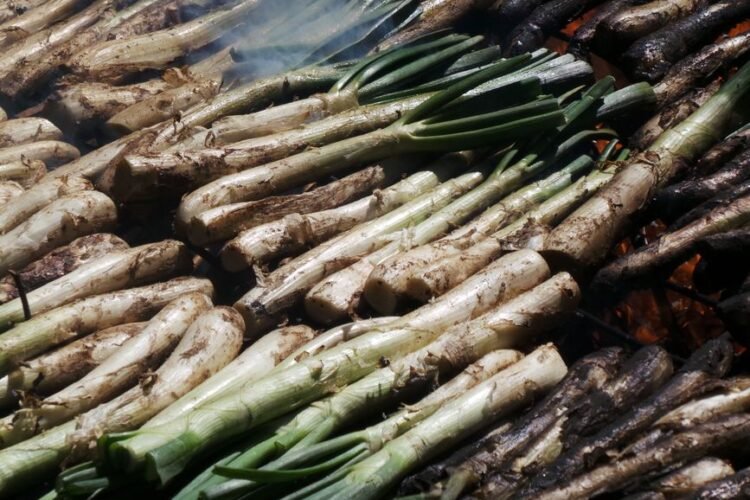
A signature dish of Catalonia's late-winter calcotadas, these sweet, smoky spring onions are charred over high heat and peeled at the table to dip into a rustic almond-and-ñora romesco sauce. The contrast of caramelized outer layers and tender, mellow hearts makes this one of Spain's most beloved communal meals.
Prep Time20 mins
Cook Time25 mins
Total Time45 mins
Servings4
Yield4 servings
Nutrition Facts
Per serving (estimated)
- 285 kcalCalories
- 22 gFat
- 3 gSaturated Fat
- 18 gCarbs
- 4 gFiber
- 6 gSugar
- 5 gProtein
- 340 mgSodium
- 470 mgPotassium
- 75 mgCalcium
- 2 mgIron
- 18 mgVitamin C
- 55 mcgVitamin A
Ingredients
For the Romesco Sauce
- 2 dried ñora peppers (or 1 guindilla pepper)
- 2 medium ripe Roma tomatoes (about 250 g)
- 1 small slice rustic country bread, torn
- 1/4 cup blanched almonds
- 1/4 cup blanched hazelnuts
- 3 garlic cloves, unpeeled
- 2 tablespoons sherry vinegar
- 1/2 teaspoon sweet smoked paprika (pimentón dulce)
- 1/2 teaspoon fine sea salt, plus more to taste
- 1/3 cup extra-virgin olive oil
For the Charred Spring Onions
- 20 calçots or large spring onions, roots trimmed and outer loose skins removed
- 1 tablespoon extra-virgin olive oil
- 1/2 teaspoon flaky sea salt
To Serve
- Lemon wedges
- Fresh flat-leaf parsley, roughly chopped (optional)
Directions
- Soak the ñora peppers in warm water for 30 minutes until softened; reserve 3 tablespoons of the soaking liquid. Meanwhile, place the tomatoes and unpeeled garlic cloves on a small sheet pan and roast under a hot broiler for 8 to 10 minutes, turning once, until charred and soft.
- Toast the bread on a dry skillet over medium heat until golden on both sides, then set aside. In the same skillet, toast the almonds and hazelnuts for 2 to 3 minutes, stirring frequently, until fragrant and lightly browned.
- Peel the roasted garlic and slice the softened ñora peppers in half, scraping out the seeds and discarding them. Place the soaked peppers, their reserved soaking liquid, garlic, roasted tomatoes, toasted bread, nuts, sherry vinegar, smoked paprika, and salt into a blender or food processor.
- Pulse to a coarse paste, then slowly stream in the olive oil while blending, until you have a thick, slightly textured sauce. Taste and adjust salt or vinegar; set aside at room temperature (or chill up to 3 days).
- Prepare a charcoal or gas grill for high, direct heat (about 230 °C / 450 °F). If using a gas burner, place a grill grate directly over the flame. Lightly coat the spring onions with olive oil and sprinkle with flaky salt.
- Lay the onions perpendicular to the grill bars (or directly on the burner grate) and char, turning every 2 minutes, until the white bulbs and pale green stems are blistered black on all sides and very soft in the center, about 10 to 14 minutes total. Work in batches to avoid crowding.
- Transfer the charred onions to a terra cotta tile or platter and loosely tent with foil to keep warm while you finish the remaining batches. The onions should collapse slightly when squeezed and steam when split open.
- To eat, each diner grabs an onion by the green tops, pinches off the charred outer skin to reveal the sweet, silky interior, and dips the white part generously into the romesco sauce. Serve the remaining sauce in a bowl alongside, with lemon wedges and parsley, plus extra bread to mop up the juices.
- Traditionally accompanied by grilled lamb chops or botifarra sausage and washed down with a young Catalan red wine such as a Priorat or Empordà.
Cook’s Notes
- If you can't find true calçots, choose the largest spring onions (leeks, scallions) you can find, about 25 cm long with thick white bases; they char and sweeten beautifully.
- For the most authentic smoky flavor, cook the onions over grapevine cuttings or oak wood if you have a fireplace; the traditional calcotada is built around this open-flame cooking.
- Romesco tastes even better the next day once the flavors have married, so consider making it a day ahead and storing it chilled in a sealed jar.
- To keep a big batch of calçots warm between grilling rounds, wrap them in several sheets of newspaper or a clean tea towel—the traditional method used in Catalan country houses.
- Bring a stack of extra napkins: eating calçots is gloriously messy, and the sauce inevitably ends up on chins, fingers, and sleeves.