 (No Ratings Yet)
 Loading...
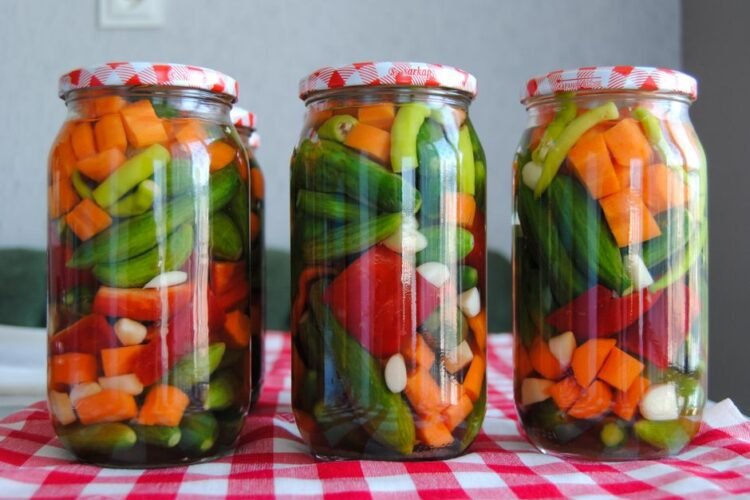
A vibrant, crunchy medley of seasonal vegetables cured in a salty, tangy brine, Turkish Mixed Pickle is served as a zesty side alongside rich meats, rice pilafs, and mezze spreads. The classic version relies on natural fermentation with a touch of vinegar for brightness, developing deep, mouth-puckering flavor over a few weeks.
Prep Time25 mins
Cook Time10 mins
Total Time35 mins
Servings16
YieldAbout 8 cups (16 servings of 1/2 cup each)
Nutrition Facts
Per serving (estimated)
- 18 kcalCalories
- 0 gFat
- 0 gSaturated Fat
- 4 gCarbs
- 1 gFiber
- 2 gSugar
- 1 gProtein
- 480 mgSodium
- 140 mgPotassium
- 28 mgCalcium
- 0.5 mgIron
- 22 mgVitamin C
- 1200 mcgVitamin A
Ingredients
For the vegetables
- 1/2 small head white cabbage, cored and cut into 1-inch pieces
- 2 medium carrots, peeled and sliced 1/4 inch thick
- 1 small cucumber, cut into 1/2-inch rounds
- 2 long green Turkish peppers, halved lengthwise
- 1 cup small cauliflower florets
- 6 garlic cloves, peeled and lightly smashed
- 1 small beet, peeled and sliced (for color, optional)
For the brine
- 5 cups filtered water
- 1/3 cup coarse pickling salt (non-iodized)
- 1/2 cup white grape vinegar or distilled vinegar
- 2 bay leaves
- 1 teaspoon whole black peppercorns
Directions
- Sterilize a 2-quart glass jar and lid by boiling them in water for 10 minutes, then drain well and let air-dry.
- Prepare the brine: combine the filtered water, pickling salt, vinegar, bay leaves, and peppercorns in a saucepan. Bring to a gentle boil, stirring until the salt dissolves, then remove from heat and let cool to room temperature.
- Tightly pack the prepared cabbage, carrots, cucumber, green peppers, cauliflower, garlic, and beet (if using) into the sterilized jar, layering colors evenly and leaving about 1 inch of headspace at the top.
- Pour the cooled brine over the vegetables until they are completely submerged, leaving about 1/2 inch of space below the rim. Tap the jar gently on the counter to release any trapped air bubbles.
- Seal the jar loosely with the lid (not airtight, to allow fermentation gases to escape) and place it on a small plate in a cool, dark spot at room temperature for 3 to 5 days, tasting daily until the desired tanginess is reached.
- Once pickled to your liking, tighten the lid and transfer the jar to the refrigerator. The pickle keeps well refrigerated for up to 2 months, with the flavor deepening and mellowing over time.
- Serve cold as a palate-cleansing side with rich main dishes such as lamb stews, stuffed grape leaves, or rice pilaf.
Cook’s Notes
- Use non-iodized pickling or sea salt; iodized table salt can make the brine cloudy and slow fermentation.
- For a faster, more vinegar-forward pickle, double the vinegar and skip the multi-day fermentation, refrigerating after 24 hours.
- Always use a clean fork to remove pickles from the jar to prevent spoilage, and keep vegetables submerged by tucking a bay leaf or small weight on top.
- Add a few sprigs of fresh dill or a sliced hot chili for regional variation, common in Aegean and southeastern Turkish styles.