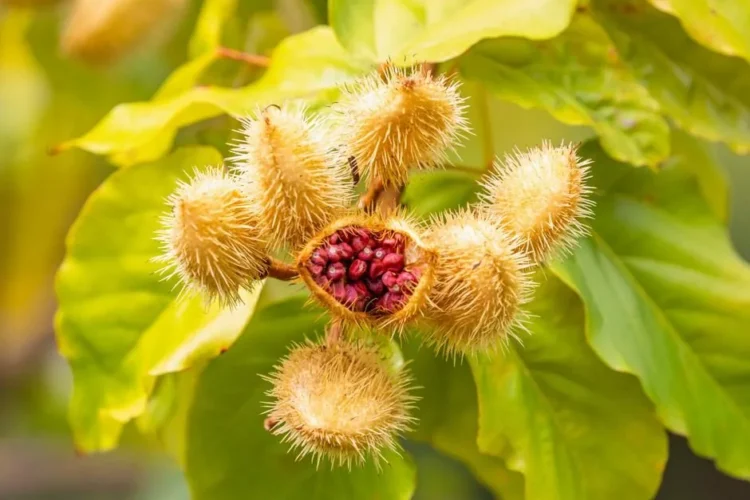
Annatto is a vivid reddish-orange spice derived from the waxy arils surrounding the seeds of the tropical shrub Bixa orellana, valued for both its earthy, mildly peppery flavor and its potent natural colorant properties.
History & Origins
Annatto has been used for millennia by indigenous peoples of the Amazon basin and the Caribbean, who applied it as body paint, textile dye, and a culinary seasoning. Spanish and Portuguese explorers encountered the crop in the 16th century and spread it across their colonial networks, where it became a saffron substitute and a colorant for dairy products. Today it remains central to Latin American, Caribbean, and Filipino cuisines and is used industrially to tint cheeses, butter, and smoked fish.
Nutrition Facts
Per 100 g, edible portion (estimated)
- 345 kcalCalories
- 13.8 gProtein
- 4.5 gFat
- 52.3 gCarbs
- 17.9 gFiber
- 0.5 gSugars
- 420 mgPotassium
- 2 mgVitamin C
- 5 mcgVitamin A
Culinary Uses
- Combined with bitter orange, garlic, and spices into achiote paste for recados, cochinita pibil, and Yucatán-style pit-roasted dishes
- Steeped in hot oil to impart color and a subtle musky flavor to rice, stews, and grilled meats
- Used industrially and traditionally to tint cheeses such as Red Leicester, Mimolette, and Cheshire, plus butter and margarine
- Added to Filipino giniling, tocino, longganisa, and kare-kare for color and aroma
Known Benefits
- Rich in carotenoid pigments bixin and norbixin with demonstrated antioxidant activity
- Provides dietary fiber along with minerals such as iron, magnesium, and calcium
- Traditionally used as a folk remedy for digestive complaints, fevers, and skin conditions
Hidden Benefits
- Contains delta-tocotrienol, making it one of the richest plant sources of this vitamin E analog
- Preliminary studies suggest anti-inflammatory and LDL-cholesterol-lowering potential
- Carotenoid profile may help protect skin against UV-induced oxidative damage
Cautions & Considerations
- Rare cases of contact dermatitis in individuals handling the seeds frequently
- Very high doses of bixin concentrate have produced hepatotoxic effects in rodent studies
- Natural coumarin-related compounds may interact with anticoagulant medications





