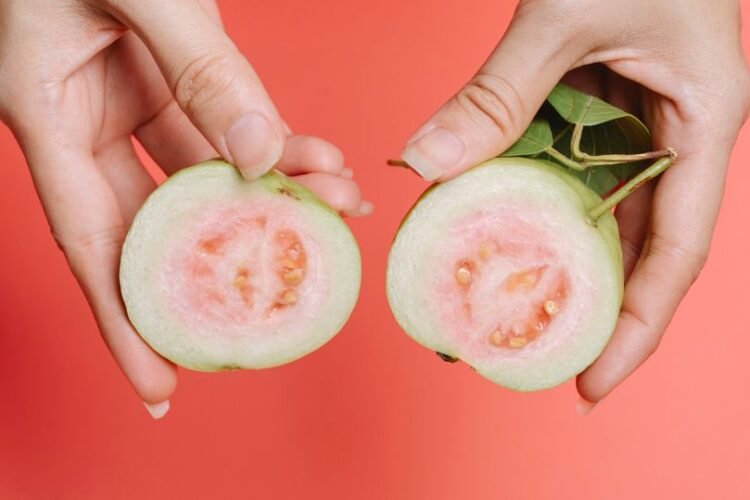
Guava is a tropical fruit known for its aromatic, creamy flesh and exceptional vitamin C content, widely consumed fresh or in processed forms.
CategoryFruits
Scientific namePsidium guajava
OriginTropical Americas
History & Origins
Guava originated in Central America and was domesticated by indigenous peoples before the arrival of Europeans. Spanish and Portuguese explorers later spread it throughout tropical and subtropical regions of the world during the 16th century.
Nutrition Facts
Per 100 g, edible portion (estimated)
- 68 kcalCalories
- 2.6 gProtein
- 1.0 gFat
- 14.3 gCarbs
- 5.4 gFiber
- 8.5 gSugars
- 417 mgPotassium
- 228 mgVitamin C
- 31 mcgVitamin A
Culinary Uses
- Eaten fresh, sliced, or in fruit salads
- Processed into juices, jams, jellies, and purees
- Used in desserts such as pies, cakes, and ice creams
- Added to savory dishes like salsas and chutneys
Known Benefits
- Extremely high in vitamin C, supporting immune function
- Rich in dietary fiber, promoting digestive health
- Contains antioxidants like lycopene and carotenoids
- Provides potassium, contributing to heart health
Hidden Benefits
- Contains folate, supporting cell division and pregnancy health
- Includes vitamin A in the form of beta-carotene for eye health
- Has anti-inflammatory properties due to polyphenols
- Supports skin health through collagen synthesis
Cautions & Considerations
- May cause allergic reactions in individuals sensitive to Myrtaceae family plants
- Seeds are edible but can be a choking hazard for young children
- High potassium content may interact with certain medications like ACE inhibitors
- Consuming excessively may lead to digestive discomfort due to fiber content