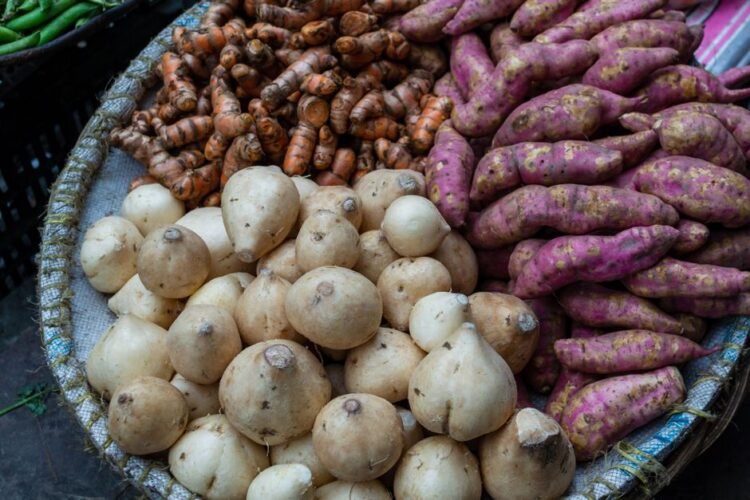
Jicama is a crunchy, sweet root vegetable with brown skin and white flesh, widely eaten raw in salads and snacks across Latin America and increasingly exported worldwide.
History & Origins
Jicama has been cultivated in Mexico and Central America for centuries, with evidence of its use dating back to pre-Columbian Mesoamerican civilizations. Spanish colonizers introduced it to Southeast Asia and the Philippines during the 16th–17th century, where it became a major commercial crop. The plant belongs to the legume family, though only its tuberous root is consumed; the seeds and foliage contain rotenone, a natural insecticide. It remains a staple in Mexican markets and street food culture, often served with lime juice and chili powder. Global demand has risen steadily since the late 20th century due to interest in low-glycemic and gluten-free foods.
Nutrition Facts
Per 100 g, edible portion (estimated)
- 38 kcalCalories
- 90 gWater
- 0.7 gProtein
- 0.1 gFat
- 0 gSaturated Fat
- 9 gCarbs
- 4.9 gFiber
- 1.8 gSugars
- 150 mgPotassium
- 12 mgCalcium
- 0.6 mgIron
- 12 mgMagnesium
- 20.2 mgVitamin C
- 1 mcgVitamin A
- 0.4 mcgVitamin K
- 14 mcgFolate
Culinary Uses
- Eaten raw as a snack with lime juice, salt, and chili powder
- Sliced or julienned in salads such as Mexican jicama pico de gallo
- Pickled in vinegar and spices for Vietnamese and Filipino dishes
- Steamed, boiled, or stir-fried in soups and Asian cuisine
- Baked or fried as a low-starch alternative to potatoes
Known Benefits
- Excellent source of dietary fiber supporting digestive health
- High in vitamin C, contributing to immune function and collagen synthesis
- Very low in calories and carbohydrates, suitable for low-glycemic and keto diets
- Contains potassium, which supports healthy blood pressure regulation
- Provides prebiotic inulin, promoting beneficial gut bacteria
Hidden Benefits
- Contains unique isoflavones such as daidzein and puerarin with antioxidant properties
- Inulin content acts as a prebiotic, improving calcium and magnesium absorption
- Contains tryptophan, supporting mood regulation and sleep cycles
- Light outer skin contains coumarins with mild anti-inflammatory effects
- Low histamine food, suitable for individuals with histamine intolerance
Cautions & Considerations
- Raw seeds, pods, and foliage contain rotenone, which is toxic if ingested in quantity
- May cause flatulence or digestive discomfort in some individuals due to inulin content
- Cross-reactive allergen risk for individuals with peanut or soy legume allergies
- People on blood-thinning medication should monitor vitamin K intake if consuming large amounts
- Organic toxins in foliage can irritate skin during handling of the plant