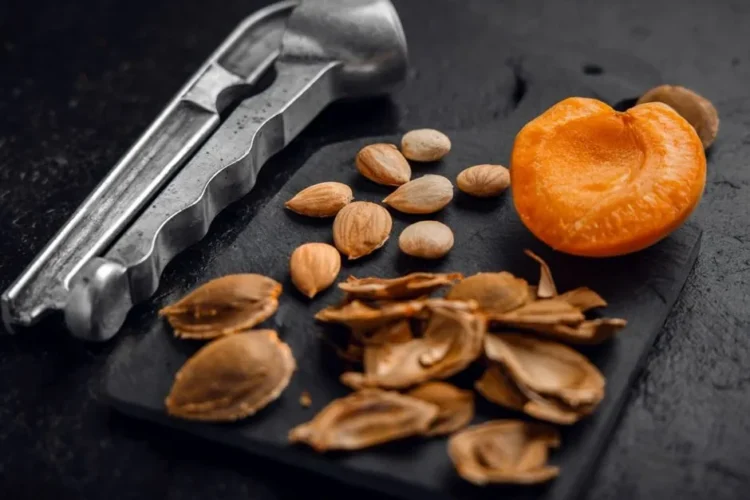
Mahleb is an aromatic spice made by grinding the dried inner kernels of the St. Lucie cherry, valued across the Eastern Mediterranean for its bittersweet, almond-cherry fragrance in festive baked goods.
History & Origins
The mahaleb cherry tree, native to the Mediterranean and temperate Western Asia, has been documented since antiquity; Greek and Roman writers noted its fragrant wood, kernels, and use in perfumery. Ground mahleb entered the culinary mainstream through Byzantine, Ottoman, and Levantine kitchens, becoming a signature flavor of holiday breads and filled pastries. By the medieval Islamic golden age it was traded across the Mediterranean and recorded in classical Arabic cookery manuscripts alongside mastic and rose water.
Nutrition Facts
Per 100 g, edible portion (estimated)
- 420 kcalCalories
- 18 gProtein
- 28 gFat
- 32 gCarbs
- 9 gFiber
- 3 gSugars
- 500 mgPotassium
- 1.2 mgVitamin C
- 4 mcgVitamin A
Culinary Uses
- Sprinkled into Greek tsoureki and Christmas christopsomo breads
- Ground into Lebanese, Syrian, and Palestinian ma'amoul date cookies
- Folded into Armenian chorak, kata, and sweet butter pastries
- Whisked into Turkish poğaça dough and mastic-flavored ice creams
Known Benefits
- Rich in antioxidant polyphenols from the kernel's fixed oils
- Traditionally used in folk medicine to soothe coughs and indigestion
- Source of oleic and linoleic fatty acids from the seed's lipid fraction
- Long used as a flavoring galactagogue in postpartum Levantine dishes
Hidden Benefits
- Contains natural coumarin derivatives with mild anticoagulant potential
- Holds trace amygdalin like other Prunus kernels, released subtly when crushed
- Fixed oil carries aromatic benzaldehyde compounds valued in perfumery
- Traditionally paired with mastic to enhance perceived sweetness without added sugar
Cautions & Considerations
- Coumarin content means very heavy or daily intake may stress the liver
- Raw kernels contain trace cyanogenic compounds; keep culinary doses small
- Possible allergy in those sensitive to other Rosaceae stone-fruit seeds
- Pregnant women should consume only the small amounts typical in baking