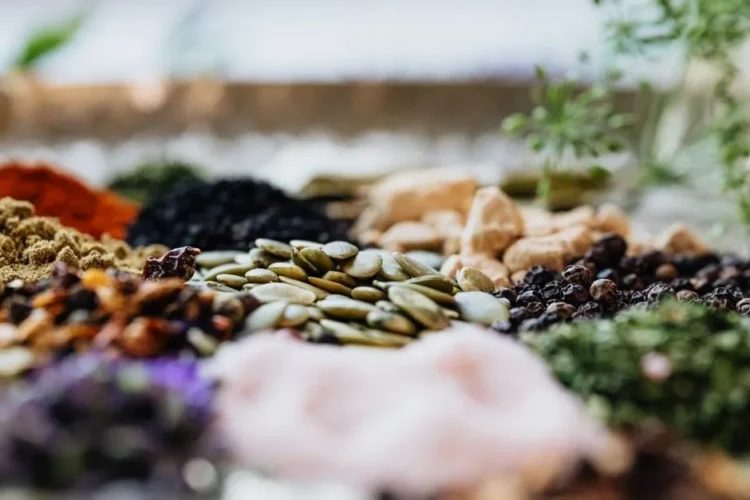
Nigella sativa, commonly called black seed, kalonji, or black cumin, is an annual herb whose small, angular, matte-black seeds are prized for their pungent, slightly bitter flavor reminiscent of oregano, onion, and pepper. The seeds are used both whole and lightly toasted across South Asian, Middle Eastern, North African, and Balkan cuisines.
History & Origins
Nigella seeds were discovered in the tomb of Tutankhamun (circa 1323 BCE) and were referenced in the Ebers Papyrus as a digestive aid in ancient Egypt. Greek physician Dioscorides documented their use in De Materia Medica (circa 65 CE) for headaches and nasal congestion, while the Prophet Muhammad reportedly described them as a cure for all ailments except death in the Hadith, embedding the seeds in Islamic herbal tradition. Trade routes carried them from the Levant through Persia into Mughal India, where they became a hallmark of Bengali and Punjabi cuisine.
Nutrition Facts
Per 100 g, edible portion (estimated)
- 345 kcalCalories
- 16 gProtein
- 22 gFat
- 35 gCarbs
- 10 gFiber
- 1.7 gSugars
- 1694 mgPotassium
- 570 mgCalcium
- 9.7 mgIron
Culinary Uses
- Sprinkled atop naan, kulcha, and Iranian flatbreads before baking
- Toasted and ground into Bengali panch phoron and garam masala blends
- Stirred into yogurt-based raitas and tahini sauces
- Flavoring for Turkish çörek and Lebanese manaeesh pastries
- Aromatic garnish for curries, dals, and roasted vegetable dishes
Known Benefits
- High in thymoquinone, a bioactive compound with anti-inflammatory and antioxidant properties studied for respiratory and metabolic support
- Traditionally used to aid digestion and reduce bloating after meals
- Source of plant sterols and essential fatty acids that may contribute to cardiovascular wellness
Hidden Benefits
- Contains nigellone, a compound under investigation for seasonal-allergy symptom modulation comparable to some antihistamines
- Natural source of saponins and alkaloids that may support immune-system signaling
- Used historically as a natural preservative due to mild antimicrobial activity against certain food-borne molds
Cautions & Considerations
- Pregnant individuals should avoid therapeutic doses, as the seeds may stimulate uterine contractions
- Topical application of the volatile oil can cause contact dermatitis in sensitive individuals
- May lower blood glucose and interact with antidiabetic medications when consumed in concentrated forms
- Seeds harvested from related ornamental Nigella species are sometimes mislabeled; culinary use should specify N. sativa