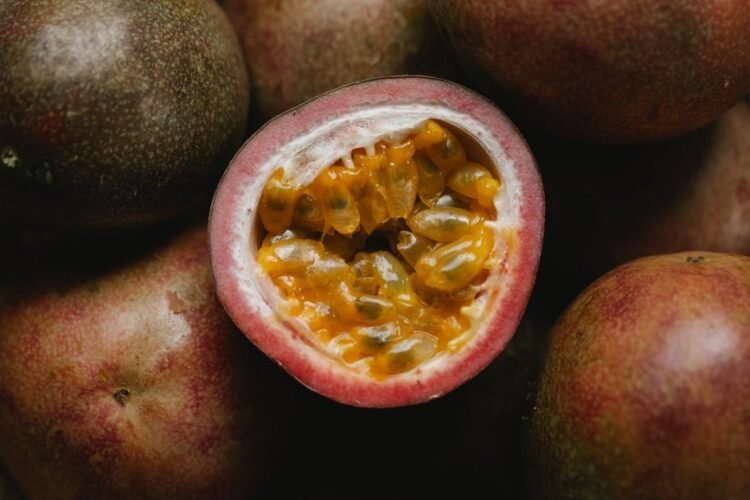
Passion fruit is an aromatic tropical fruit with a leathery purple or yellow rind encasing a jelly-like pulp filled with crunchy edible seeds. It is prized worldwide for its intensely tart-sweet, perfumed flavor and its striking floral fragrance.
History & Origins
Passion fruit is native to the tropical regions of southern South America, where it was harvested and consumed by indigenous peoples long before European contact. Spanish missionaries in the sixteenth century named it for elements of the Passion of Christ they perceived in the flower's structure. Commercial cultivation spread to Hawaii, Australia, and parts of Asia and Africa in the late nineteenth and twentieth centuries, transforming it into a globally traded fruit.
Nutrition Facts
Per 100 g, edible portion (estimated)
- 97 kcalCalories
- 2.2 gProtein
- 0.7 gFat
- 23.4 gCarbs
- 10.4 gFiber
- 11.2 gSugars
- 348 mgPotassium
- 30 mgVitamin C
- 64 mcgVitamin A
Culinary Uses
- Pulp spooned over pavlova, cheesecake, ice cream, and yogurt
- Juice blended into cocktails, smoothies, and tropical mocktails
- Reduced into tart-sweet sauces for seafood, poultry, and pork
- Stirred into mousses, curd, sorbets, and salad dressings
Known Benefits
- Excellent source of vitamin C supporting immune function
- Very high dietary fiber content aids digestion and satiety
- Rich in antioxidants including vitamin A and carotenoids
- Provides potassium for cardiovascular and muscle health
Hidden Benefits
- Seeds contain piceatannol, a polyphenol linked to improved insulin sensitivity
- Rind and pulp are rich in bioflavonoids with potential anti-inflammatory effects
- Contains GABA and other compounds that may support relaxation and sleep
Cautions & Considerations
- Can trigger allergic reactions in individuals sensitive to latex
- Hard seeds may pose a choking risk for young children
- Naturally high sugar content warrants portion control for diabetics