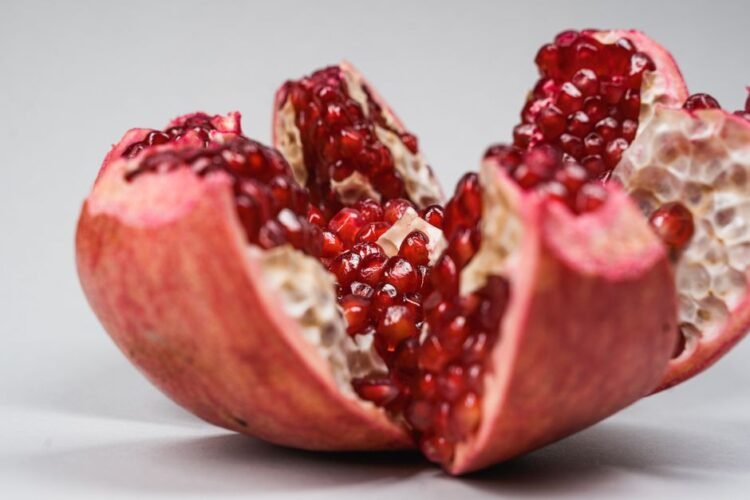
Pomegranate is a deciduous shrub fruit with a leathery red rind enclosing hundreds of jewel-like arils, prized for its sweet-tart flavor. It is central to cuisines from the Levant and Persia to the Indian subcontinent and Mexico.
CategoryFruits
Scientific namePunica granatum
OriginPersia (modern-day Iran) and the broader Caucasus/Central Asia region
History & Origins
Pomegranate has been cultivated for over 5,000 years, with archaeological evidence from early Bronze Age sites across the Levant and Mesopotamia. It held symbolic significance in ancient Egyptian, Greek, Jewish, Zoroastrian, and Islamic traditions, representing fertility, prosperity, and resurrection, and was carried along Silk Road and Mediterranean trade routes that spread it to India, North Africa, Spain, and eventually the Americas with Spanish colonists in the 16th century.
Nutrition Facts
Per 100 g, edible portion (estimated)
- 83 kcalCalories
- 1.7 gProtein
- 1.2 gFat
- 18.7 gCarbs
- 4 gFiber
- 13.7 gSugars
- 236 mgPotassium
- 10.2 mgVitamin C
- 16.4 mcgVitamin K
Culinary Uses
- Fresh arils in salads, grain bowls, and yogurt
- Pomegranate molasses (dibs rob) in Levantine dressings and stews
- Anardana: dried, ground seeds as souring agent in Indian and Pakistani cooking
- Grenadine syrup and fresh juice for cocktails and sharbat drinks
- Garnish for kebabs, tahini dishes, and Mexican chiles en nogada
Known Benefits
- Exceptionally high in polyphenols, especially punicalagins and ellagitannins
- Supports cardiovascular health and may lower blood pressure
- Provides vitamin C, vitamin K, folate, and potassium
- Anti-inflammatory and antioxidant activity documented in human trials
Hidden Benefits
- Punicalagins may enhance endurance and post-exercise recovery
- Ellagitannin metabolites support beneficial gut microbiota
- Emerging research suggests neuroprotective effects on memory
- Topical and dietary use linked to UV-protective skin effects in small studies
Cautions & Considerations
- Interacts with statins, ACE inhibitors, and warfarin via CYP3A inhibition
- High natural sugar content warrants moderation for diabetics
- Juice strongly stains fabrics, skin, and porous countertops
- Whole aril seeds pose a choking risk for young children