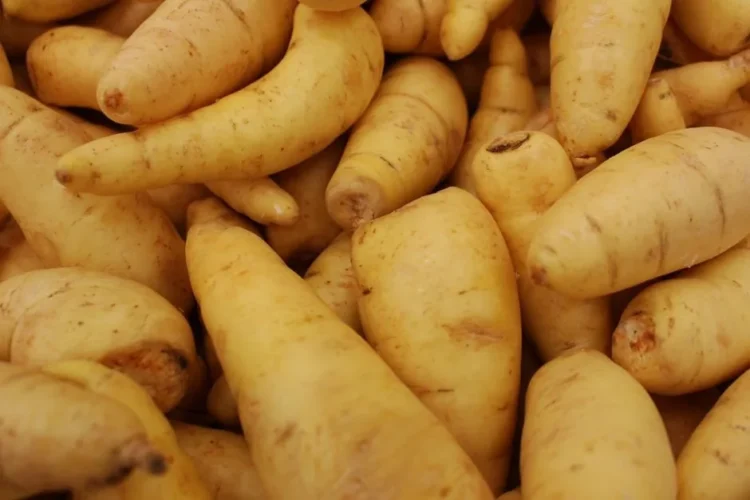
Skirret is a perennial root vegetable of the carrot family (Apiaceae) producing clusters of long, sweet, off-white tubers with a flavor reminiscent of parsnip crossed with sweet chestnut. Once a staple of European monastery gardens and Tudor banquet tables, it is now a rare heritage crop grown mainly by enthusiasts and foragers.
History & Origins
Skirret has been cultivated in China and across Eurasia since at least Roman times, where Pliny the Elder described it in the 1st century CE as a prized sweet root. It became a mainstay of medieval European monastic gardens and was a favored vegetable at Tudor-era English feasts, including reportedly at the coronation of Henry VIII, before being steadily displaced by the potato after the 17th century. Today it survives as a niche heritage crop in parts of Britain, France, Germany, and Korea, where it is called chamchwi.
Nutrition Facts
Per 100 g, edible portion (estimated)
- 75 kcalCalories
- 1.5 gProtein
- 0.3 gFat
- 17.5 gCarbs
- 3.5 gFiber
- 7 gSugars
- 300 mgPotassium
- 35 mgCalcium
- 0.6 mgIron
- 20 mgVitamin C
Culinary Uses
- Boiled and served with butter as a simple side, similar to salsify or parsnip
- Roasted with olive oil, garlic, and thyme to concentrate its natural sweetness
- Pureed into creamy soups and veloutés, often paired with leek or potato
- Glazed in syrup or honey as a dessert preparation in historical European cookery
- Pickled in vinegar brine for use as a condiment or salad component
Known Benefits
- Good source of dietary fiber supporting digestive regularity
- Provides vitamin C for immune function and collagen synthesis
- Contains potassium which contributes to healthy blood pressure regulation
- Offers complex carbohydrates for sustained energy release
Hidden Benefits
- Contains imperatorin and other furanocoumarins studied for anti-inflammatory potential
- Provides inulin-type fructans that act as prebiotics feeding beneficial gut microbiota
- Naturally sweet due to sucrose and fructose without requiring added sugar
- Stores relatively high levels of manganese and other trace minerals compared with common roots
Cautions & Considerations
- Some individuals may experience contact dermatitis when handling the leaves or sap
- Furanocoumarin content may increase photosensitivity in sensitive people
- Raw skirret has a mildly tough, fibrous core that is best removed before serving
- Not recommended for pregnant women in large medicinal quantities due to traditional uterotonic reputation