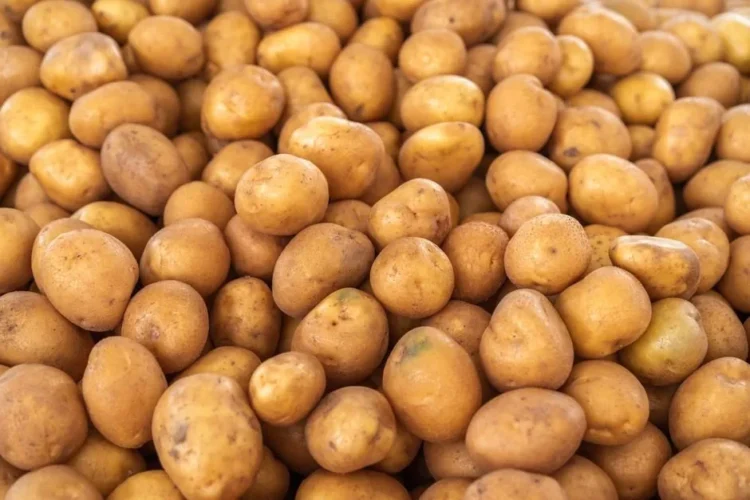
The potato is the starchy tuber of Solanum tuberosum, originally cultivated in the high Andes and now the world's most widely consumed root vegetable.
CategoryStarchy Foods
Scientific nameSolanum tuberosum
OriginAndean region of South America (modern Peru and Bolivia)
History & Origins
Domesticated by indigenous Andean peoples some 7,000–10,000 years ago, the potato was a cornerstone of pre-Columbian highland agriculture, with farmers developing thousands of landrace varieties adapted to altitude and climate. Spanish conquistadors brought the tuber to Europe in the 16th century, where it gradually spread across the continent and, after late-18th-century Prussian reforms, became a key safeguard against famine. Today it ranks among the world's foremost staple crops, with China, India and Russia among the leading producers.
Nutrition Facts
Per 100 g, edible portion (estimated)
- 77 kcalCalories
- 2.05 gProtein
- 0.09 gFat
- 17.49 gCarbs
- 2.1 gFiber
- 0.82 gSugars
- 421 mgPotassium
- 19.7 mgVitamin C
- 0 mcgVitamin A
Culinary Uses
- Boiled, mashed, roasted or baked as a side dish
- Fried as chips (crisps) or french fries
- Dumplings such as gnocchi, pierogi and knödel
- Thickener for soups, stews and gratins
- Distilled into vodka and aquavit
Known Benefits
- Provides complex carbohydrates for sustained energy
- Naturally gluten-free and easily digestible
- Good source of vitamin C and potassium
- Contains B6, thiamine and folate
Hidden Benefits
- Cooled cooked potatoes form resistant starch that feeds beneficial gut bacteria
- Skin holds most of the fiber and antioxidant flavonoids, especially in purple and red varieties
- Higher potassium density per calorie than the average banana
- Glycoalkaloids such as chaconine studied for antimicrobial and anti-inflammatory potential
Cautions & Considerations
- Green spots and sprouts indicate toxic solanine and chaconine—do not eat
- High glycemic index; balance with protein, fat and fiber
- Deep frying markedly raises caloric and acrylamide content
- Store in a cool, dark, well-ventilated place to prevent greening