 (No Ratings Yet)
 Loading...
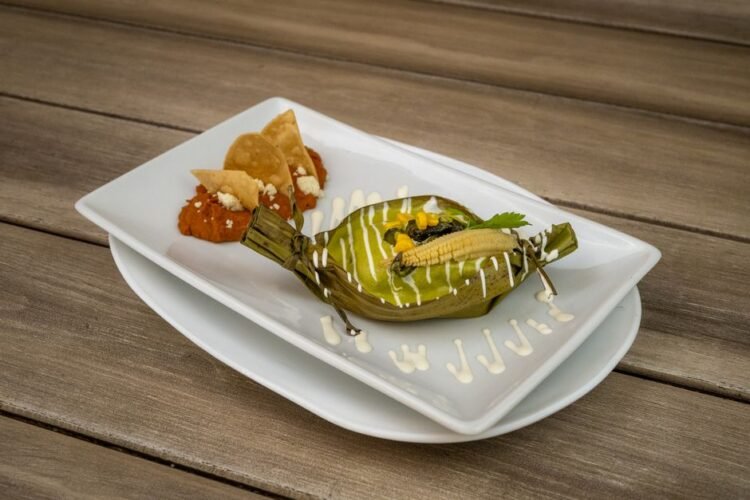
Tamales de Rajas con Queso are tender steamed corn masa packets filled with smoky roasted poblano pepper strips and stretchy melted cheese. This classic Mexican comfort food is wrapped in softened corn husks and steamed until the masa is pillowy and the cheese turns luxuriously gooey.
Prep Time25 mins
Cook Time75 mins
Total Time100 mins
Servings4
Yield12 tamales (4 servings)
Nutrition Facts
Per serving (estimated)
- 430 kcalCalories
- 23 gFat
- 9 gSaturated Fat
- 42 gCarbs
- 5 gFiber
- 3 gSugar
- 14 gProtein
- 610 mgSodium
- 380 mgPotassium
- 230 mgCalcium
- 3 mgIron
- 62 mgVitamin C
- 28 mcgVitamin A
Ingredients
For the masa dough
- 2 cups masa harina
- 1/2 cup lard or vegetable shortening
- 1 teaspoon baking powder
- 1 teaspoon fine salt
- 1 1/2 cups warm chicken or vegetable broth
For the rajas filling
- 4 large poblano peppers
- 1 medium white onion, thinly sliced
- 2 cloves garlic, minced
- 1 tablespoon vegetable oil
- 8 ounces Oaxaca cheese (or Monterey Jack), shredded
- 1/2 teaspoon salt
For wrapping and steaming
- 18 to 20 dried corn husks
- Warm water for soaking
- 2 1/2 cups water for the steamer pot
- 1 piece of cheesecloth or extra husks to line the steamer
Directions
- Soak the dried corn husks in a large bowl of warm water for at least 30 minutes, weighting them down with a plate so they stay submerged until pliable.
- Roast the poblanos directly over a gas flame or under a hot broiler, turning until the skins are blackened and blistered on all sides. Place in a covered bowl for 10 minutes, then peel off the skins, slit open, remove the seeds, and cut into 1/2-inch-wide strips (rajas).
- Heat the oil in a skillet over medium heat; sauté the onion until soft and translucent, about 4 minutes. Add the garlic and cook 30 seconds, then stir in the poblano strips and salt. Cook 3 minutes more and set aside to cool. Reserve half the shredded cheese; fold the rest into the cooled rajas.
- In a large bowl, beat the lard with a wooden spoon or hand mixer until light and fluffy, about 2 minutes. Add the masa harina, baking powder, and salt, then drizzle in the warm broth a little at a time, beating continuously, until the masa is spreadable but holds its shape (a small ball should float in a cup of cold water).
- Drain the soaked husks and pat dry. Lay a husk flat, smooth side up, with the narrow end pointing toward you. Spread about 3 tablespoons of masa in a thin rectangle down the center, leaving a 1-inch border on top and sides. Place 1 1/2 tablespoons of the rajas filling and a pinch of reserved cheese down the middle of the masa.
- Fold the two long sides of the husk over the filling so they meet in the center, then fold the narrow bottom up to form a closed packet. Tie loosely with a thin strip of soaked husk if needed. Repeat with the remaining husks and filling.
- Stand the tamales upright, open end up, in a steamer basket lined with cheesecloth or extra husks. Pour the 2 1/2 cups of water into the pot (keeping it below the basket), cover tightly with a lid and a clean kitchen towel, and steam over medium-low heat for 75 to 90 minutes, checking the water level occasionally and adding more hot water as needed.
- The tamales are done when the masa pulls away cleanly from the husk and feels firm; test one by opening it slightly. Let the tamales rest, still wrapped, for 10 minutes off the heat so the cheese sets slightly, then serve hot with Mexican crema, salsa verde, or pickled jalapeños.
Cook’s Notes
- To check if the masa is properly whipped, drop a small teaspoon into a glass of cold water; it should float to the surface when ready.
- Do not overfill the tamales or leave air pockets, as the masa can split open during steaming and the cheese will leak out.
- If you cannot find Oaxaca cheese, a mix of low-moisture mozzarella and Monterey Jack melts beautifully without releasing too much oil.
- Keep a small ramekin or a few coins in the bottom of the steamer pot; if the rattling stops, you know the water has boiled away and more is needed.
- Fresh corn husks from a Mexican market are more flexible than packaged ones and tear less easily during wrapping.