 (No Ratings Yet)
 Loading...
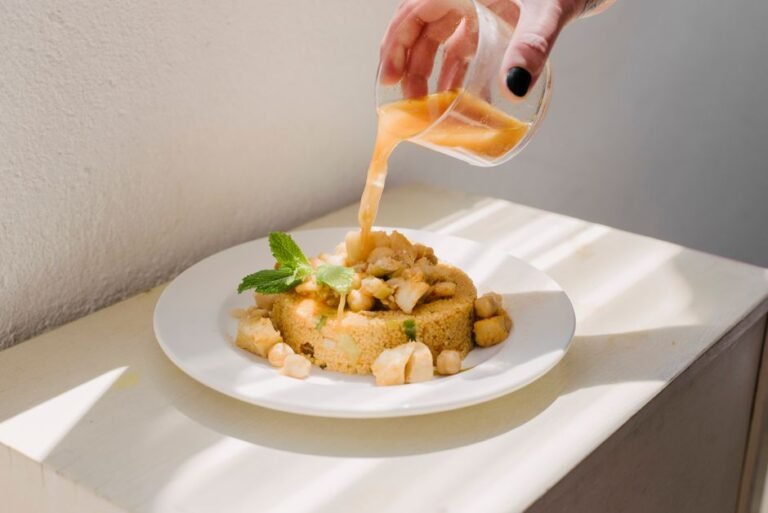
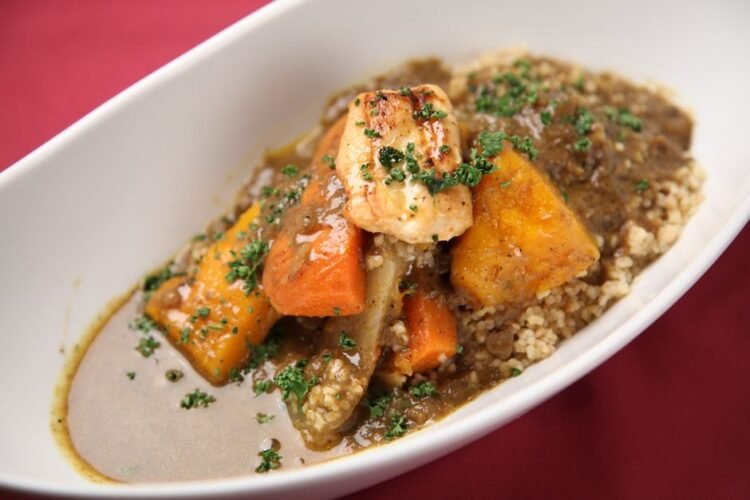
A fragrant North African classic where flaky white fish is gently poached in a saffron-harissa broth brimming with chickpeas, carrots, potatoes, and peppers, then served over a fluffy mound of steamed semolina couscous.
Prep Time20 mins
Cook Time50 mins
Total Time70 mins
Servings6
Yield6 generous servings
Nutrition Facts
Per serving (estimated)
- 540 kcalCalories
- 16 gFat
- 2.5 gSaturated Fat
- 64 gCarbs
- 8 gFiber
- 9 gSugar
- 34 gProtein
- 640 mgSodium
- 980 mgPotassium
- 110 mgCalcium
- 4.5 mgIron
- 42 mgVitamin C
- 780 mcgVitamin A
Ingredients
For the spice base and aromatics
- 2 tbsp olive oil
- 1 large yellow onion, finely chopped
- 4 garlic cloves, minced
- 2 tbsp tomato paste
- 1 tbsp harissa paste, plus extra for serving
- 2 tsp ras el hanout
- 1/2 tsp saffron threads
- 1 tsp ground cumin
For the vegetable stew
- 6 cups fish stock or water
- 1 (15 oz) can chickpeas, drained and rinsed
- 3 medium carrots, peeled and cut into 2-inch sticks
- 2 Yukon gold potatoes, peeled and cubed
- 1 red bell pepper, cut into thick strips
- 1 medium zucchini, sliced into half-moons
- 1 preserved lemon, pulp discarded, peel chopped
- 1 1/2 tsp kosher salt, plus more to taste
For the fish
- 1 1/2 lbs skinless firm white fish (sea bass, grouper, or cod), cut into 2-inch pieces
- 1 lemon, juiced
- 1/2 tsp kosher salt
- 1/4 tsp freshly ground black pepper
- 2 tbsp chopped fresh cilantro
For the semolina couscous
- 2 cups medium semolina couscous
- 2 tbsp olive oil
- 3 cups fish stock or water
- 1 tsp kosher salt
For serving
- 1/4 cup chopped fresh cilantro
- 1/4 cup chopped fresh flat-leaf parsley
- Extra harissa paste
- Lemon wedges
- 1/4 cup pitted black olives, optional
Directions
- Warm 2 tbsp olive oil in a large Dutch oven over medium heat. Add the chopped onion and cook, stirring occasionally, until softened and translucent, about 6 minutes.
- Stir in the garlic, tomato paste, harissa, ras el hanout, saffron, and cumin; cook 1 minute until the mixture darkens and smells fragrant.
- Pour in 6 cups fish stock and add the chickpeas, carrots, potatoes, bell pepper, zucchini, chopped preserved lemon, and 1 1/2 tsp salt. Bring to a gentle boil, then reduce heat and simmer uncovered for 18 to 20 minutes, until the carrots and potatoes are just tender.
- Meanwhile, prepare the couscous: bring 3 cups fish stock to a boil with 2 tbsp olive oil and 1 tsp salt. Place 2 cups couscous in a wide bowl, pour the boiling liquid over it, cover tightly, and let steam off heat for 10 minutes. Fluff with a fork, breaking up any clumps.
- Pat the fish pieces dry and toss with lemon juice, 1/2 tsp salt, and pepper. Nestle the fish gently into the simmering broth, cover, and cook 5 to 7 minutes, until the fish flakes easily with a fork. Stir in the chopped cilantro and taste the broth, adjusting salt as needed.
- Mound the steamed couscous onto a large serving platter in a ring shape. Carefully ladle the fish and vegetables into the center, spooning some of the broth over the couscous so it stays moist.
- Scatter the parsley and olives (if using) over the top. Bring the platter to the table with extra harissa and lemon wedges so each diner can adjust the heat and brightness.
Cook’s Notes
- Toast the dry couscous in 1 tbsp olive oil for 2 minutes before adding liquid; it gives a nuttier flavor and fluffier texture.
- Use firm, skinless white fish like sea bass, grouper, or cod; oily fish such as mackerel will overwhelm the delicate saffron broth.
- Add harissa gradually; Tunisian pastes vary widely in heat, and diners can always stir in more at the table.
- Spoon extra broth over the couscous just before serving so the grains do not dry out and absorb the saffron flavor.
- Pearl (Israeli) couscous will not work here; stick with traditional semolina grains for the right texture and broth absorption.