 (No Ratings Yet)
 Loading...
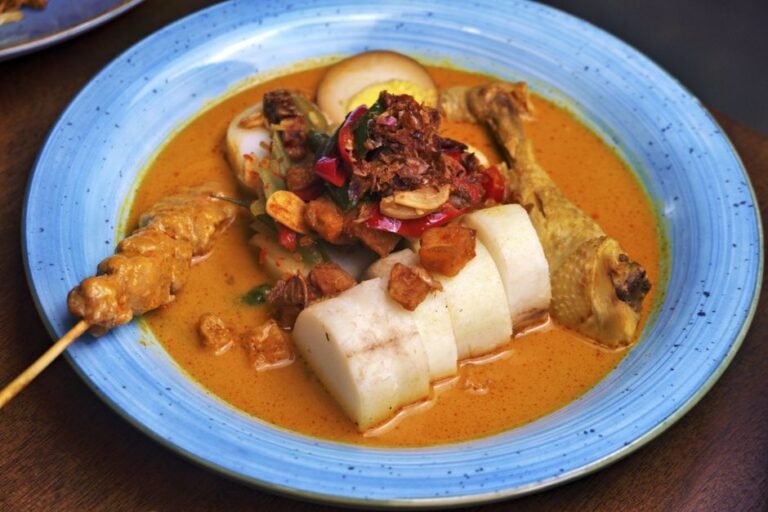
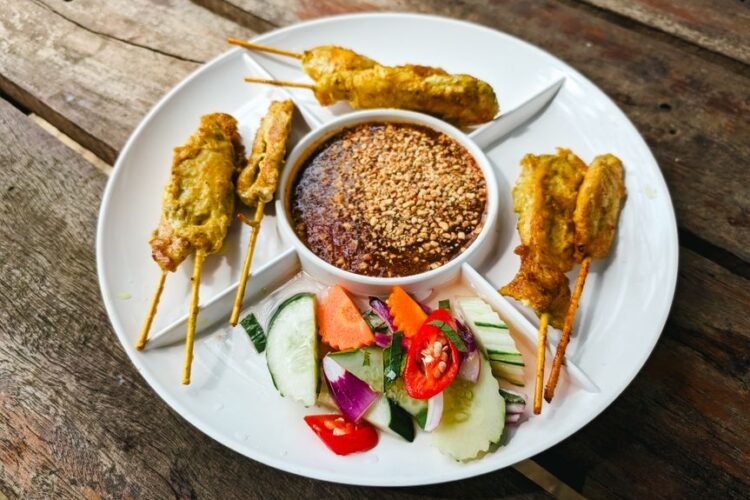
Indonesian satay features turmeric-and-lemongrass-marinated chicken threaded onto bamboo skewers, grilled over high heat until lightly charred, and served with a thick, fragrant peanut sauce. This street-food classic balances smoky char, warm spice, and the sweet-savory depth of kecap manis for an irresistible bite.
Prep Time25 mins
Cook Time15 mins
Total Time40 mins
Servings4
Yield4 servings (about 12 skewers)
Nutrition Facts
Per serving (estimated)
- 565 kcalCalories
- 30 gFat
- 9 gSaturated Fat
- 34 gCarbs
- 5 gFiber
- 13 gSugar
- 38 gProtein
- 780 mgSodium
- 720 mgPotassium
- 90 mgCalcium
- 3.5 mgIron
- 9 mgVitamin C
- 55 mcgVitamin A
Ingredients
For the chicken and marinade
- 1.5 lb (680 g) boneless skinless chicken thighs, cut into 1-inch cubes
- 2 tbsp kecap manis (sweet soy sauce)
- 1 tbsp coconut oil, melted
- 1 tbsp fresh lime juice
- 3 garlic cloves, minced
- 2 large shallots, grated
- 1 inch fresh ginger, grated
- 1 tsp ground turmeric
- 1 tsp ground coriander
- 1/2 tsp ground cumin
- 1 tsp fine sea salt
- 12 to 14 bamboo skewers, soaked in water 30 minutes
For the peanut sauce
- 1 cup (140 g) roasted unsalted peanuts
- 3 large shallots, roughly chopped
- 2 garlic cloves
- 1 inch fresh ginger, peeled
- 2 to 3 red bird's-eye chilies, seeded for less heat
- 1 tbsp coconut oil
- 1 cup (240 ml) unsweetened coconut milk
- 2 tbsp kecap manis
- 1 tbsp palm sugar or dark brown sugar
- 1 tsp tamarind paste
- 1/2 tsp fine sea salt
- 1 tbsp fresh lime juice
- 1/2 to 3/4 cup warm water, as needed
For serving
- 2 cups cooked jasmine rice or sliced lontong (compressed rice cakes)
- 1 small cucumber, sliced
- 1/4 cup fried shallots
- Lime wedges
Directions
- Make the marinade: whisk kecap manis, coconut oil, lime juice, garlic, shallots, ginger, turmeric, coriander, cumin, and salt in a large bowl. Add the chicken, toss to coat, cover, and refrigerate at least 30 minutes (up to 4 hours) so the spices penetrate.
- While the chicken marinates, prepare the peanut sauce: pulse the peanuts in a food processor until coarsely ground, then transfer to a bowl. Add shallots, garlic, ginger, and chilies to the processor and blend into a smooth paste.
- Heat coconut oil in a small saucepan over medium heat. Add the paste and cook, stirring, 2 to 3 minutes until fragrant and lightly golden. Stir in the ground peanuts, coconut milk, kecap manis, palm sugar, tamarind, and salt.
- Simmer the sauce gently 6 to 8 minutes, stirring often, until thickened to a pourable but coating consistency. Loosen with warm water if it gets too thick; it will continue to thicken off the heat. Stir in the lime juice, taste, and adjust salt or sugar. Reserve about two-thirds for serving.
- Thread 4 to 5 pieces of marinated chicken onto each soaked skewer, leaving a little space between pieces so the heat circulates.
- Preheat a grill, grill pan, or broiler to medium-high heat (about 400°F). Lightly oil the grates.
- Grill the skewers 3 to 4 minutes per side, turning once, until lightly charred and the chicken is just cooked through (internal temperature 165°F).
- Plate the skewers over rice or lontong with cucumber slices, spoon the warm peanut sauce generously over the top or serve it in a small bowl for dipping, and finish with fried shallots and lime wedges.
Cook’s Notes
- Soak bamboo skewers for at least 30 minutes so they don't splinter or ignite on the grill.
- Chicken thighs stay juicier than breasts over high heat; pull the skewers off the moment the centers hit 165°F to avoid dryness.
- The peanut sauce thickens as it cools; rewarm with a splash of water and loosen to a dipping consistency before serving.
- Toast the peanuts in a dry skillet 2 to 3 minutes before grinding for a deeper, nuttier flavor.
- For authentic aroma, char the skewers over real charcoal or wood if possible — the smokiness is what makes street-style satay sing.