 (No Ratings Yet)
 Loading...
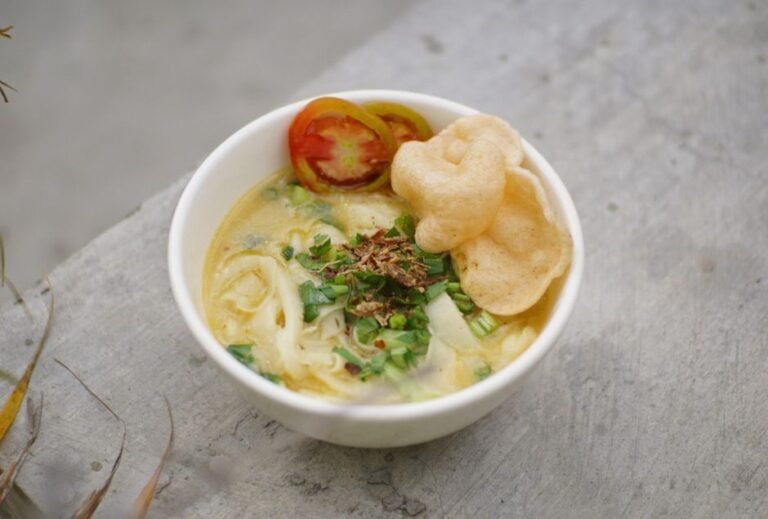
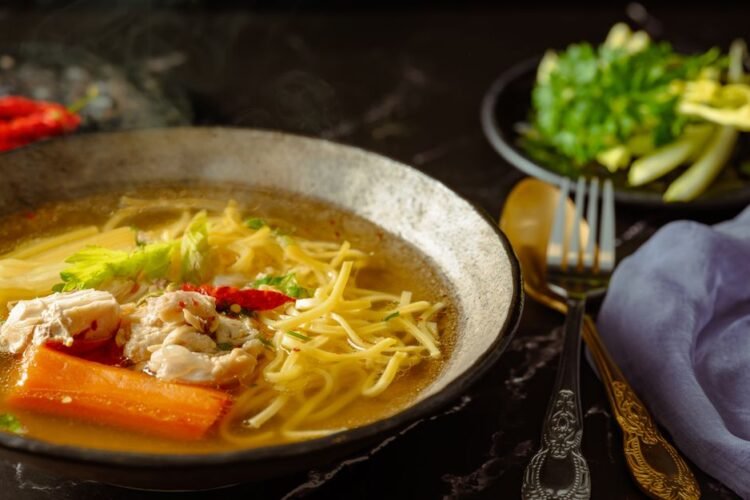
A beloved Indonesian comfort soup featuring tender chicken simmered in a fragrant turmeric and lemongrass broth, served over rice vermicelli with crisp bean sprouts, halved eggs, and a shower of fried shallots. Bright, aromatic, and deeply satisfying, it's the kind of bowl that warms you from the inside out.
Prep Time20 mins
Cook Time45 mins
Total Time65 mins
Servings4
Yield4 hearty bowls
Nutrition Facts
Per serving (estimated)
- 485 kcalCalories
- 14 gFat
- 3.5 gSaturated Fat
- 52 gCarbs
- 4 gFiber
- 5 gSugar
- 36 gProtein
- 720 mgSodium
- 780 mgPotassium
- 115 mgCalcium
- 4.2 mgIron
- 18 mgVitamin C
- 160 mcgVitamin A
Ingredients
For the spice paste (bumbu halus)
- 6 shallots, peeled and roughly chopped
- 4 garlic cloves, peeled
- 2-inch piece fresh turmeric, peeled and sliced (or 1 1/2 tsp ground turmeric)
- 1-inch piece fresh ginger, peeled
- 2 stalks lemongrass, white parts only, finely sliced
- 1 tbsp coriander seeds, toasted
- 2 tbsp neutral oil, for sautéing
For the soup
- 1 1/2 lbs bone-in chicken thighs, skin removed
- 8 cups low-sodium chicken broth or water
- 2 bay leaves (Indonesian salam leaves if available)
- 4 kaffir lime leaves, torn
- 1 1/2 tsp fine sea salt, plus more to taste
- 1/2 tsp freshly ground white pepper
For the noodles and garnishes
- 8 oz rice vermicelli (bihun), cooked and drained
- 2 large hard-boiled eggs, peeled and halved lengthwise
- 1 1/2 cups fresh bean sprouts, rinsed
- 1/2 cup fresh celery leaves, roughly chopped
- 3 tbsp crispy fried shallots (bawang goreng)
- 1 lime, cut into 4 wedges
- Sambal oelek or kecap manis, for serving
Directions
- Make the spice paste: combine shallots, garlic, fresh turmeric, ginger, lemongrass, and toasted coriander seeds in a small food processor and blend to a smooth, thick paste, adding 1 to 2 tablespoons of water if needed.
- Heat the oil in a large Dutch oven or heavy pot over medium heat. Add the spice paste and sauté, stirring frequently, for 4 to 5 minutes until fragrant, slightly darkened, and the raw garlic smell has cooked off.
- Pat the chicken thighs dry and nestle them into the pot, turning to coat in the spice paste. Cook for 3 minutes per side until lightly browned.
- Pour in the chicken broth and add the bay leaves, kaffir lime leaves, salt, and white pepper. Bring to a rolling boil, then reduce the heat to low, cover partially, and simmer gently for 35 to 40 minutes, until the chicken is fall-off-the-bone tender.
- Carefully transfer the chicken to a cutting board; once cool enough to handle, shred the meat into bite-size pieces and discard the bones. Strain the broth through a fine-mesh sieve if you prefer a clear soup, then return it to the pot and taste for seasoning.
- Cook the rice vermicelli according to the package directions, typically soaking in hot water for 4 to 5 minutes; drain well and divide among 4 serving bowls.
- Quickly blanch the bean sprouts in the simmering broth for 30 seconds, then layer them over the noodles along with the shredded chicken and a halved egg in each bowl.
- Ladle the hot golden broth over everything, then generously top each bowl with celery leaves and crispy fried shallots. Serve immediately with lime wedges, sambal, and kecap manis on the side.
Cook’s Notes
- For the brightest yellow hue and most authentic flavor, seek out fresh turmeric root at Asian markets; ground turmeric works at about half the volume.
- Bone-in chicken thighs are non-negotiable here for a rich, silky broth, but you can swap in a small whole chicken cut into pieces if you prefer.
- A squeeze of fresh lime just before eating is essential; the acidity cuts through the richness and amplifies the aromatics.
- The spice paste can be made up to 3 days ahead and stored in the refrigerator, making weeknight assembly much faster.
- Leftover broth keeps for 3 days in the fridge or 2 months in the freezer, and the noodles should always be cooked fresh to prevent sogginess.