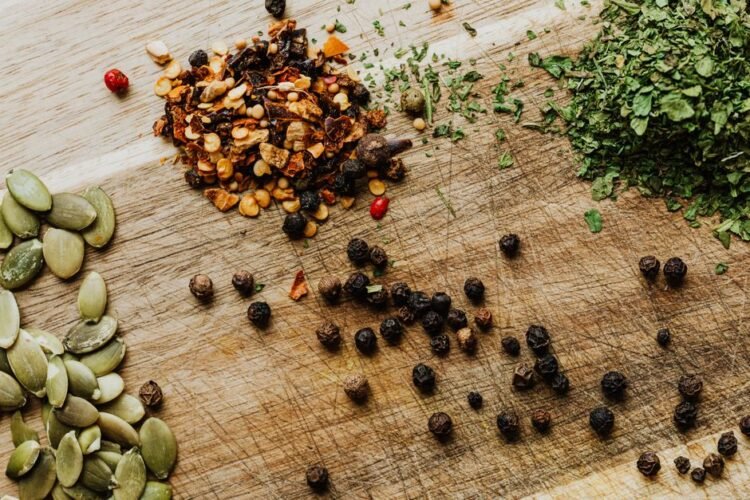
Celery seed is the small, dried, tan-to-brown fruit of the wild and cultivated celery plant, prized as a pungent, warm, slightly bitter spice with concentrated herbal aroma.
CategorySpices
Scientific nameApium graveolens
OriginMediterranean Basin and Western Asia
History & Origins
Celery and its seeds have been used since antiquity; the ancient Egyptians, Greeks, and Romans recorded celery in medicinal, ritual, and culinary contexts, with seeds appearing in pharmacopoeias by the classical period. By the Middle Ages, celery seed was a common European apothecary ingredient, and from the 19th century onward it became a staple of pickling brines, German and Indian spice blends, and European seasoning mixtures as global trade expanded its reach.
Nutrition Facts
Per 100 g, edible portion (estimated)
- 392 kcalCalories
- 18.1 gProtein
- 25.3 gFat
- 41.4 gCarbs
- 11.4 gFiber
- 0.8 gSugars
- 1400 mgPotassium
- 1767 mgCalcium
- 44.0 mgIron
- 440 mgMagnesium
- 17.1 mgVitamin C
- 52 mcgVitamin A
Culinary Uses
- Key component of Indian panch phoron, achari masala, and Bengali spice blends
- Used in pickling brines for cucumbers, beets, and sauerkraut
- Flavoring agent for Bloody Mary cocktails, tomato juice, and savory broths
- Mixed into coleslaw dressings, potato salads, and tartar sauce
- Sprinkled on rye breads, crackers, and seasoned salts such as celery salt
Known Benefits
- Source of apigenin, a flavonoid studied for anti-inflammatory effects
- Contains phthalides associated with vasodilation and blood pressure support
- Provides dietary fiber and notable mineral density for a spice
- Traditionally used as a carminative to ease digestive discomfort
Hidden Benefits
- Rich in volatile oils (limonene, selinene) with potential antioxidant activity
- Contains coumarin derivatives that may influence mild sedative effects
- Provides manganese and magnesium important for enzymatic and neuromuscular function
- Historically used in folk medicine as a mild diuretic and antispasmodic
Cautions & Considerations
- May provoke allergic reactions in individuals sensitive to Apiaceae plants such as carrot, parsley, or fennel
- Contains coumarins that can interact with anticoagulant medications like warfarin
- High doses may cause photosensitivity due to furanocoumarin content
- Not recommended in concentrated medicinal amounts during pregnancy without medical guidance


