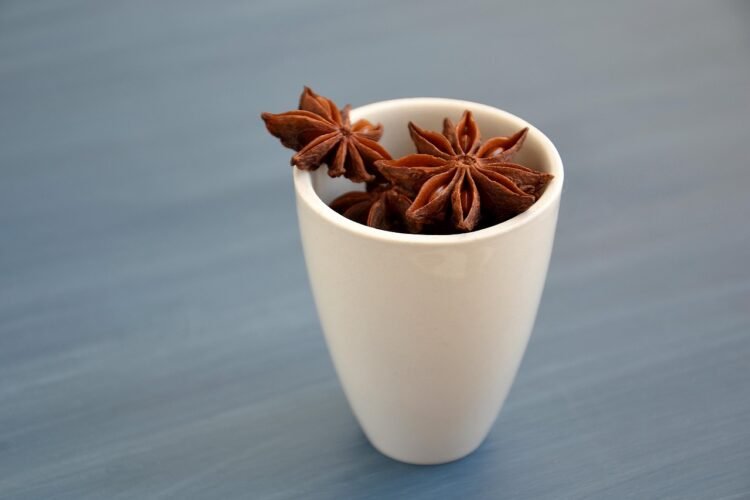
Anise seed is a small, ridged, pale-green to grayish seed harvested from the umbelliferous annual herb Pimpinella anisum, prized for its sweet, licorice-like aroma derived primarily from the volatile compound anethole. It is used worldwide as a flavoring spice in baking, liqueurs, savory dishes, and traditional confectionery.
History & Origins
Anise is one of the oldest documented spices, cultivated in Egypt as early as 1500 BCE where it appears in Ebers Papyrus medicinal texts. It spread through ancient Greece and Rome, where it flavored cakes, wines, and was chewed to freshen breath. By the medieval period, anise had become a staple of European monastic herbalism, lending its name to anisette, ouzo, pastis, and the classic Italian biscotti.
Nutrition Facts
Per 100 g, edible portion (estimated)
- 337 kcalCalories
- 17.6 gProtein
- 15.9 gFat
- 50.0 gCarbs
- 14.6 gFiber
- 4.0 gSugars
- 1441 mgPotassium
- 646 mgCalcium
- 36.96 mgIron
- 21 mgVitamin C
- 16 mcgVitamin A
Culinary Uses
- Essential flavoring for Italian biscotti, pizzelle, and panettone
- Steeped into spirits to make anisette, ouzo, raki, pastis, and absinthe
- Ground into spice blends for Indian garam masala and Middle Eastern lamb dishes
- Added to breads, sauerkraut, and vegetable pickles for a sweet aromatic note
Known Benefits
- Traditionally used to relieve bloating, gas, and mild digestive cramps
- Carminative and mild expectorant properties helpful in cough syrups
- Contains anethole, studied for potential mild antibacterial and antifungal effects
- Mildly estrogenic activity historically used to ease menopausal discomfort
Hidden Benefits
- Iron content is exceptionally high at over 36 mg per 100 g, rivaling organ meats
- Rich source of manganese and magnesium supporting bone and enzyme health
- Anethole may act as a mild insect repellent when applied topically in oil form
- Chewing the seeds can help freshen breath and reduce post-meal sugar cravings
Cautions & Considerations
- Essential oil is potent and should not be ingested undiluted due to neurotoxicity risk at high doses
- Avoid therapeutic doses during pregnancy because of documented uterotonic effects
- May interact with estrogen-modulating medications and blood thinners
- Rare contact dermatitis reported in handlers of the fresh plant


