 (No Ratings Yet)
 Loading...
A daily ritual across Nepal's high Himalaya, this rich, salty butter tea fuels yak herders, monks, and trekkers through freezing mountain mornings. Tea is boiled strong, then churned with cultured butter and salt until frothy, producing a savory cup that warms from the inside out.
Prep Time5 mins
Cook Time15 mins
Total Time20 mins
Servings4
Yield4 cups (about 1 L)
Nutrition Facts
Per serving (estimated)
- 155 kcalCalories
- 14 gFat
- 9 gSaturated Fat
- 2 gCarbs
- 0 gFiber
- 1 gSugar
- 1 gProtein
- 290 mgSodium
- 90 mgPotassium
- 25 mgCalcium
- 0.5 mgIron
- 0 mgVitamin C
- 110 mcgVitamin A
Ingredients
For the tea
- 4 cups (960 ml) cold water
- 3 tablespoons loose Tibetan tea leaves or loose pu-erh tea (Assam works in a pinch)
- 1/2 teaspoon fine sea salt, plus more to taste
- 4 tablespoons cultured yak butter, or unsalted European-style cultured butter
- 1/2 cup (120 ml) whole milk, optional, for a milder cup
Directions
- Bring 4 cups of cold water to a rolling boil in a heavy-bottomed saucepan over high heat.
- Add the tea leaves, reduce heat to medium-low, and simmer uncovered for 10 to 12 minutes, until the brew turns a deep reddish-brown and smells earthy.
- Strain the tea through a fine mesh sieve into a tall jar, butter churn, or blender pitcher, pressing gently on the leaves to extract every drop.
- Add the salt, cultured butter, and the milk if using to the hot tea while it is still steaming.
- Whisk vigorously with a traditional Nepali-Tibetan bamboo churn (chandong) for 2 to 3 minutes, or pulse in a blender for 60 to 90 seconds, until the surface is pale, frothy, and the butter is completely emulsified with no greasy film.
- Taste and adjust the salt; the finished cup should taste savory, rich, and lightly saline, never sweet.
- Pour into small ceramic cups or a pre-warmed thermos and serve immediately, piping hot.
- Re-whisk or shake briefly before each pour if the butter begins to separate as the tea cools.
Cook’s Notes
- Use cultured, slightly tangy butter for the authentic Himalayan tang; sweet American-style butter will taste flat and greasy.
- A traditional Nepali chandong (bamboo plunger churn) gives the silkiest micro-foam; a countertop blender is the easiest modern substitute.
- Tibetan compressed brick tea is boiled directly in chunks; if using brick tea, simmer for 15 minutes and crush a piece before adding.
- Always store leftover butter tea in a thermos rather than reboiling; reboiling breaks the emulsion and leaves an oily film on top.
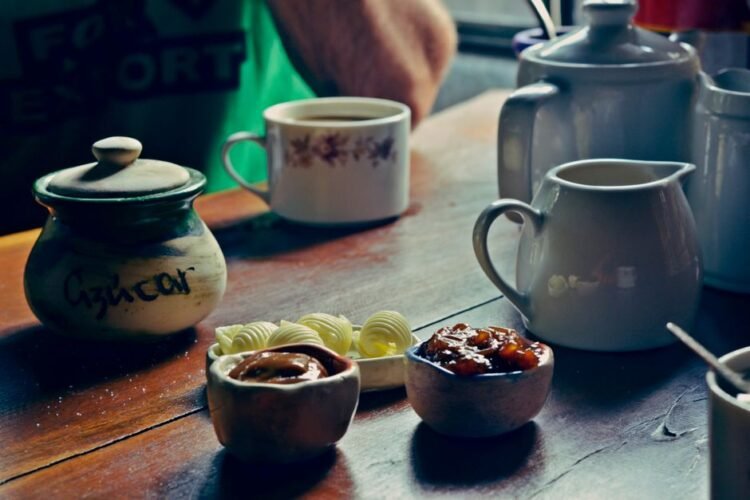
- In Mustang, Dolpo, and Solukhumbu, butter tea is sipped slowly throughout the day from a wooden bowl or small ceramic cup to maintain warmth and stamina at altitude.