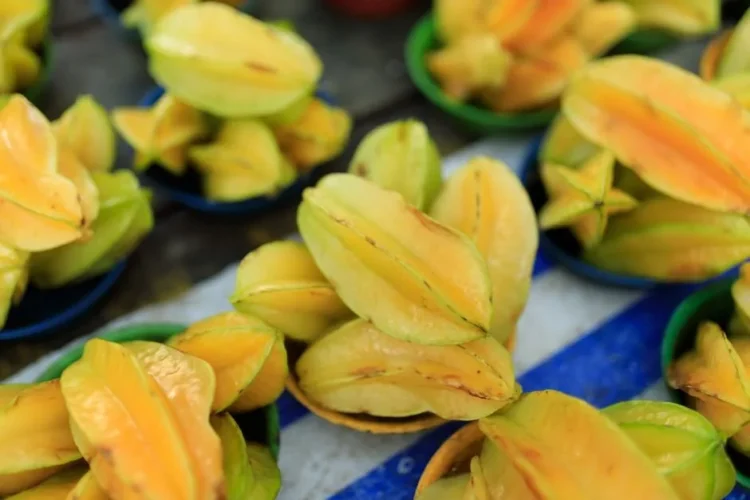
Carambola is a waxy, golden-yellow tropical fruit of the family Oxalidaceae, prized for its distinctive five-angled form that yields perfect star-shaped cross-sections. Its flavor balances crisp sweetness with a tart, grape-like acidity, making it a versatile fresh and culinary ingredient.
CategoryFruits
Scientific nameAverrhoa carambola
OriginTropical Southeast Asia (Malaysia, Indonesia, Philippines, Sri Lanka, southern India)
History & Origins
Cultivated for centuries across its native Southeast Asian range, carambola was carried along Malay and Indian Ocean trade routes to South Asia and China well before European contact. It was introduced to Florida in 1887 and subsequently spread through the Caribbean, Latin America, and Pacific islands, where it now grows as a familiar dooryard tree.
Nutrition Facts
Per 100 g, edible portion (estimated)
- 31 kcalCalories
- 1.04 gProtein
- 0.33 gFat
- 6.73 gCarbs
- 2.8 gFiber
- 3.98 gSugars
- 133 mgPotassium
- 34.4 mgVitamin C
- 3 mcgVitamin A
Culinary Uses
- Sliced fresh as a garnish or salad ingredient, exploiting the star-shaped cross-section
- Pressed into refreshing juices, smoothies, and tropical punches
- Pickled with salt and chili in Filipino and Sri Lankan home cooking
- Cooked into chutneys, relishes, and savory sauces for fish and poultry
- Dried into sweet-tart chips or candied as a confection
Known Benefits
- Rich in vitamin C, supplying over a third of the daily value per 100 g
- Very low in calories and fat, suitable for weight-conscious diets
- Provides dietary fiber that supports digestion
- Contains antioxidants including quercetin, gallic acid, and epicatechin
Hidden Benefits
- Carries trace carotenoids (beta-cryptoxanthin, lutein) that support eye health
- Polyphenol content has demonstrated anti-inflammatory activity in vitro
- Folate and B-vitamins contribute to cellular metabolism
- Low glycemic load despite its sweet flavor
Cautions & Considerations
- High oxalic acid can worsen kidney stones and is dangerous for patients with chronic kidney disease
- Contains a caramboxin neurotoxin that may trigger hiccups, confusion, or seizures in susceptible individuals, especially those on dialysis
- May potentiate the effects of certain statins and blood-pressure medications
- Unripe fruit is intensely sour and can irritate the mouth and stomach lining





