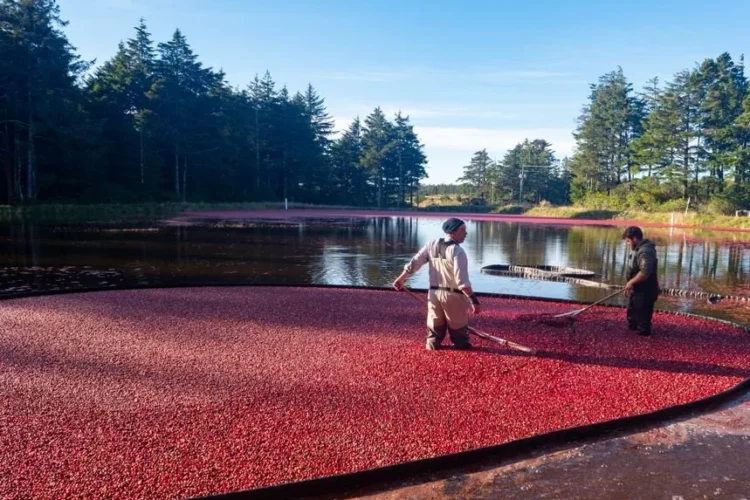
Cranberries are tart, deep-red berries that grow on low evergreen shrubs in acidic bogs and are widely cultivated across the northern United States, Canada, and Chile. They are consumed fresh, dried, juiced, or sweetened and are particularly associated with North American holiday cuisine.
History & Origins
Indigenous peoples of the northeastern woodlands, including the Wampanoag, Lenape, and Ojibwe, harvested wild cranberries long before European contact, using them in pemmican, sauces, and as a pigment and wound poultice. English and Dutch colonists adopted the fruit in the early 17th century, and commercial cultivation began in Massachusetts in the 1810s, eventually making the cranberry one of the few fruits native to North America that became a major commercial crop.
Nutrition Facts
Per 100 g, edible portion (estimated)
- 46 kcalCalories
- 0.4 gProtein
- 0.1 gFat
- 12.2 gCarbs
- 4.6 gFiber
- 4.0 gSugars
- 85 mgPotassium
- 13.3 mgVitamin C
- 3 mcgVitamin A
- 5 mcgVitamin K
Culinary Uses
- Simmered with sugar into classic Thanksgiving cranberry sauce and relishes
- Dried and sweetened (craisins) for trail mix, salads, and baked goods
- Pressed into tart juice, often blended in cocktails and spritzers
- Folded into muffins, scones, quick breads, and festive cakes
- Reduced into jams, chutneys, and vinegars for charcuterie boards
Known Benefits
- Rich in proanthocyanidins that inhibit bacterial adhesion in the urinary tract, traditionally used to prevent UTIs
- High in polyphenol antioxidants that combat oxidative stress
- Provides vitamin C and manganese to support immune function and bone health
- Contains dietary fiber that supports digestive regularity
Hidden Benefits
- Quinic acid may help reduce calcium-based kidney stone formation by acidifying urine
- Anti-adhesion compounds may interfere with Helicobacter pylori colonization in the stomach
- Anthocyanins show emerging research on reducing periodontal inflammation and dental plaque
- Low glycemic load despite tart taste, making moderate portions suitable for many diabetic diets
Cautions & Considerations
- Naturally very tart and typically consumed with large amounts of added sugar in juices and sauces
- Contains salicylic acid and vitamin K, which can interact with warfarin and other anticoagulants
- High oxalate content may aggravate susceptibility to calcium oxalate kidney stones
- Commercial cranberry juice cocktails often contain only a fraction of real fruit and significant added sugars





