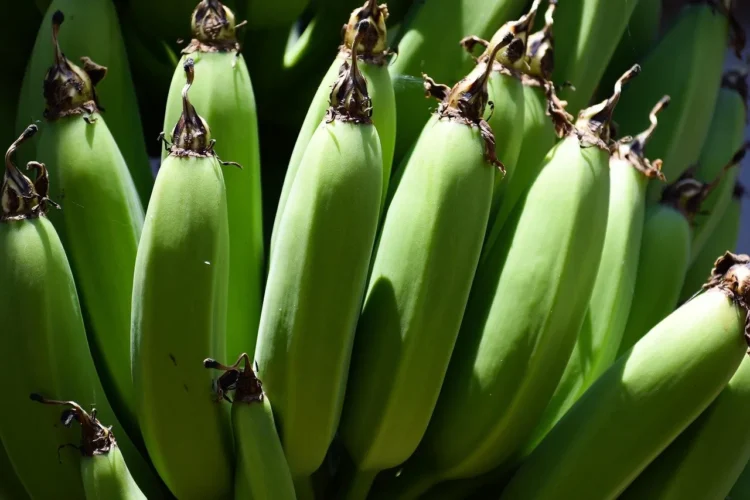
Green plantains are the unripe fruits of a hybrid banana cultivar, treated culinarily as a starchy vegetable rather than a sweet fruit. They serve as a dietary cornerstone across West and Central Africa, the Caribbean, and Latin America, providing a versatile, potato-like starch.
History & Origins
Plantains were first domesticated in the Malay Archipelago and the Philippines around 5000 BCE, spreading westward through Indian Ocean trade into Africa where they became a major staple by the 11th century. Portuguese and Spanish voyagers carried the crop to the Canary Islands and the Americas during the 15th and 16th centuries, where it integrated into Afro-Caribbean and Latin American foodways. Today, West and Central Africa account for roughly 70% of world production, with Cameroon, Ghana, and Nigeria among the largest consumers per capita.
Nutrition Facts
Per 100 g, edible portion (estimated)
- 122 kcalCalories
- 1.3 gProtein
- 0.4 gFat
- 31.9 gCarbs
- 2.3 gFiber
- 15 gSugars
- 499 mgPotassium
- 18.4 mgVitamin C
- 13 mcgVitamin A
Culinary Uses
- Double-fried smashed green slices known as tostones or patacones, especially in Cuba, Puerto Rico, and Colombia
- Mofongo: garlic- and chicharrón-mashed plantain formed into a mound, Puerto Rico
- Boiled and served with stews, palm-oil sauces, or grilled fish across West Africa
- Kelewele and aloco: spiced or chili-glazed fried plantain in Ghana and Côte d'Ivoire
- Thin-sliced and fried or baked into plantain chips, often salted as a snack
Known Benefits
- High in potassium, supporting healthy blood pressure
- Rich in complex carbohydrates for sustained energy
- Naturally gluten-free and easily digestible when cooked
- Good source of vitamin B6, magnesium, and vitamin C
Hidden Benefits
- High content of resistant starch in the green state acts as a prebiotic fiber, feeding beneficial gut bacteria
- Contains bioactive dopamine and low-molecular-weight antioxidants distinct from banana
- Provides slowly digestible starch that produces a flatter postprandial glucose curve than many tubers
- Yellow-to-orange carotenoids accumulate as the peel ripens, even after harvest
Cautions & Considerations
- Raw green plantains are very starchy and difficult to digest; thorough cooking is essential
- Frying preparations add substantial fat and calories
- Portion control is advisable for people with diabetes due to high carbohydrate content
- Individuals with latex-banana allergy syndrome may react to plantain sap





