 (No Ratings Yet)
 Loading...
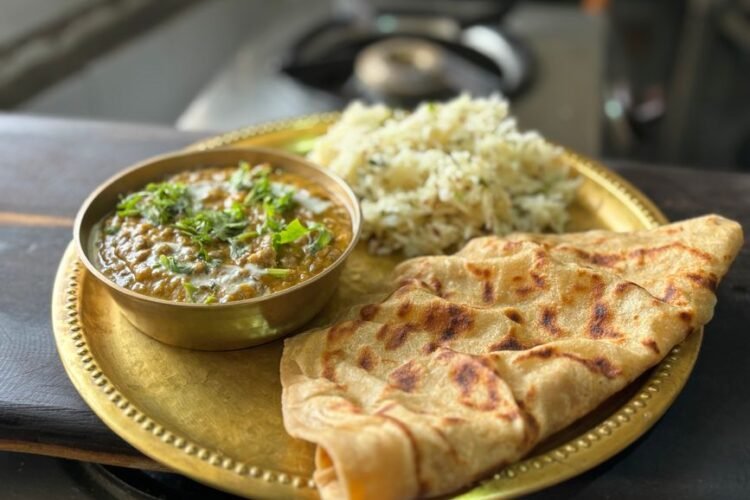
A slow-simmered winter classic from the Punjab, this vibrant mustard green curry is paired with rustic cornmeal flatbread. The saag develops deep flavor from a long cook with tomatoes, ginger, and greens, finished with a sizzling tempering of ghee and cumin.
Prep Time25 mins
Cook Time75 mins
Total Time100 mins
Servings4
Yield4 servings
Nutrition Facts
Per serving (estimated)
- 445 kcalCalories
- 22 gFat
- 7 gSaturated Fat
- 52 gCarbs
- 9 gFiber
- 6 gSugar
- 12 gProtein
- 620 mgSodium
- 980 mgPotassium
- 285 mgCalcium
- 6.5 mgIron
- 58 mgVitamin C
- 640 mcgVitamin A
Ingredients
For the Greens Curry (Saag)
- 500 g fresh mustard greens (sarson), tough stems removed, chopped
- 250 g fresh spinach (palak), chopped
- 100 g fresh fenugreek leaves (methi), optional, chopped
- 2 medium tomatoes, finely chopped
- 1 medium onion, finely chopped
- 1 inch ginger, grated
- 4 garlic cloves, minced
- 2 green chilies, slit
- 3 tbsp mustard oil
- 1 tsp cumin seeds
- 1/4 tsp asafoetida (hing)
- 1 tsp red chili powder
- 1 tsp coriander powder
- 1/2 tsp turmeric powder
- 1 tsp garam masala
- Salt to taste
- 2 cups water
For the Tempering (Tadka)
- 2 tbsp ghee
- 1 small onion, finely chopped
- 1 tsp cumin seeds
- 2 garlic cloves, sliced
- 1 tbsp grated ginger
For the Cornmeal Flatbread (Makki Roti)
- 2 cups yellow cornmeal (makki ka atta)
- 1/2 tsp salt
- 3/4 cup warm water (as needed)
- Ghee for brushing
Directions
- Pressure-cook or boil the mustard greens, spinach, and fenugreek with 2 cups water and 1/2 tsp salt for 6-8 minutes until completely tender, then drain and coarsely blend or mash with a wooden madhani to keep texture rustic.
- Heat mustard oil in a heavy-bottomed kadhai until smoking, lower heat, then add cumin seeds and asafoetida. Once fragrant, add chopped onion, garlic, ginger, and green chilies; sauté for 6-7 minutes until golden.
- Add tomatoes, turmeric, red chili powder, and coriander powder. Cook uncovered for 8-10 minutes, stirring often, until the mixture reduces to a thick, oil-splitting masala.
- Stir in the mashed greens along with any reserved cooking liquid. Simmer on low for 35-40 minutes, stirring occasionally, until the saag darkens and thickens to a spoon-coating consistency.
- Meanwhile prepare the roti dough: mix cornmeal with salt, drizzle warm water gradually, and knead into a soft, pliable dough (cover with a damp cloth – it dries quickly). Divide into 8 balls, flatten each between greased parchment into 5-inch rounds.
- For the tempering, heat ghee in a small pan, add cumin seeds, then sliced garlic, ginger, and chopped onion; cook until onion turns deep golden and pour over the finished saag along with garam masala. Cover for 2 minutes to merge flavors.
- Cook each roti on a hot tawa for 2 minutes per side until golden spots appear, finishing directly over a low flame for puffed edges. Brush with ghee and stack in a cloth.
- Serve the saag in a kathal or bowl with the hot cornmeal flatbread, topped with a generous spoonful of white butter (makhan) and sliced raw onion on the side.
Cook’s Notes
- Traditional saag is mashed rather than pureed to keep its rustic character; do not over-blend or it becomes gluey.
- Make-ahead tip: the saag tastes even better the next day as flavors deepen; reheat with a splash of water.
- If cornmeal dough feels crumbly, wet your palms while shaping each roti to prevent cracking during rolling.
- Substitute mustard oil with ghee for a milder flavor, but mustard oil gives the authentic Punjabi pungency.
- Serve with a wedge of jaggery on the side – the sweet contrast is the classic Punjabi pairing.