 (No Ratings Yet)
 Loading...
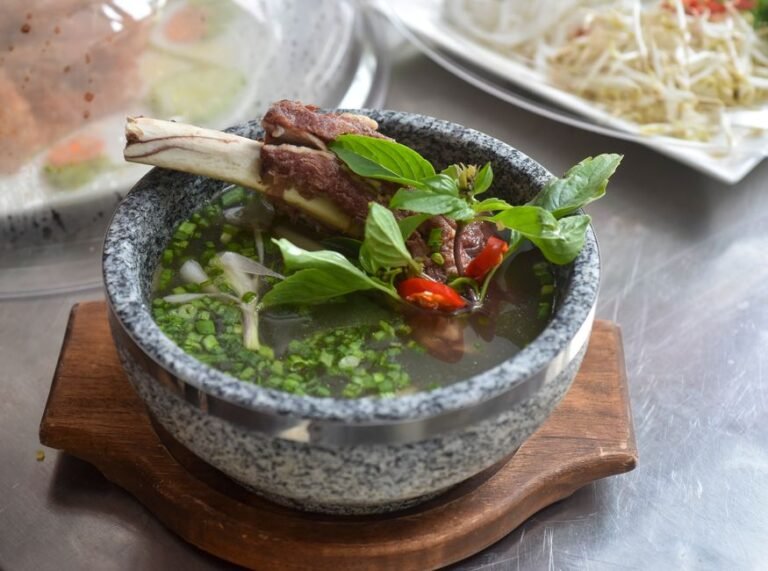
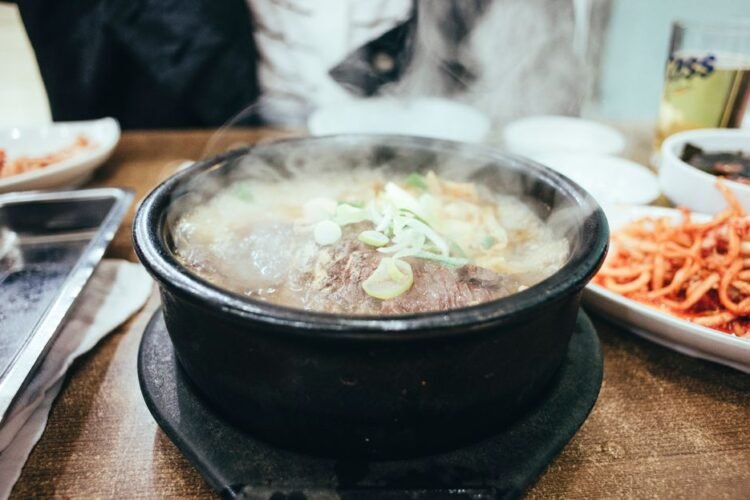
A beloved Seoul specialty built on long-simmered beef bones that release their marrow into an opaque, ivory-white broth. Served simply over rice with sliced beef and scallions, this soup is seasoned at the table so every diner can taste the broth on its own before adding salt and garlic.
Prep Time30 mins
Cook Time420 mins
Total Time450 mins
Servings6
Yield6 bowls (about 1.5 cups broth each, plus rice and beef)
Nutrition Facts
Per serving (estimated)
- 360 kcalCalories
- 13 gFat
- 5 gSaturated Fat
- 16 gCarbs
- 1 gFiber
- 1 gSugar
- 38 gProtein
- 540 mgSodium
- 620 mgPotassium
- 65 mgCalcium
- 4.5 mgIron
- 3 mgVitamin C
- 30 mcgVitamin A
Ingredients
For the broth
- 4 lb beef leg bones (marrow and knuckle, cut into 2- to 3-inch pieces by the butcher)
- 2 lb beef shank, in one piece
- 1 large yellow onion, halved (skin on)
- 1 head garlic, halved crosswise
- 2 inches fresh ginger, thickly sliced
- 2 whole green onions
- 16 cups cold water (about 1 gallon)
- 1 tbsp kosher salt, plus more to taste
- 1/2 tsp ground white pepper
For serving
- 2 cups cooked short-grain white rice, kept warm
- 1 cup finely chopped green onions (white and green parts)
- 1/3 cup minced fresh garlic
- 2 tbsp fine sea salt, for table seasoning
- 1 tsp ground black or white pepper, for table seasoning
- 2 cups diced danggeuni (korean radish kimchi), optional
Optional add-ins
- 1 lb somyeon (thin wheat noodles), cooked and rinsed
- 1 small Korean radish (mu), julienned, optional
Directions
- Soak the bones and beef shank in a large bowl of cold water for 4 to 6 hours or overnight in the refrigerator, changing the water once or twice, to draw out blood and impurities. Drain and rinse well.
- Place the bones and beef shank in a large 12-quart stockpot, cover with cold water, and bring to a vigorous boil over high heat. Boil for 10 minutes, then drain and rinse the bones and meat under cold running water; discard the cloudy water. This blanching step is key to a clean, milky-white broth.
- Return the cleaned bones and beef shank to the pot. Add the onion, garlic, ginger, and whole green onions. Pour in 16 cups of cold water (the bones should be covered by about 2 inches). Bring to a boil over high heat, then reduce the heat to maintain a steady, gentle simmer.
- Skim off any foam that rises during the first hour. Simmer uncovered for 7 hours, adding hot water as needed to keep the bones submerged. The broth should turn an opaque ivory white as the marrow emulsifies and tiny fat droplets disperse. After about 3 hours, lift out the beef shank and refrigerate it in a covered container; return the bones to the pot and continue simmering.
- Strain the broth through a fine-mesh sieve into a clean pot; discard the aromatics and bones (or reserve bones for a second, lighter batch). Season the broth with 1 tablespoon kosher salt and the white pepper, taste, and adjust. The broth should taste rich and beefy but slightly under-seasoned, since diners will salt at the table.
- When the beef shank is cold, slice it as thinly as possible against the grain using a sharp knife or mandoline. Bring the finished broth back to a low simmer and keep it hot.
- To serve, place a mound of warm rice in each of six large soup bowls (or serve rice on the side). Lay several slices of the cold beef over the rice, then ladle the hot milky broth into the bowl. Scatter a generous handful of chopped green onions over the top.
- Pass minced garlic, sea salt, pepper, and kimchi at the table so each diner seasons to taste. Many Seoul diners stir in a pinch of salt and a spoonful of raw garlic directly into the bowl, tasting as they go until the broth is perfectly balanced.
Cook’s Notes
- Ask the butcher to saw the bones into 2- to 3-inch pieces so the marrow is exposed; a mix of knuckle bones and femur pieces gives the creamiest, most flavorful broth.
- In a hurry? Use a pressure cooker: cook bones, beef, and aromatics with 12 cups of water at high pressure for 2 hours, then natural-release; the flavor will be lighter than the traditional 7-hour simmer but still good.
- Keep the simmer gentle but steady. A hard boil emulsifies the fat too aggressively and can make the broth cloudy in the wrong way and slightly greasy on the tongue.
- Save the cooked bones for a second batch of broth within 2 days; it will be thinner but excellent as a base for kalguksu noodle soup or as cooking liquid for sundubu jjigae.
- If the broth seems too rich, skim a few tablespoons of the surface fat off before serving and reserve it for frying rice or sautéing vegetables the next day.