 (No Ratings Yet)
 Loading...
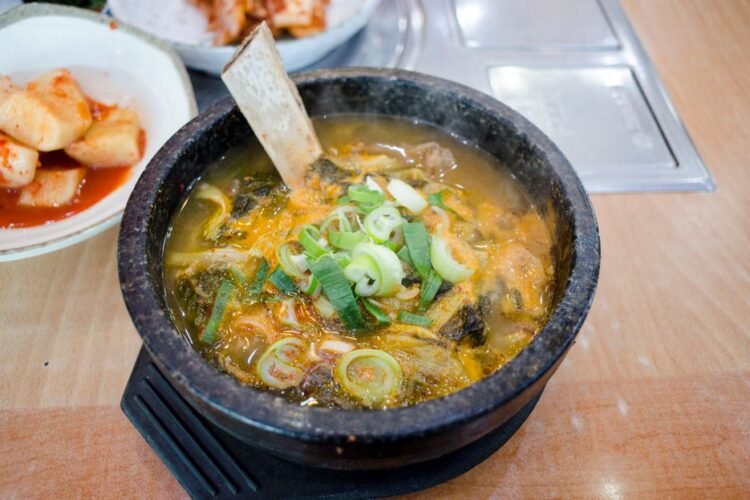
A classic Korean simmer built around beef knee bones, prized for the slippery, gelatin-rich cartilage pieces that soften during a long, gentle boil. The broth turns a clean milky white as marrow and collagen release into the water, then it is finished simply with salt, pepper, and scallions so the pure beef flavor shines.
Prep Time20 mins
Cook Time300 mins
Total Time320 mins
Servings4
Yield4 servings
Nutrition Facts
Per serving (estimated)
- 480 kcalCalories
- 28 gFat
- 11 gSaturated Fat
- 6 gCarbs
- 1 gFiber
- 1 gSugar
- 48 gProtein
- 720 mgSodium
- 580 mgPotassium
- 80 mgCalcium
- 5.5 mgIron
- 4 mgVitamin C
- 25 mcgVitamin A
Ingredients
For the soup base
- 3 lb beef knee bones with cartilage, cut into 2-inch pieces by the butcher
- 1 lb beef shank, cut into thick rounds
- 12 cups cold water, plus more as needed
- 1 large yellow onion, halved (skin on)
- 6 garlic cloves, smashed
- 1 inch fresh ginger, sliced
- 2 dried red chilies (optional, for gentle warmth)
For seasoning and serving
- 1 tbsp Korean fine sea salt, plus more to taste
- 1/2 tsp ground white pepper, plus more for serving
- 4 scallions, thinly sliced
- 1 cup somyeon or other thin wheat noodles, cooked (optional)
- 2 tbsp toasted sesame seeds, crushed
Directions
- Place the knee bones and shank in a large bowl, cover with cold water, and soak for 2 hours, changing the water once, to draw out blood; this keeps the broth clear and clean-tasting.
- Drain the bones and transfer to a tall stockpot. Cover with fresh cold water, bring to a rolling boil over high heat, and boil hard for 8 minutes. Skim the gray scum that rises, then drain and rinse each bone under cool running water, rubbing off any clinging impurities.
- Return the cleaned bones and shank to the rinsed pot. Add the onion halves, smashed garlic, ginger slices, and dried chilies if using. Pour in 12 cups cold water and bring slowly to a bare simmer over medium heat; once bubbles break the surface, reduce to low and partially cover.
- Simmer gently for 4 to 5 hours, maintaining only an occasional lazy bubble so the broth stays milky rather than cloudy. Top up with hot water as needed to keep the bones submerged. The broth should turn pale ivory and feel slightly viscous on the spoon.
- Lift out the onion halves and ginger. Remove the shank and let it cool briefly, then slice the meat thinly against the grain. The cartilage on the knee pieces should now yield to a fork while still holding its shape.
- Stir the fine sea salt and white pepper into the broth and taste; adjust until the soup is lightly seasoned and the beef flavor is pronounced. Warm everything through for 3 to 4 minutes.
- Ladle the milky broth into deep bowls. Divide the sliced shank and 3 to 4 knee bone pieces (with their softened cartilage) into each bowl, scatter sliced scallions on top, and serve hot.
- Pass extra salt, white pepper, crushed sesame seeds, and a small dish of noodles at the table so each diner adjusts the seasoning and adds noodles if they want a heartier bowl.
Cook’s Notes
- A hard initial boil followed by a very gentle simmer is the secret to a milky, non-greasy broth; boiling hard throughout emulsifies too much fat and can cloud the flavor.
- Ask your butcher to crack the knee bones lengthwise so the marrow is exposed; this is what gives doganitang its signature ivory color and rich mouthfeel.
- For the best cartilage texture, simmer a full 5 hours; undercooked cartilage stays rubbery, while fully cooked pieces become pleasantly gelatinous.
- Make a double batch and freeze the extra broth in zip-top bags laid flat; it reheats into a quick base for kimchi jjigae or ramen.
- Add a small splash of soju or rice wine to the parboil step if your bones have a strong beefy aroma; it neutralizes any gaminess without leaving flavor behind.