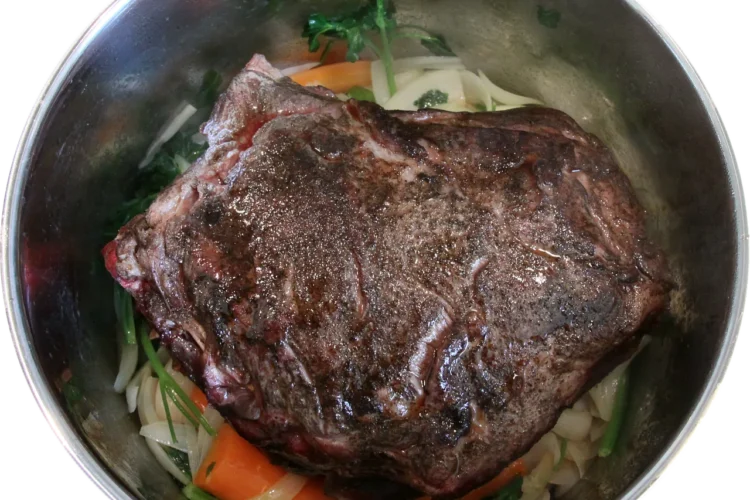
Wild boar meat is a lean, dark game meat with a deep, slightly sweet, nutty flavor, prized in rustic European, Caucasian, and East Asian cuisines. It is markedly lower in fat than domestic pork and is traditionally prepared through slow braising, curing, or roasting.
History & Origins
Wild boar has been hunted for its meat since the Paleolithic, making it one of humanity's oldest protein sources; its bones and tusks appear in Neolithic refuse heaps across Europe and the Levant. In classical antiquity it featured in Greek and Roman banquets, while medieval European nobility reserved it as a prestigious quarry preserved through smoking and curing. Today it remains a cultural cornerstone in Italian, German, Hungarian, Corsican, Russian, and Korean cuisines, and managed hunts supply restaurants worldwide.
Nutrition Facts
Per 100 g, edible portion (estimated)
- 122 kcalCalories
- 21.5 gProtein
- 3.4 gFat
- 0 gCarbs
- 0 gFiber
- 0 gSugars
- 320 mgPotassium
- 1.4 mgIron
Culinary Uses
- Slow-braised shoulder in red wine with juniper and bay (French civet de sanglier)
- Cured and air-dried as Italian prosciutto di cinghiale or German Wildschweinschinken
- Roasted haunch rubbed with garlic, rosemary, and rendered lard
- Korean-style bulgogi marinated in soy, garlic, and gochujang
- Stewed in stews with chestnuts, mushrooms, or root vegetables
Known Benefits
- High in complete protein supplying all essential amino acids
- Rich in heme iron, supporting red blood cell formation
- Good source of vitamin B12 for nerve function
- Lower in saturated fat and calories than most domestic pork cuts
- Provides bioavailable zinc for immune support
Hidden Benefits
- Contains higher natural creatine levels than domestic pork, supporting muscle energy
- Wild foraging diet yields higher omega-3 to omega-6 ratios than feedlot pork
- Provides conjugated linoleic acid (CLA) from pasture feeding
- Darker myoglobin content delivers more readily absorbed iron than lighter meats
Cautions & Considerations
- Must be cooked to at least 63°C (145°F) to inactivate Trichinella spiralis larvae in undercooked wild meat
- Can carry Yersinia enterocolitica; thorough cooking recommended
- Strong, gamey flavor may be off-putting for those unfamiliar with wild meats
- Hanging and aging required for mature boars to tenderize and mellow rank notes





