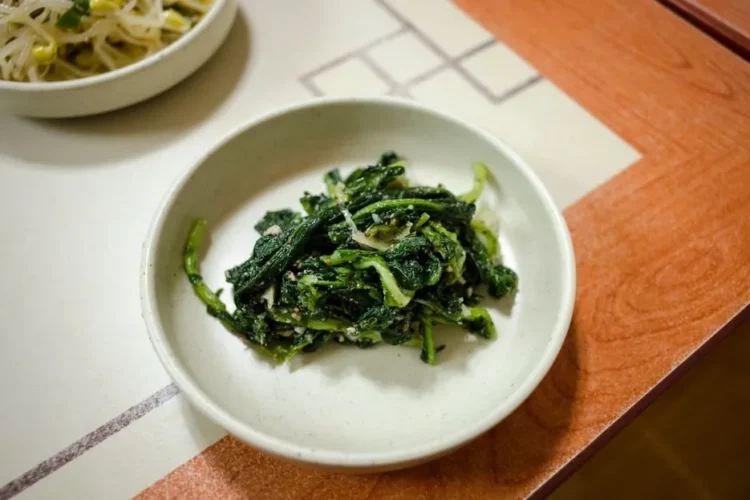
A fast-growing, heat-tolerant perennial climbing vine cultivated for its thick, mucilaginous leaves and tender shoots, forming a staple summer green across South and Southeast Asian kitchens. It is valued both for its spinach-like flavor and for the slippery, okra-like body it imparts to soups and stews.
History & Origins
Malabar spinach has been cultivated in tropical Asia for at least two millennia, with early references appearing in Sanskrit botanical texts from the classical period. Arab traders carried it eastward through the Indian Ocean, and by the 16th and 17th centuries Portuguese and Spanish mariners had introduced it to the Philippines, the Caribbean, and parts of West Africa, where it persists today as a backyard green.
Nutrition Facts
Per 100 g, edible portion (estimated)
- 32 kcalCalories
- 2.0 gProtein
- 0.3 gFat
- 5.6 gCarbs
- 1.9 gFiber
- 1.4 gSugars
- 510 mgPotassium
- 109 mgCalcium
- 1.2 mgIron
- 102 mgVitamin C
- 800 mcgVitamin A
Culinary Uses
- Stir-fried with garlic, shrimp paste, or fermented bean curd in Cantonese and Vietnamese cooking
- Thickened into mucilaginous soups and stews alongside yam, lentils, or dried scallops
- Steamed and dressed with sesame oil, soy sauce, and crispy garlic
- Added to coconut-milk curries and dals in Kerala, Sri Lanka, and Bangladesh
Known Benefits
- Exceptionally high vitamin C content, supporting immune function
- Rich source of iron, folate, and calcium for vegetarian diets
- Provides mucilaginous soluble fiber that soothes the digestive tract
Hidden Benefits
- Deep-red cultivars contain betacyanin and betaxanthin pigments with antioxidant and hepatoprotective activity
- Mucilage polysaccharides (similar to those in okra) help modulate post-meal blood glucose response
- Leaves contain peptides studied for anti-inflammatory and lipid-lowering effects in animal models
Cautions & Considerations
- Notable oxalate content; individuals with calcium-oxalate kidney stones should moderate intake
- Deep-purple-fruited varieties stain fabrics, tiles, and fingertips on contact
- Excessive raw consumption may cause mild gastric upset due to saponins and soluble oxalates