 (No Ratings Yet)
 Loading...
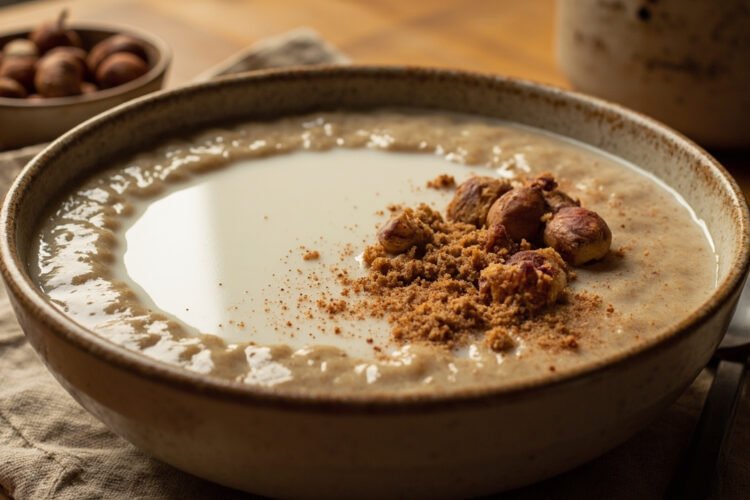
A classic South African breakfast porridge made by naturally fermenting sorghum meal to develop a tangy, slightly effervescent flavor. The fermented grain is then cooked into a creamy, comforting porridge traditionally served with cold milk and sugar for breakfast or supper.
Prep Time15 mins
Cook Time30 mins
Total Time45 mins
Servings4
Yield4 servings
Nutrition Facts
Per serving (estimated)
- 340 kcalCalories
- 6 gFat
- 2.5 gSaturated Fat
- 62 gCarbs
- 6 gFiber
- 14 gSugar
- 10 gProtein
- 320 mgSodium
- 310 mgPotassium
- 160 mgCalcium
- 3.8 mgIron
- 0 mgVitamin C
- 120 mcgVitamin A
Ingredients
For the fermented sorghum base
- 2 cups whole-grain sorghum flour
- 4 cups filtered lukewarm water (about 30°C)
- 1/4 cup active fermented sorghum starter or 2 tablespoons malt extract
- 1 tablespoon raw sugar
- 1 teaspoon lemon juice (to encourage wild fermentation)
 Whole-grain sorghum flour
 Filtered lukewarm water
 Fermented sorghum starter
 Raw sugar
 Lemon juice
For cooking the porridge
- 5 cups water
- 1/2 teaspoon fine sea salt
- 1 tablespoon butter (optional)
 Water
Water Fine sea salt
 Butter
To serve
- 2 cups cold full-cream milk
- 4 to 6 tablespoons brown sugar or honey
- Ground cinnamon, for dusting
- Roasted groundnuts or peanut butter, optional
 Full-cream milk
 Brown sugar
 Ground cinnamon
 Roasted groundnuts
Directions
 Day 1: In a clean glass or ceramic bowl, whisk together the sorghum flour, lukewarm water, starter, sugar, and lemon juice until smooth. The mixture should resemble a thin pancake batter.
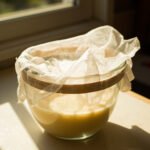 Loosely cover the bowl with a clean cheesecloth secured with a rubber band, and leave at room temperature (24-28°C) for 2 to 3 days. Stir once every 12 hours; you should see small bubbles and a pleasantly tangy, yogurt-like aroma by day 2.
 Once the ferment smells sour and tastes pleasantly tangy (like mild yogurt), give it a final stir. The mixture will appear thinner with a frothy layer on top.
 Pour 5 cups of water into a heavy-bottomed pot, add the salt, and bring to a gentle boil over medium-high heat.
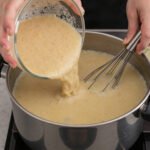 Reduce heat to medium-low and slowly whisk the fermented sorghum mixture into the hot water in a thin, steady stream, whisking constantly to prevent lumps from forming.
 Add the butter if using, then reduce heat to low. Simmer gently for 25 to 30 minutes, whisking frequently and scraping the bottom, until the porridge thickens into a smooth, glossy consistency that coats the back of a spoon.
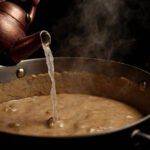 If the porridge becomes too thick, stir in additional hot water a few tablespoons at a time until desired consistency is reached. For thinner ting, stop cooking at 15 minutes.
 Ladle the hot porridge into warmed bowls, then pour a generous splash of cold milk over the top and sprinkle with brown sugar and a dusting of cinnamon.
 Serve immediately, passing extra milk, sugar, and groundnuts at the table. Refrigerate any leftovers in a sealed container for up to 3 days; loosen with a splash of water when reheating.
Cook’s Notes
- Fermentation is essential – it produces natural lactic acid bacteria, giving ting its signature tang and improving mineral absorption from the sorghum.
- Always use a non-reactive bowl (glass, ceramic, or food-grade plastic) for fermenting; metal can interfere with the culture activity and flavor.
- In colder kitchens, place the fermenting bowl near (but not on) a warm appliance, or inside a turned-off oven with the light on to maintain a steady 24-28°C.
- For a savory serving style popular in the Free State, skip the milk and sugar and serve the porridge alongside morogo (wild spinach) or a tomato-and-onion relish.
- If sorghum flour is unavailable, finely ground pearl millet works well; the flavor will be slightly nuttier but still authentically Southern African.