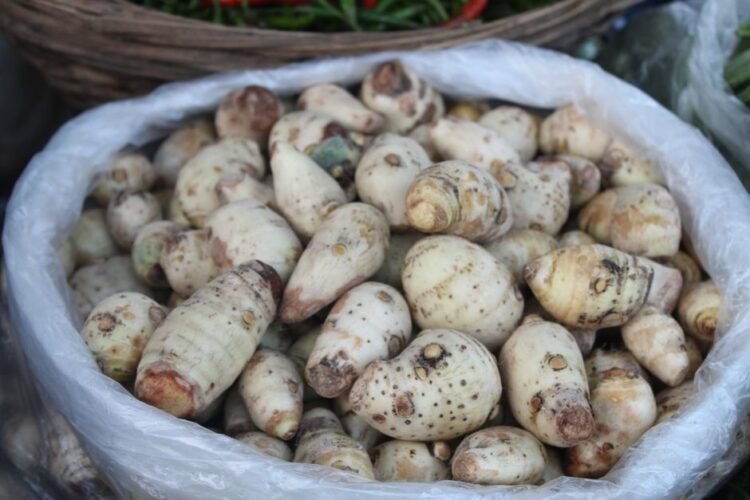
Taro is a root vegetable distinguished by its starchy corm and large heart-shaped leaves, serving as a dietary staple across tropical and subtropical regions worldwide.
CategoryStarches
Scientific nameColocasia esculenta
OriginSoutheast Asia and the Pacific Islands
History & Origins
Taro ranks among the oldest cultivated food plants, with archaeological evidence suggesting domestication in Papua New Guinea approximately 9,000 years ago. The crop spread through Polynesian voyagers who carried it throughout the Pacific islands as a portable food source. It reached the Mediterranean and Africa via ancient trade routes, becoming integral to Caribbean and West African cuisines after the Columbian Exchange. Today, taro remains a primary carbohydrate source for over 500 million people in developing nations.
Nutrition Facts
Per 100 g, edible portion (estimated)
- 58 kcalCalories
- 73 gWater
- 1.5 gProtein
- 0.1 gFat
- 0 gSaturated Fat
- 13 gCarbs
- 1.7 gFiber
- 0.4 gSugars
- 484 mgPotassium
- 29 mgCalcium
- 0.5 mgIron
- 30 mgMagnesium
- 2 mgVitamin C
- 3 mcgVitamin A
- 3 mcgVitamin K
- 19 mcgFolate
Culinary Uses
- Pounded into poi, the traditional Hawaiian staple dish
- Sliced and fried as chips or wedges
- Boiled, mashed, or roasted as a side dish
- Ground into flour for gluten-free baked goods
- Added to soups, stews, and curries for thickening
Known Benefits
- Excellent source of resistant starch, supporting gut health
- High potassium content aids blood pressure regulation
- Provides sustained energy through complex carbohydrates
- Gluten-free alternative for those with celiac disease
- Contains antioxidants including vitamin C and E
Hidden Benefits
- Resistant starch acts as prebiotic fiber, feeding beneficial gut bacteria
- May help improve insulin sensitivity when consumed regularly
- Copper content supports iron metabolism and connective tissue formation
- Mucilaginous quality provides digestive tract soothing effects
- Contains flavonoids with anti-inflammatory properties
Cautions & Considerations
- Must be cooked before eating; raw taro contains calcium oxalate crystals that irritate the mouth and throat
- Consuming large quantities may cause kidney stone formation in susceptible individuals
- May trigger allergic reactions in people sensitive to Araceae family plants
- High oxalate content warrants caution for those with gout or rheumatoid arthritis
- Should be peeled thoroughly as the skin contains compounds that can cause skin irritation