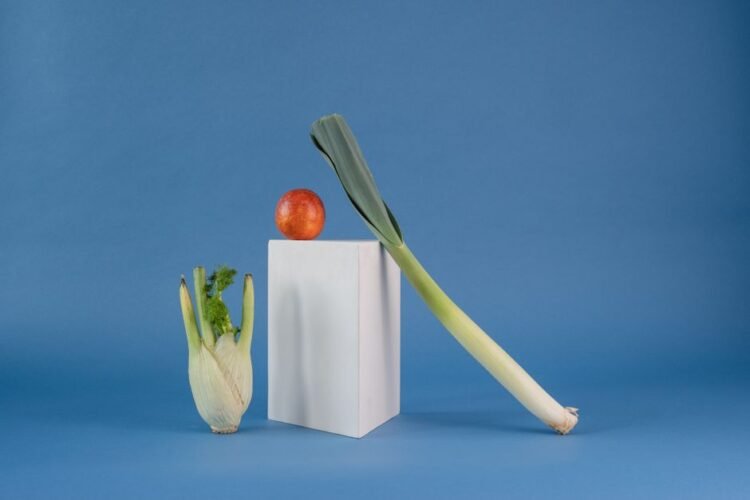
The fennel bulb is the swollen leaf base of the Florence fennel plant, prized for its crisp texture and distinctive anise-flavored flesh, commonly eaten raw or cooked across European, Middle Eastern, and South Asian cuisines.
History & Origins
Fennel has been cultivated since ancient Greek and Roman times, with the Romans using it both as a culinary vegetable and a medicinal herb. The bulb-forming variety, Florence fennel, was developed in Italy during the Renaissance and spread throughout the Mediterranean and beyond. By the 17th century, it had become a staple in French and Italian markets. Its versatility and distinctive flavor ensured its continued popularity across Europe and into North American and Asian markets by the 19th and 20th centuries.
Nutrition Facts
Per 100 g, edible portion (estimated)
- 31 kcalCalories
- 90 gWater
- 1.2 gProtein
- 0.2 gFat
- 0.1 gSaturated Fat
- 7.3 gCarbs
- 3.1 gFiber
- 3.9 gSugars
- 414 mgPotassium
- 49 mgCalcium
- 0.6 mgIron
- 17 mgMagnesium
- 12 mgVitamin C
- 48 mcgVitamin A
- 62.8 mcgVitamin K
- 27 mcgFolate
Culinary Uses
- Thinly sliced raw in salads for a crisp, anise-flavored crunch
- Roasted or braised as a side dish, caramelizing its natural sugars
- Grilled and drizzled with olive oil as a standalone vegetable
- Added to soups and stews for depth of flavor
- Candied or used in desserts in traditional Italian and Middle Eastern recipes
- Finely chopped raw in seafood and fish preparations
Known Benefits
- Rich in dietary fiber supporting digestive health
- Contains potassium for blood pressure regulation
- Provides vitamin C supporting immune function
- Contains vitamin K important for blood clotting and bone health
- Low in calories making it suitable for weight management diets
Hidden Benefits
- Contains anethole, a compound with anti-inflammatory and antimicrobial properties
- Contains limonene, shown in studies to have antioxidant effects
- Provides choline, an essential nutrient for liver function and metabolism
- Contains flavonoids that may support cardiovascular health
- Contains trace minerals like manganese and copper important for enzyme function
Cautions & Considerations
- May cause allergic reactions in individuals sensitive to other Apiaceae family plants (e.g., celery, carrots)
- May interact with certain medications due to its mild diuretic properties
- Raw consumption may cause mild gastrointestinal discomfort in sensitive individuals
- Not recommended in extremely large quantities for individuals on blood-thinning medication due to vitamin K content


