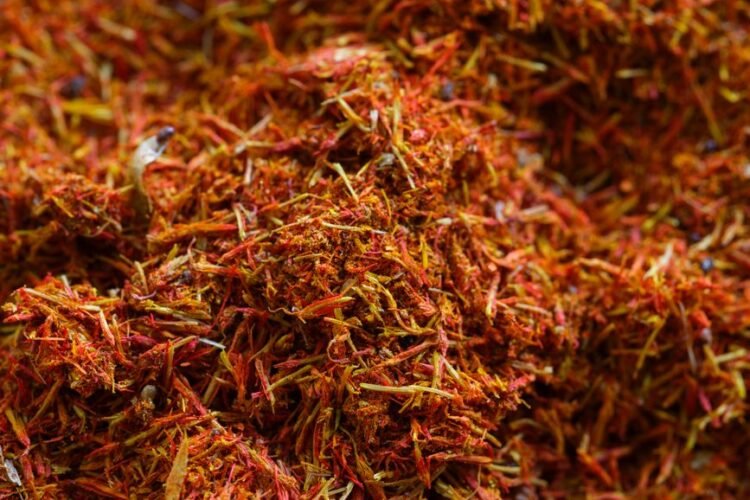
Saffron is the world's most expensive spice, consisting of the dried stigmas of the crocus flower, prized for its intense golden color, distinctive aroma, and complex flavor with notes of honey, hay, and slight bitterness.
History & Origins
Saffron has been cultivated for over 3,500 years, with origins tracing to Greece and Southwest Asia, where it was used in ancient Minoan rituals, Persian carpets, and Egyptian medicinal preparations. It was a highly valued commodity along the Silk Road, traded across the Mediterranean, Middle East, and into India and China. Ancient Greeks and Romans used saffron for perfumes, dyes, and as a luxurious seasoning, while medieval European apothecaries prescribed it for digestive ailments and respiratory conditions. The spice requires meticulous hand-harvesting, as each flower yields only three stigmas, making it extraordinarily labor-intensive.
Nutrition Facts
Per 100 g, edible portion (estimated)
- 310 kcalCalories
- 11.9 gWater
- 11.4 gProtein
- 5.9 gFat
- 1.6 gSaturated Fat
- 65.4 gCarbs
- 3.9 gFiber
- 1.6 gSugars
- 1724 mgPotassium
- 111 mgCalcium
- 11.1 mgIron
- 264 mgMagnesium
- 80.8 mgVitamin C
- 27 mcgVitamin A
- 4.4 mcgVitamin K
- 93.8 mcgFolate
Culinary Uses
- Essential in Spanish paella, Persian saffron rice, and Italian risotto alla milanese
- Used to flavor and color breads, pastries, liqueurs, and tea in many cultures
- Added to Moroccan tagines, Indian biryanis, and French bouillabaisse for depth and color
- Steeped in warm water or milk to release color and aroma before adding to dishes
- Employed as a natural food coloring agent in cheeses, butters, and confectioneries
Known Benefits
- Contains crocin and crocetin, powerful antioxidant carotenoids that give it color
- Traditional mood enhancer and mild sedative in Persian and Greek folk medicine
- Supports digestive health and has been used to relieve stomach discomfort
- Anti-inflammatory properties attributed to safranal content
- May support eye health due to antioxidant compounds protecting retinal cells
Hidden Benefits
- May improve memory and cognitive function through neuroprotective mechanisms
- Contains compounds that research suggests may help regulate blood sugar levels
- Saffron extract has shown potential in reducing appetite and supporting weight management
- Contains vitamins and minerals that support immune function, including zinc and selenium
- Emerging studies indicate possible cardiovascular benefits through improved blood lipid profiles
Cautions & Considerations
- High doses (more than 1.5 g/day) may cause toxicity symptoms including nausea, dizziness, and vivid dreams
- Should be avoided during pregnancy as it may stimulate uterine contractions
- May interact with anticoagulant medications due to potential antiplatelet effects
- Allergic reactions are possible, particularly in individuals sensitive to other Crocus species
- adulteration with cheaper dyes like tartrazine or sudan dye is a known market concern