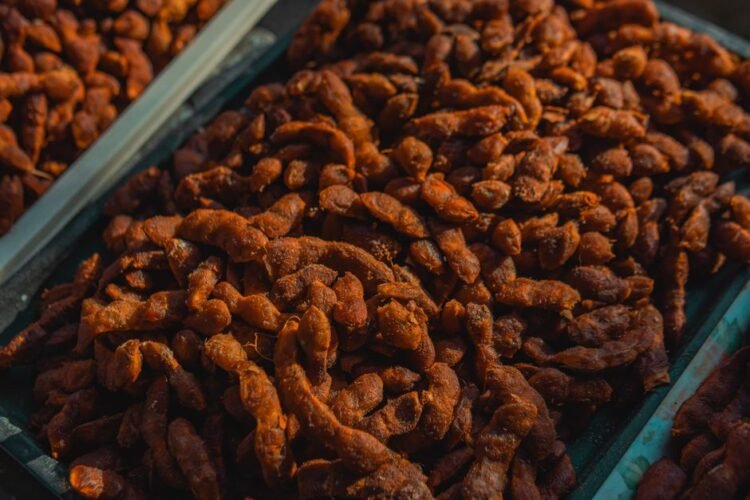
Tamarind is the sweet-sour pod of the long-lived tropical tree Tamarindus indica, whose sticky brown pulp is a foundational flavoring ingredient across South Asian, Latin American, Middle Eastern, and Southeast Asian cuisines. The fruit combines high acidity with concentrated natural sugars, lending a uniquely tangy, slightly caramel-like taste.
History & Origins
Although tamarind was cultivated in India so early that early botanists assumed it was native there, genetic and linguistic evidence point to tropical Africa as its original home, with introduction to South Asia likely via prehistoric human transport or migrating bird dispersal. Arab traders carried it through the Middle East and Mediterranean by the medieval period, and Spanish and Portuguese colonists dispersed it across the Caribbean, Mexico, and Latin America between the 16th and 17th centuries, where it became deeply integrated into regional foodways.
Nutrition Facts
Per 100 g, edible portion (estimated)
- 239 kcalCalories
- 2.8 gProtein
- 0.6 gFat
- 62.5 gCarbs
- 5.1 gFiber
- 38.0 gSugars
- 628 mgPotassium
- 3.5 mgVitamin C
- 2 mcgVitamin A
Culinary Uses
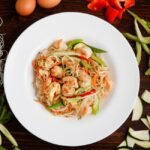
- Base for tamarind water and pulp pastes used in Indian chutneys, Thai pad Thai sauce, and Mexican agua fresca
- Key ingredient in Worcestershire sauce, jerk marinades, and certain barbecue sauces
- Used in confections such as tamarind pulp rolled in sugar, pulparindo-style candies, and Mexican tamarind candies spiced with chili
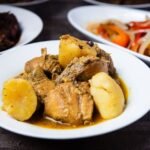
- Incorporated into savory braises and stews including sinigang (Philippines), saar (India), and sweet-and-sour dishes
Known Benefits
- Rich in magnesium, potassium, and iron
- Provides polyphenols and tartaric acid with antioxidant activity
- Traditionally used to aid digestion and as a mild laxative
Hidden Benefits
- Tartaric acid may moderate postprandial blood glucose response by displacing simple sugars
- Contains lupeol and other phytochemicals studied in vitro for anti-inflammatory and antimicrobial effects
- Naturally occurring tartaric acid can enhance mineral absorption in the gut
Cautions & Considerations
- Dried pulp is calorie- and sugar-dense; portion control is important for low-sugar diets
- May interact with blood-thinning medications due to natural salicylates and trace vitamin K content
- Excessive consumption can produce a strong laxative effect or lower blood sugar in sensitive individuals