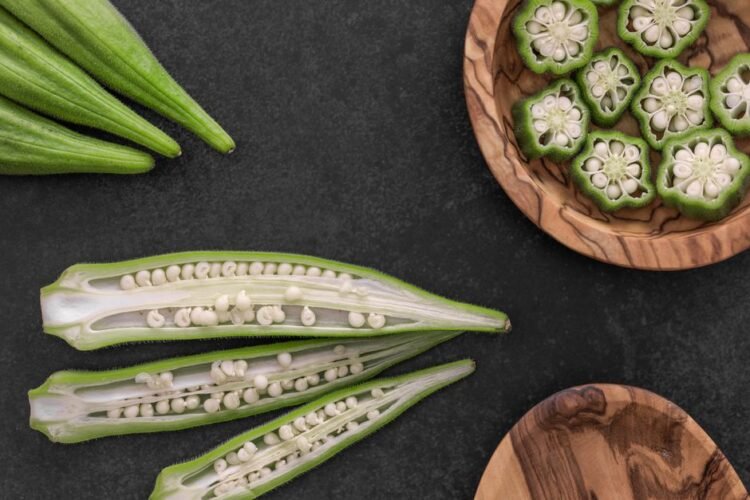
Okra is a warm-season flowering plant in the mallow family cultivated for its immature green seed pods, which are eaten as a vegetable in cuisines from West Africa and the Middle East to the Caribbean, the American South, and South Asia.
History & Origins
Okra was likely first domesticated in the Ethiopian highlands or West African savannas, with carbonized remains dating its cultivation in Egypt to at least the 12th Dynasty (c. 1500 BCE); it spread eastward into the Indian subcontinent and westward across the Atlantic through the slave trade, becoming a defining ingredient of Louisiana Creole and Lowcountry cooking. By the medieval period it was a staple of Mughal gardens, and it reached Western European kitchens via the Ottoman Empire in the 17th century.
Nutrition Facts
Per 100 g, edible portion (estimated)
- 33 kcalCalories
- 1.9 gProtein
- 0.2 gFat
- 7.5 gCarbs
- 3.2 gFiber
- 1.5 gSugars
- 299 mgPotassium
- 82 mgCalcium
- 57 mgMagnesium
- 23 mgVitamin C
- 36 mcgVitamin A
- 60 mcgFolate
Culinary Uses
- Thickening agent in stews such as Louisiana gumbo and Senegalese thiéboudienne through its mucilaginous sap
- Dry-roasted, ground, or stuffed in South Indian bhindi preparations and Andhra curries
- Pickled whole in vinegar brine as a Middle Eastern and Balkan mezze
- Breaded and deep-fried in the American South and the Caribbean
- Stir-fried with garlic, ginger, and chilies in Chinese and Southeast Asian cooking
- Added to rice dishes like jambalaya and Persian bamieh-polo for color and body
Known Benefits
- Rich in soluble and insoluble dietary fiber supporting digestive regularity
- Good source of vitamin C and polyphenols that contribute to antioxidant defenses
- Provides folate, vitamin K, and iron important for blood and bone health
- Very low in calories and fat, suitable for weight-management diets
Hidden Benefits
- Mucilaginous polysaccharides may slow glucose absorption and support glycemic control
- Contains lutein and zeaxanthin carotenoids that concentrate in the retina and support eye health
- Mature seeds yield an edible oil high in linoleic acid and contain protein comparable to legumes
- Saponins and flavonoids show anti-inflammatory activity in preliminary laboratory studies
Cautions & Considerations
- Frequent contact can cause contact dermatitis in handlers sensitive to Malvaceae plants
- Contains oxalates; individuals with a history of calcium-oxalate kidney stones should limit intake
- High-FODMAP soluble fiber may provoke symptoms in those with irritable bowel syndrome
- Possible hypoglycemic effect may amplify the action of diabetes medications