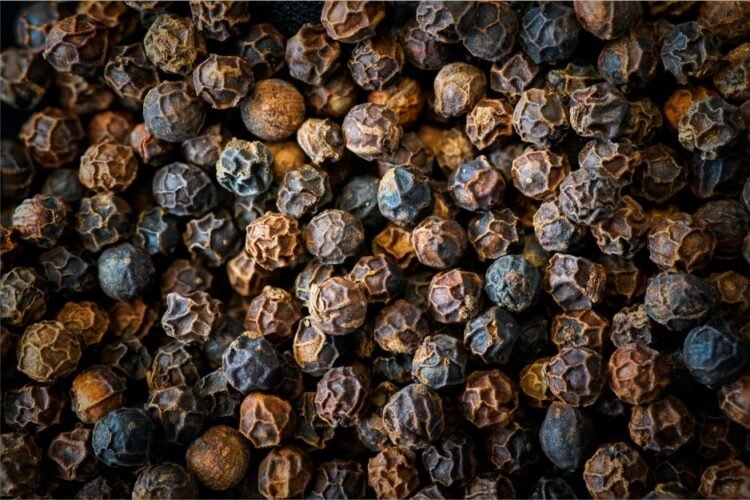
Black pepper, the dried unripe drupes of the flowering vine Piper nigrum, is the world's most traded spice and is foundational to nearly every global cuisine. Its pungency comes from the alkaloid piperine, which lends both heat and the ability to enhance the bioavailability of other compounds.
CategorySpices
Scientific namePiper nigrum
OriginWestern Ghats of India (Malabar Coast), Kerala
History & Origins
Black pepper has been cultivated in the Malabar Coast for at least 4,000 years, with Sanskrit and Tamil texts documenting its use as both food and medicine. It became one of the earliest commodities of long-distance trade, fueling Arab monopoly routes and later driving Portuguese, Dutch, and British colonial ambitions in the East Indies, where it was sometimes valued as currency.
Nutrition Facts
Per 100 g, edible portion (estimated)
- 251 kcalCalories
- 10.4 gProtein
- 3.3 gFat
- 64 gCarbs
- 25 gFiber
- 0.6 gSugars
- 1329 mgPotassium
- 443 mgCalcium
- 9.7 mgIron
- 0 mgVitamin C
Culinary Uses
- Universal table seasoning in mills and cracked form, used across European, American, and Asian kitchens
- Key component of French quatre épices, Indian garam masala, Ethiopian berbere, and Chinese five-spice blends
- Coarsely cracked peppercorns crust steaks for steak au poivre and charcuterie such as saucisson
- Tellicherry and Lampong varieties prized for whole-steeping in brines, vinegars, and pickling liquids
- White pepper (the same berry with husk removed) preferred in pale sauces, Chinese soups, and Swedish meatballs for visual neutrality
Known Benefits
- Piperine stimulates digestive enzymes and gastric secretions, traditionally used as a carminative
- Rich in manganese and provides antioxidant compounds including piperine and flavonoids
- May support respiratory health and has been used in Ayurvedic steam therapies for sinus relief
Hidden Benefits
- Piperine increases bioavailability of curcumin by up to 2000%, enhancing effects when combined with turmeric
- May improve absorption of selenium, vitamin B6, beta-carotene, and certain pharmaceuticals
- Contains trace amounts of safrole and other minor alkaloids studied for thermogenic and metabolic effects
Cautions & Considerations
- High doses may irritate the gastrointestinal lining and worsen ulcers or GERD symptoms
- Piperine inhibits CYP3A4 and P-glycoprotein, potentially altering metabolism of prescription drugs such as anticoagulants and antiepileptics
- Essential oil of pepper is a strong mucous membrane and skin irritant and should be diluted
- Rare cross-reactivity reported in people allergic to other Piperaceae family plants