 (No Ratings Yet)
 Loading...
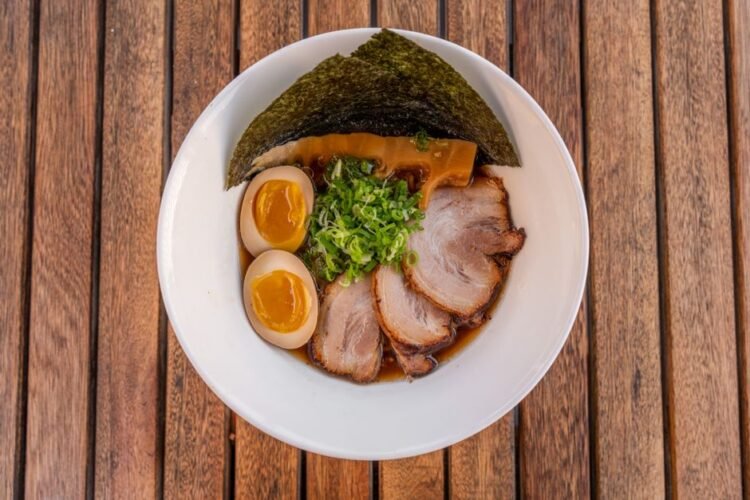
This classic Japanese Shoyu Ramen features a clear amber broth seasoned with soy sauce, mirin, and sake. The savory chicken and dashi base is layered with aromatic sesame oil, garlic, and ginger, then topped with tender chashu, jammy marinated egg, and crisp fresh vegetables. Each slurpable bowl balances deep umami with refreshing toppings for an authentic ramen experience at home.
Prep Time20 mins
Cook Time50 mins
Total Time70 mins
Servings4
Yield4 servings
Nutrition Facts
Per serving (estimated)
- 585 kcalCalories
- 22 gFat
- 6 gSaturated Fat
- 62 gCarbs
- 4 gFiber
- 6 gSugar
- 34 gProtein
- 1820 mgSodium
- 640 mgPotassium
- 85 mgCalcium
- 5 mgIron
- 9 mgVitamin C
- 160 mcgVitamin A
Ingredients
For the Tare (Seasoning Base)
- 1/2 cup soy sauce
- 3 tablespoons mirin
- 2 tablespoons sake
- 1 tablespoon rice vinegar
- 1 teaspoon granulated sugar
For the Broth
- 8 cups low-sodium chicken stock
- 4 cups dashi (made from kombu and katsuobushi)
- 8 garlic cloves, smashed
- 2-inch piece fresh ginger, sliced
- 2 dried shiitake mushrooms
- 3 green onions, white parts only
- 1/4 cup mirin
- 1/4 cup sake
For the Aromatic Oil
- 3 tablespoons toasted sesame oil
- 4 garlic cloves, finely minced
- 1 tablespoon freshly grated ginger
For Assembly
- 1.5 lbs fresh ramen noodles
- 4 large eggs
- 8 slices chashu pork (about 8 oz)
- 4 sheets nori seaweed
- 1 cup menma (bamboo shoots), drained
- 1 cup fresh bean sprouts, blanched
- 4 green onions, thinly sliced
- 1 tablespoon toasted sesame seeds
Directions
- Make the tare: In a small saucepan, combine 1/2 cup soy sauce, 3 tablespoons mirin, 2 tablespoons sake, rice vinegar, and sugar. Bring to a gentle simmer over medium heat, stirring until the sugar fully dissolves. Remove from heat and set aside to cool.
- Soft-boil the eggs: Bring a medium pot of water to a rolling boil. Carefully lower the eggs in with a slotted spoon and cook exactly 6 minutes 30 seconds. Transfer immediately to an ice bath for 5 minutes, then peel. Place the peeled eggs in a small container and pour half of the cooled tare over them; marinate at least 30 minutes, or refrigerate overnight for best flavor.
- Prepare the broth: In a large stockpot, combine the chicken stock, dashi, smashed garlic, sliced ginger, dried shiitake, and green onion whites. Bring to a gentle simmer over medium heat and cook uncovered for 30 minutes. Strain the broth through a fine-mesh sieve, discard the solids, and return the liquid to the pot. Stir in the 1/4 cup mirin and 1/4 cup sake, then keep warm over low heat.
- Make the aromatic oil: Heat the sesame oil in a small skillet over medium-low heat. Add the minced garlic and grated ginger and cook 1 to 2 minutes until fragrant and just beginning to turn golden, watching carefully to prevent burning. Remove from heat and set aside.
- Cook the noodles: Bring a large pot of unsalted water to a vigorous boil. Add the fresh ramen noodles and cook according to package directions, usually 2 to 3 minutes until tender but still chewy. Drain well and divide evenly among 4 large, deep serving bowls.
- Heat the chashu: Warm the chashu slices by briefly dunking them in the hot broth for 30 seconds, or sear them in a dry skillet for 1 minute per side until lightly caramelized.
- Assemble the bowls: Add 1 to 2 tablespoons of the reserved (unmarinated) tare to the bottom of each bowl. Ladle about 2 cups of hot broth over the noodles, then drizzle 1 tablespoon of the aromatic oil across the surface of each bowl.
- Garnish and serve: Top each bowl with 2 slices of chashu, half a marinated egg (cut lengthwise), one sheet of nori standing against the side, a small mound of menma, a handful of bean sprouts, and a generous sprinkle of sliced green onions and sesame seeds. Serve immediately and slurp while piping hot.
Cook’s Notes
- For deeper, more complex flavor, make the broth a day ahead, refrigerate it overnight, and skim any solidified fat from the surface before reheating.
- Marinate the soft-boiled eggs in the tare for at least 2 hours, ideally overnight, to develop that signature amber color and savory flavor.
- Fresh ramen noodles are available at most Asian grocery stores and yield the best texture; high-quality dried ramen can be substituted, just follow the package timing.
- Store-bought chashu works beautifully here, but you can also use 8 oz of thinly sliced roasted chicken thigh or rotisserie pork as an easy alternative.
- Adjust the amount of tare and finishing soy sauce to taste, as salt levels vary widely between Japanese and Chinese soy sauce brands.