 (No Ratings Yet)
 Loading...
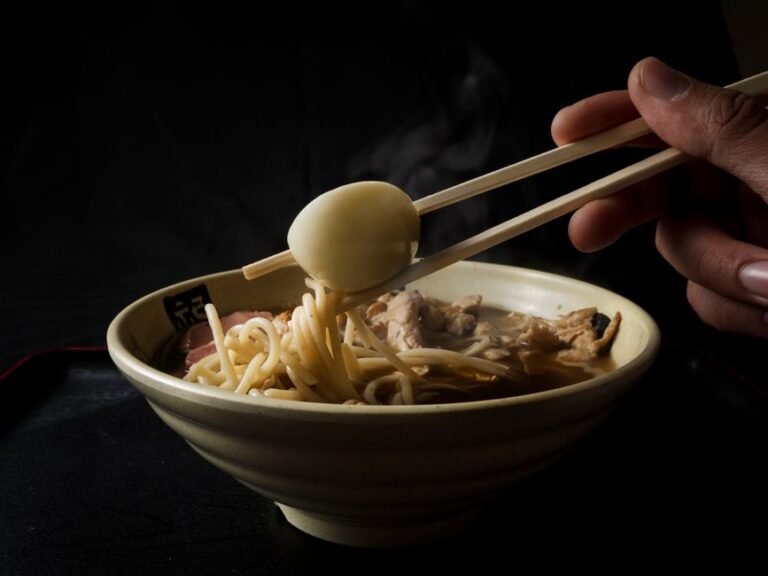
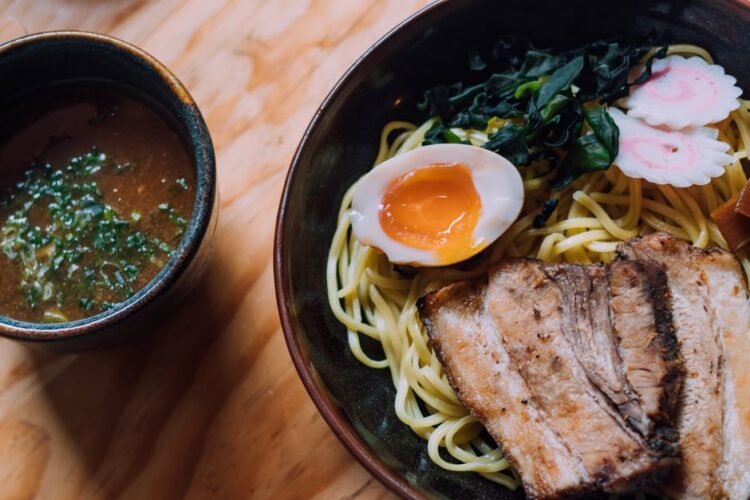
Tonkotsu Ramen hails from Fukuoka, where pork bones are simmered for many hours until the broth turns a creamy, opaque ivory color from rendered collagen. This rich, savory bowl is layered with seasoned tare, tender braised chashu, jammy marinated eggs, and springy wheat noodles. Although the broth demands patience, most of the time is hands-off, making it a deeply rewarding weekend project for serious home cooks.
Prep Time40 mins
Cook Time600 mins
Total Time640 mins
Servings4
Yield4 large bowls
Nutrition Facts
Per serving (estimated)
- 780 kcalCalories
- 38 gFat
- 14 gSaturated Fat
- 62 gCarbs
- 2 gFiber
- 9 gSugar
- 45 gProtein
- 2100 mgSodium
- 780 mgPotassium
- 95 mgCalcium
- 5 mgIron
- 6 mgVitamin C
- 110 mcgVitamin A
Ingredients
For the Tonkotsu Broth
- 4 lb pork neck bones
- 2 lb pork trotters or pig feet, split lengthwise
- 1 lb chicken backs or wings
- 14 cups cold water, plus hot water as needed
- 1 large white onion, halved and charred
- 8 garlic cloves, smashed
- 2-inch piece fresh ginger, smashed
- 4 green onions, white parts only
For the Shoyu Tare
- 1/2 cup soy sauce
- 3 tablespoons mirin
- 1 tablespoon sake
- 1 teaspoon toasted sesame oil
- 2 garlic cloves, finely grated
- 1 teaspoon finely grated fresh ginger
For the Braised Chashu
- 1.5 lb pork belly slab, skin on
- 1/2 cup soy sauce
- 1/4 cup mirin
- 1/4 cup sake
- 2 tablespoons brown sugar
- 3 garlic cloves, smashed
- 1-inch piece ginger, sliced
For the Marinated Eggs and Assembly
- 4 large eggs, cold from the fridge
- 1/3 cup soy sauce
- 3 tablespoons mirin
- 2 tablespoons water
- 1 lb fresh ramen noodles
- Thinly sliced green onions, nori sheets, menma, and black garlic oil, to serve
Directions
- Cover the pork neck bones, trotters, and chicken parts with cold water in a large stockpot, bring to a hard boil, and boil vigorously for 10 minutes; drain, rinse the bones under cold water, and scrub the pot clean to remove all scum.
- Return the cleaned bones to the pot with 14 cups of fresh cold water, the charred onion, garlic, ginger, and green onion whites. Bring to a vigorous boil, then maintain a strong rolling boil uncovered for 8 to 10 hours, adding hot water as needed to keep the bones submerged and skimming gray foam from the surface early on.
- Meanwhile, make the chashu: roll the pork belly into a tight cylinder, tie with kitchen twine at 1-inch intervals, and sear on all sides in a dry skillet over medium-high heat until deep golden brown.
- Transfer the seared pork to a small pot with the soy sauce, mirin, sake, brown sugar, garlic, and ginger. Add water to nearly cover, bring to a gentle simmer, cover, and braise over very low heat for 90 minutes until fork-tender. Cool completely in the liquid, then slice into 1/4-inch rounds just before serving.
- For the eggs, lower the cold eggs into boiling water and cook exactly 7 minutes for a jammy yolk. Transfer to an ice bath, peel carefully, and soak in a zip-top bag with the soy sauce, mirin, and water for at least 4 hours, ideally overnight in the fridge.
- Strain the finished broth through a fine-mesh sieve, pressing on the solids to extract every drop of the milky liquid. Whisk 2 tablespoons of tare into the bottom of each warmed serving bowl, then ladle in about 2 cups of the piping-hot broth.
- Boil the ramen noodles in a separate pot of water according to package directions, typically 2 to 3 minutes until just tender, drain well, and divide among the bowls.
- Top each bowl with a few slices of chashu, a halved marinated egg, a generous shower of green onions, a sheet of nori, a spoonful of menma, and a drizzle of black garlic oil. Serve immediately while steaming hot.
Cook’s Notes
- A vigorous rolling boil, not a gentle simmer, is what emulsifies the collagen into the signature milky-white broth; do not reduce the heat too low.
- Char the onion over an open gas flame or in a dry cast-iron skillet until deeply blackened for a smoky backbone in the finished broth.
- For the cleanest bowl, make the broth a day ahead, refrigerate overnight, and scrape off the solidified fat layer before reheating and seasoning.
- Use a pressure cooker to cut the broth time to about 2 hours at high pressure, though the texture will be slightly thinner than the traditional long-simmered version.
- Fresh ramen noodles from the refrigerated section of an Asian market deliver far better chew than dried varieties and are worth seeking out.