 (No Ratings Yet)
 Loading...
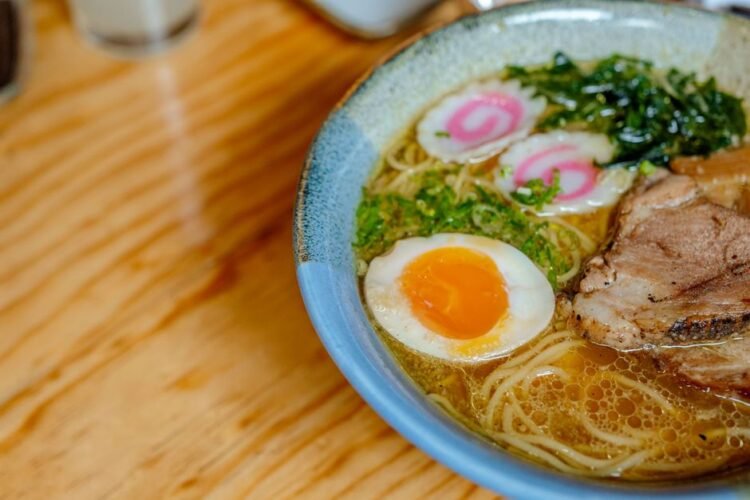
Shio ramen is the lightest and oldest of Japan's four major ramen styles, built on a clear chicken and dashi broth seasoned with salt. The goal is a clean, deeply savory soup that lets the quality of the broth shine through rather than masking it with heavy tare. Served with tender chashu, a jammy marinated egg, and crisp fresh toppings, it is an elegant weeknight bowl.
Prep Time20 mins
Cook Time55 mins
Total Time75 mins
Servings4
Yield4 large bowls
Nutrition Facts
Per serving (estimated)
- 640 kcalCalories
- 28 gFat
- 9 gSaturated Fat
- 58 gCarbs
- 3 gFiber
- 8 gSugar
- 38 gProtein
- 1820 mgSodium
- 720 mgPotassium
- 95 mgCalcium
- 4 mgIron
- 6 mgVitamin C
- 95 mcgVitamin A
Ingredients
For the chicken and kombu broth
- 2 lb chicken wings and backs
- 10 cups cold water
- 1 piece dried kombu (about 4 inches)
- 4 dried shiitake mushrooms
- 1 large yellow onion, halved (skin on)
- 5 garlic cloves, smashed
- 1-inch knob fresh ginger, sliced
- 2 scallions, lightly crushed
For the salt tare
- 3 tbsp fine sea salt
- 2 tbsp mirin
- 1 tbsp rice vinegar
- 1 tsp toasted sesame oil
- 1/2 tsp ground white pepper
- 2 garlic cloves, finely grated
For the braised chashu pork
- 1 lb skinless pork belly, rolled and tied
- 1 cup water
- 1/4 cup soy sauce
- 3 tbsp mirin
- 2 tbsp sake
- 1 tbsp sugar
- 1 scallion, smashed
- 2 slices fresh ginger
For the marinated soft-boiled eggs
- 4 large eggs, cold from the fridge
- 1/3 cup soy sauce
- 1/3 cup mirin
- 1/4 cup water
- 1 tsp sugar
For assembly
- 14 oz fresh ramen noodles
- 2 scallions, thinly sliced
- 4 sheets nori, halved
- 1 cup prepared menma (bamboo shoots), warmed
- 1 tsp white sesame seeds, toasted
- chili oil, for serving (optional)
Directions
- Make the chashu: pat the pork belly dry, sear in a dry skillet over medium-high heat until golden on all sides, then transfer to a small pot with water, soy sauce, mirin, sake, sugar, scallion, and ginger. Bring to a simmer, cover, and braise gently for 45 minutes, turning once, until fork-tender. Cool in the liquid, then chill until firm enough to slice.
- Soft-boil the eggs: bring a pot of water to a gentle boil, lower the eggs in carefully, and cook exactly 7 minutes. Transfer to an ice bath, peel, and place in a zip-top bag. Whisk soy sauce, mirin, water, and sugar together, pour over the eggs, and marinate at least 4 hours, preferably overnight.
- Build the broth: combine chicken bones, cold water, kombu, shiitake, onion, garlic, ginger, and scallions in a large pot. Bring slowly to a bare simmer over medium heat, skimming any foam. Simmer uncovered for 40 minutes, then remove and discard the kombu. Strain the broth through a fine-mesh sieve and keep at a low simmer.
- Whisk the salt tare: in a small bowl, combine sea salt, mirin, rice vinegar, sesame oil, white pepper, and grated garlic until the salt fully dissolves. Set aside.
- Assemble the bowls: place 1 tablespoon of the salt tare (plus more to taste) in each warmed bowl. Ladle in about 2 cups of the hot broth and stir gently to combine.
- Cook the noodles: in a separate pot of boiling water, cook the ramen noodles according to package directions, usually 2 to 3 minutes for fresh. Drain well and divide among the bowls.
- Top each bowl with a few slices of chashu, one halved marinated egg, a spoonful of menma, sliced scallions, half a sheet of nori, and a sprinkle of sesame seeds.
- Serve immediately with chili oil on the side for those who want a little heat.
Cook’s Notes
- For the clearest broth, blanch the chicken bones in boiling water for 5 minutes, rinse, and then proceed with the simmer.
- Never let the broth boil hard; a bare, lazy simmer keeps it crystal clear and delicate.
- Marinate the eggs longer for a deeper brown color and more intense flavor; they keep up to 3 days in the fridge.
- The salt tare can be made up to 1 week ahead and stored in a sealed jar in the refrigerator.
- Taste your tare with a spoonful of broth before salting the bowls; broths vary in sodium depending on how long you simmer.