 (No Ratings Yet)
 Loading...
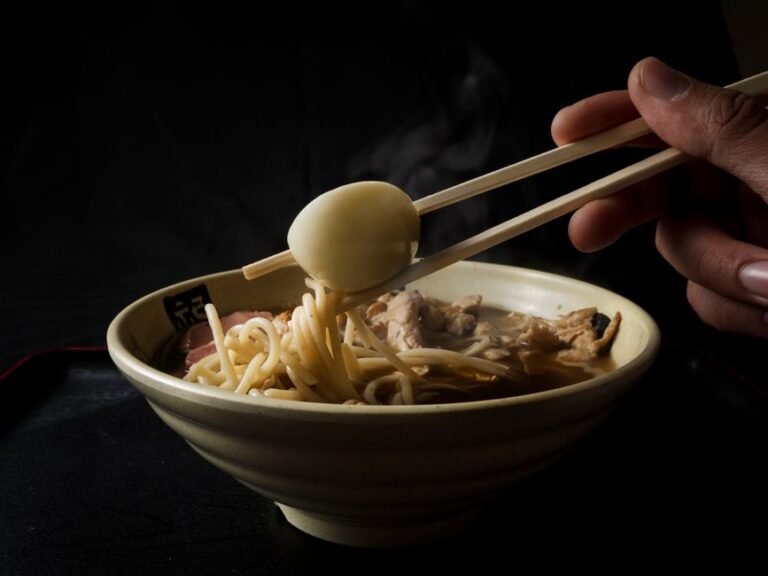
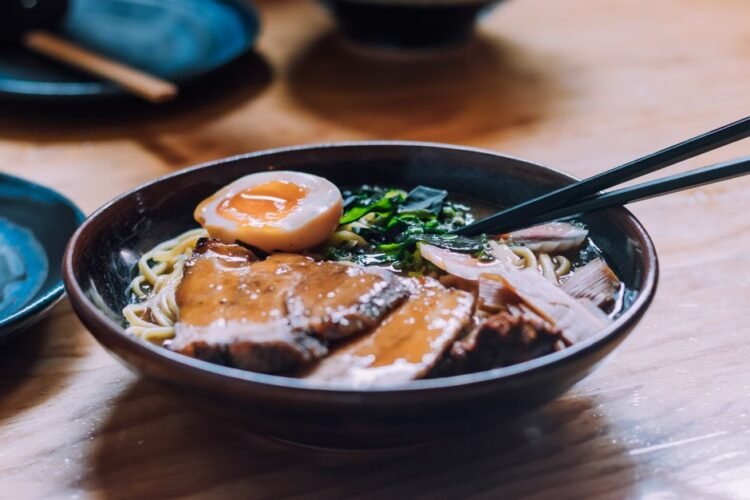
Tsukemen is a Japanese noodle dish where thick, chewy wheat noodles are served alongside an intensely concentrated dipping broth rather than submerged in it. Each bite is dipped into the savory pork-and-chicken broth, then topped with slices of slow-braised chashu and a marinated soft-boiled egg for the ultimate umami-rich experience.
Prep Time20 mins
Cook Time50 mins
Total Time70 mins
Servings4
Yield4 servings
Nutrition Facts
Per serving (estimated)
- 740 kcalCalories
- 28 gFat
- 9 gSaturated Fat
- 78 gCarbs
- 4 gFiber
- 9 gSugar
- 44 gProtein
- 1820 mgSodium
- 780 mgPotassium
- 95 mgCalcium
- 6 mgIron
- 6 mgVitamin C
- 180 mcgVitamin A
Ingredients
For the Dipping Broth
- 6 cups low-sodium chicken stock
- 2 cups pork bone broth (or additional chicken stock)
- 1/4 cup soy sauce
- 3 tablespoons mirin
- 2 tablespoons sake
- 1 tablespoon white miso paste
- 1 tablespoon fish sauce
- 1 teaspoon granulated sugar
- 2 garlic cloves, smashed
- 1-inch piece fresh ginger, thinly sliced
- 1 piece kombu (about 4 inches)
- 2 dried shiitake mushrooms
- 1 tablespoon toasted sesame oil
- 1/2 cup reserved chashu braising liquid
For the Chashu Pork
- 1.5 lb boneless pork shoulder, rolled and tied
- 1/2 cup soy sauce
- 1/2 cup mirin
- 1/4 cup sake
- 1/4 cup water
- 2 tablespoons brown sugar
- 3 garlic cloves, smashed
- 1-inch piece fresh ginger, sliced
For the Marinated Eggs
- 4 large eggs, cold from the refrigerator
- 1/4 cup soy sauce
- 1/4 cup mirin
- 1/4 cup water
- 1 teaspoon sugar
For the Noodles and Assembly
- 1.5 lbs fresh thick wheat noodles (tsukemen or udon-style ramen)
- 4 sheets nori, halved
- 1 cup menma (bambamboo shoots), drained
- 4 scallions, thinly sliced
- 1 teaspoon toasted white sesame seeds
- Freshly ground white pepper, to taste
Directions
- Make the chashu: Pat the pork shoulder dry and sear in a dry skillet over medium-high heat until browned on all sides, about 3 minutes per side. In a small pot, combine soy sauce, mirin, sake, water, brown sugar, garlic, and ginger; bring to a simmer and stir to dissolve the sugar. Add the seared pork, cover, and braise on low for 40 minutes, turning occasionally, until fork-tender. Reserve 1/2 cup of the braising liquid for the dipping broth, then let the pork rest before slicing into 1/4-inch rounds.
- Prepare the ajitama eggs: Bring a pot of water to a gentle boil and lower the eggs in carefully. Cook exactly 7 minutes for a jammy yolk, then transfer to an ice bath for 2 minutes. Peel the eggs and place them in a zip-top bag with soy sauce, mirin, water, and sugar. Marinate in the refrigerator for at least 2 hours, or overnight for deeper color.
- Build the dipping broth: In a large pot, combine chicken stock, pork bone broth, kombu, dried shiitake, garlic, and ginger. Bring to a bare simmer over medium heat and cook gently for 20 minutes; do not boil or the kombu will turn bitter. Remove the kombu, shiitake, garlic, and ginger with a slotted spoon. Whisk in soy sauce, mirin, sake, white miso, fish sauce, sugar, sesame oil, and the reserved chashu braising liquid. Taste and adjust seasoning — the broth should be noticeably saltier and more concentrated than a regular ramen broth.
- Cook the noodles: Bring a large pot of unsalted water to a rolling boil. Add the fresh thick wheat noodles and cook according to package directions, usually 4-6 minutes, until chewy but not soft. Drain immediately and rinse briefly under cool water to remove surface starch. Divide into 4 portions and arrange each in a deep bowl or on a plate.
- Prep the toppings: Slice the rested chashu into rounds, halve the marinated eggs lengthwise, and arrange the nori, menma, scallions, and sesame seeds in small bowls or piles for assembly.
- Heat 4 wide, shallow bowls for the dipping broth by filling them with hot water and letting them sit for 2 minutes, then discard the water. Pour the hot dipping broth into each warmed bowl, filling about halfway.
- Assemble each serving by topping the noodles with chashu slices, a halved marinated egg, a piece of nori, a spoonful of menma, and a generous sprinkle of scallions and sesame seeds. Finish with a light grind of white pepper.
- Serve immediately with the broth bowl on the side. Instruct diners to dip the noodles into the concentrated broth between bites, occasionally sipping the broth directly from a spoon. Replenish broth in the dipping bowl as needed.
Cook’s Notes
- The dipping broth should taste more intense than regular ramen broth; do not be shy with the soy sauce and fish sauce when seasoning.
- Save and freeze leftover chashu braising liquid in ice cube trays to drop into future ramen or stir-fries for instant depth.
- For a cold summer version called mori tsukemen, chill the finished broth thoroughly and serve over ice to keep it cold.
- Thicker, chewier noodles are traditional — look for noodles labeled for tsukemen or udon-style ramen at Japanese markets.
- Soft-boiled eggs are best when started cold and timed precisely; 6.5 minutes gives a fully runny yolk, 7 minutes yields a jammy center.