 (No Ratings Yet)
 Loading...
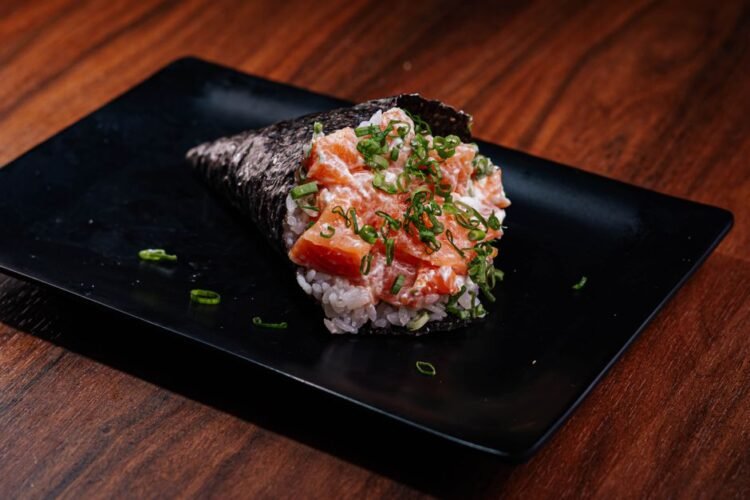
Temaki, or hand-rolled sushi, is a beloved Japanese home-style meal where diners build their own crisp nori cones filled with seasoned rice and fresh fillings. Unlike precise restaurant sushi, temaki celebrates imperfection and customization, making it perfect for casual gatherings and family dinners. The contrast of warm sushi rice, cool fresh fish, and crunchy seaweed creates an irresistible bite in every mouthful.
Prep Time20 mins
Cook Time25 mins
Total Time45 mins
Servings4
Yield4 servings (about 12 hand rolls)
Nutrition Facts
Per serving (estimated)
- 475 kcalCalories
- 13 gFat
- 2.5 gSaturated Fat
- 62 gCarbs
- 5 gFiber
- 4 gSugar
- 26 gProtein
- 580 mgSodium
- 620 mgPotassium
- 70 mgCalcium
- 3 mgIron
- 9 mgVitamin C
- 130 mcgVitamin A
Ingredients
For the Sushi Rice
- 2 cups short-grain Japanese rice
- 2 1/4 cups cold water
- 3 tbsp rice vinegar
- 1 1/2 tbsp granulated sugar
- 1 tsp fine sea salt
For the Fillings
- 8 oz sashimi-grade salmon, sliced into thin strips
- 6 oz sashimi-grade tuna, sliced into thin strips
- 1 English cucumber, cut into thin matchsticks
- 1 ripe avocado, sliced into thin wedges
- 4 oz imitation crab sticks or cooked lump crab meat
- 2 tbsp toasted sesame seeds
- 2 green onions, thinly sliced
- 1 sheet toasted nori (kizami nori), crumbled, optional
For Assembly and Serving
- 6 full sheets nori, each cut in half crosswise
- Soy sauce, for dipping
- Prepared wasabi, for serving
- Pickled ginger (gari), for serving
- Spicy mayo, optional
Directions
- Rinse the rice in cold water 3 to 4 times, swirling gently and draining, until the water runs nearly clear. Combine the rinsed rice and 2 1/4 cups cold water in a rice cooker and let soak for 15 minutes, then start the cooker.
- While the rice cooks, make the sushi vinegar: combine the rice vinegar, sugar, and salt in a small saucepan over low heat. Stir just until the sugar and salt dissolve; do not let it boil. Remove from heat.
- When the rice finishes, transfer it to a large wooden or glass bowl. Drizzle the warm vinegar mixture over the rice and fold gently with a flat wooden paddle, cutting through rather than stirring. Fan the rice as you fold to help it cool to body temperature and develop a glossy sheen.
- While the rice cools, prepare all the fillings: arrange the salmon, tuna, cucumber, avocado, and crab on a platter. Sprinkle the sesame seeds and green onions into small bowls so each diner can build their own roll.
- Set up a rolling station with the cooled rice, fillings, and nori halves within easy reach. Keep a small bowl of water nearby to dip your fingers in so the rice does not stick to your hands.
- Place one nori half on a clean dry surface with the shiny side down and one corner pointing toward you. Wet your fingertips and spread about 1/4 cup of rice on the left half of the nori, leaving about a 1-inch border along the edges.
- Lay a few strips of fish and vegetables across the rice in a horizontal line. Top with a pinch of sesame seeds, green onions, and a tiny dab of wasabi if using.
- Lift the bottom-left corner of the nori and fold it over the fillings to form an open cone, then continue rolling around to seal the bottom edge. Repeat with the remaining nori and fillings, serving each roll immediately while the nori is still crisp. Dip in soy sauce and enjoy with pickled ginger on the side.
Cook’s Notes
- Always buy sushi-grade fish from a trusted fishmonger or Japanese grocer; if raw fish is not available, substitute cooked shrimp, smoked salmon, or tamago (Japanese omelette).
- Dip your fingertips in water frequently while handling rice to keep it from sticking, and avoid over-mixing the rice once the vinegar is added so each grain stays distinct.
- Serve temaki immediately after rolling; nori loses its crunch within a few minutes, which is part of the charm but should be eaten fresh.
- Set out an array of fillings so each person can customize their cone – popular add-ins include kimchi, tempura flakes (tenkasu), shiso leaves, or a drizzle of spicy mayo.
- If you are new to rolling, use a bamboo sushi mat to help shape the cone at first; once you get the hang of it, hand-rolling is faster and more authentic.