 (No Ratings Yet)
 Loading...
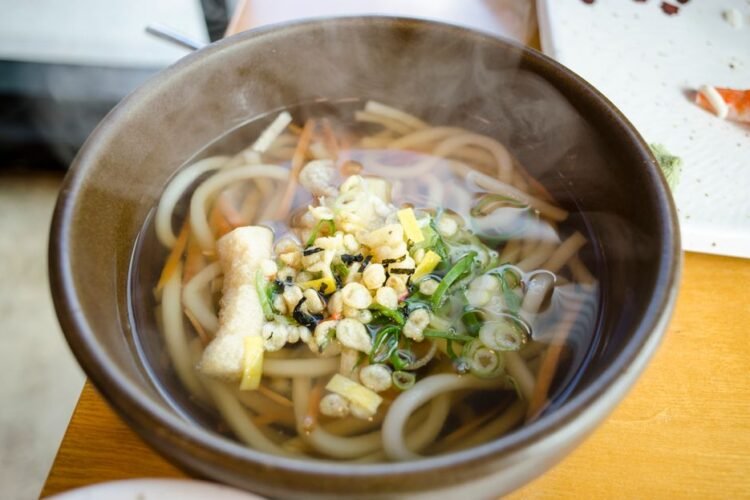
Tempura Udon is a beloved Japanese comfort dish that pairs thick, chewy wheat noodles in a savory dashi broth with crispy shrimp and vegetable tempura. The contrast between the hot, fragrant soup and the light, crackling tempura makes every spoonful deeply satisfying, especially on a cold day.
Prep Time25 mins
Cook Time25 mins
Total Time50 mins
Servings4
Yield4 bowls
Nutrition Facts
Per serving (estimated)
- 590 kcalCalories
- 22 gFat
- 3 gSaturated Fat
- 72 gCarbs
- 4 gFiber
- 6 gSugar
- 28 gProtein
- 1480 mgSodium
- 620 mgPotassium
- 95 mgCalcium
- 4 mgIron
- 14 mgVitamin C
- 120 mcgVitamin A
Ingredients
For the dashi broth
- 8 cups water
- 1 (4-inch) piece kombu (dried kelp)
- 1 cup katsuobushi (dried bonito flakes)
- 1/2 cup soy sauce
- 1/4 cup mirin
- 2 tbsp sake
- 1 tsp salt
- 1 tsp sugar
For the shrimp and vegetable tempura
- 12 large shrimp, peeled and deveined with tails intact
- 1 small sweet potato, sliced into 1/4-inch rounds
- 1/2 small kabocha squash, seeded and sliced into 1/4-inch wedges
- 8 fresh shiso leaves (optional)
- 1 1/4 cups cake flour, divided
- 1 cup ice-cold water or sparkling water
- 1 large egg yolk
- 4 cups neutral oil such as canola, for frying
For the udon and garnishes
- 4 portions (about 14 oz) dried or frozen udon noodles
- 4 scallions, thinly sliced
- 1/2 cup grated daikon radish
- 1 tbsp grated fresh ginger
- Shichimi togarashi, for serving
Directions
- Make the dashi: wipe the kombu with a damp cloth and place it in a large pot with 8 cups of water. Let steep for 20 minutes, then slowly heat to just below a boil and remove and discard the kombu. Add the katsuobushi, turn off the heat, and steep 4 minutes. Strain through a fine-mesh sieve, discarding the flakes.
- Season the broth: return the dashi to the pot and stir in the soy sauce, mirin, sake, salt, and sugar. Heat gently over low, cover, and keep warm.
- Prep the tempura: pat the shrimp thoroughly dry with paper towels and make 4 small shallow slits across the underside of each to prevent curling. Lightly salt the sweet potato and kabocha slices. Sift 1 cup of the cake flour into a bowl and set aside.
- Make the batter right before frying: whisk the egg yolk and ice-cold water in a separate bowl. Add the sifted flour and stir only a few times with chopsticks; small lumps are ideal. Set the bowl over a larger bowl of ice to keep it cold.
- Fry the tempura: heat the oil in a heavy pot to 340 to 350°F. Lightly dust each shrimp or vegetable in the remaining 1/4 cup flour, dip into the batter, and slide into the oil. Fry in small batches, 2 to 3 minutes per side, until pale gold and crisp. Drain on a wire rack.
- Cook the udon: bring a separate pot of water to a boil and cook the udon according to package directions, about 8 to 10 minutes for dried or 3 to 4 minutes for frozen. Drain well and divide among 4 large, deep bowls.
- Reheat the broth to a gentle simmer and ladle 1 1/2 to 2 cups over the noodles in each bowl.
- Top each bowl with 3 pieces of tempura, mixing shrimp and vegetables, arranging them so half rests on the noodles and half hangs over the rim.
- Sprinkle with sliced scallions and serve immediately, passing the grated daikon, ginger, and shichimi togarashi at the table so each diner can customize their bowl.
Cook’s Notes
- Keep the tempura batter as cold as possible; using ice water and resting the bowl over ice helps create the signature lacy, crisp crust.
- Avoid overmixing the batter — a few lumps actually produce a lighter, crunchier coating.
- Fry in small batches so the oil temperature stays between 340 and 350°F; too cool and the tempura absorbs oil, too hot and it browns before cooking through.
- For an authentic touch, serve with a small side dish of tentsuyu (tempura dipping sauce) made from dashi, soy sauce, and mirin alongside the noodle soup.
- Eat the tempura first while it is still crackling crisp; pouring the broth over it too early will quickly soften the coating.