 (No Ratings Yet)
 Loading...
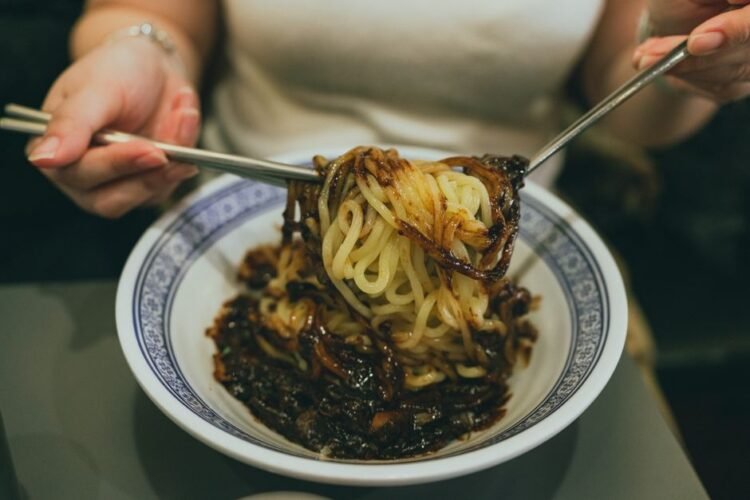
A beloved Korean-Chinese comfort dish featuring thick, chewy wheat noodles smothered in a rich, glossy black bean sauce studded with pork, potato, zucchini, and cabbage. The deeply savory sauce gets its signature color and umami depth from fermented black bean paste, balanced with a hint of sweetness. Quick enough for a weeknight yet satisfying enough for a weekend treat.
Prep Time15 mins
Cook Time25 mins
Total Time40 mins
Servings4
Yield4 servings
Nutrition Facts
Per serving (estimated)
- 620 kcalCalories
- 22 gFat
- 6 gSaturated Fat
- 78 gCarbs
- 5 gFiber
- 9 gSugar
- 24 gProtein
- 1100 mgSodium
- 720 mgPotassium
- 80 mgCalcium
- 4 mgIron
- 22 mgVitamin C
- 75 mcgVitamin A
Ingredients
For the noodles
- 1.5 lbs fresh or 14 oz dried thick wheat noodles
- 1 tbsp neutral oil, for tossing
For the black bean sauce base
- 4 tbsp Korean chunjang (fermented black bean paste)
- 1 tbsp neutral oil
- 1 tbsp oyster sauce
- 1 tbsp soy sauce
- 1 tbsp granulated sugar
- 1/2 cup water or chicken stock
For the stir-fry and assembly
- 1/2 lb pork belly or shoulder, diced into 1/2-inch pieces
- 2 tbsp neutral oil
- 2 cloves garlic, minced
- 1 tsp fresh ginger, grated
- 1 medium yellow onion, diced
- 1 medium russet potato, peeled and diced small
- 2 cups roughly chopped cabbage
- 1 small zucchini, diced
- 1/2 cup water or chicken stock
- 1 tbsp cornstarch mixed with 2 tbsp cold water
For garnish (optional)
- 1 small cucumber, julienned
- 1 hard-boiled egg, halved
- 1 sheet roasted seaweed (gim), shredded
Directions
- Heat 1 tbsp oil in a small skillet over medium-low heat, add the chunjang, and stir-fry for 2-3 minutes until fragrant and slightly darkened; set aside to mellow the raw bean flavor.
- In a wok or large skillet, heat 2 tbsp oil over medium-high heat. Add the diced pork and stir-fry for 3-4 minutes until lightly browned and the fat begins to render.
- Add the garlic, ginger, and onion, and stir-fry for 2 minutes until the onion softens and turns translucent.
- Stir in the potato and cabbage, cook for 3-4 minutes, then pour in 1/2 cup water or stock. Cover and simmer for 5-6 minutes until the potato is just tender when pierced.
- Add the toasted chunjang, oyster sauce, soy sauce, and sugar. Stir well to coat, then add the zucchini and the additional 1/2 cup water. Simmer 2 more minutes.
- Stir the cornstarch slurry and pour it into the sauce in a thin stream, stirring quickly for about 30 seconds until the sauce thickens to a glossy, coat-the-spoon consistency. Remove from heat.
- Meanwhile, bring a large pot of water to a rolling boil. Cook the noodles according to package directions (about 5-7 minutes for fresh, 7-8 for dried) until chewy. Drain and toss with 1 tbsp oil to prevent sticking.
- Divide the noodles among 4 large bowls, spoon the hot black bean sauce generously over the top, and finish with cucumber, a halved egg, and shredded seaweed if using. Serve immediately with yellow pickled radish (danmuji) on the side.
Cook’s Notes
- Toasting the chunjang in a little oil before adding it to the wok is a crucial Korean-Chinese technique that deepens flavor and removes any raw, bitter edge from the fermented paste.
- Dice the potato into small, even 1/2-inch pieces so it cooks through at the same rate as the onion and cabbage; overcooked potato will turn mushy in the sauce.
- For an even richer sauce, swap the water for homemade chicken or pork stock, and add a small splash of the noodle cooking water when assembling bowls.
- The cornstarch slurry is non-negotiable—it transforms the sauce into the glossy, clingy consistency that defines authentic jajangmyeon.
- Fresh vacuum-packed Korean noodles are ideal, but spaghetti or udon work in a pinch; just adjust cooking time so the noodles stay pleasantly chewy.