(No Ratings Yet)
 Loading...
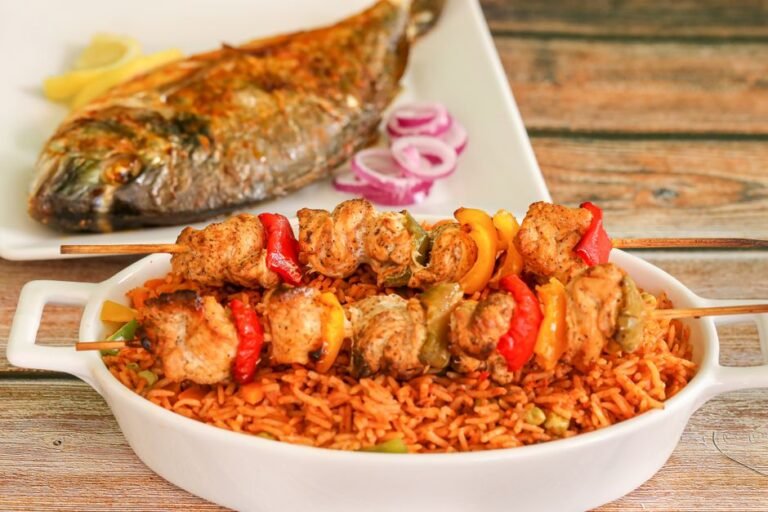
Nigerian Fried Rice is a colorful, aromatic staple at Nigerian parties and Sunday lunches. Long-grain rice is par-cooked, then tossed in a hot wok with crisp vegetables, curry powder, thyme, and warming aromatics for a deeply savory one-pan dish.
Prep Time20 mins
Cook Time30 mins
Total Time50 mins
Servings6
Yield6 servings
Nutrition Facts
Per serving (estimated)
- 425 kcalCalories
- 12 gFat
- 3 gSaturated Fat
- 68 gCarbs
- 5 gFiber
- 6 gSugar
- 11 gProtein
- 620 mgSodium
- 430 mgPotassium
- 75 mgCalcium
- 3.2 mgIron
- 28 mgVitamin C
- 380 mcgVitamin A
Ingredients
For the rice
- 3 cups long-grain parboiled rice (or basmati), rinsed until water runs clear
- 5 cups water
- 1 teaspoon salt
- 1/2 teaspoon vegetable oil
Aromatics
- 3 tablespoons vegetable oil (plus 1 tablespoon butter, optional)
- 1 large yellow onion, finely diced
- 4 cloves garlic, minced
- 1 tablespoon fresh ginger, grated
- 1 tablespoon curry powder (Nigerian-style, mild)
- 1 teaspoon dried thyme
- 1 teaspoon dried basil
- 1 seasoning cube (Maggi or Knorr), crushed
- 1 teaspoon salt, or to taste
- 1/2 teaspoon freshly ground black pepper
Vegetables
- 1 large carrot, diced into small cubes
- 1 cup green beans, sliced into 1/2-inch pieces
- 1 red bell pepper, diced
- 1/2 cup sweet corn kernels (fresh or frozen)
- 1/2 cup green peas (fresh or frozen)
- 3 spring onions, sliced (whites and greens separated)
Optional proteins
- 200 g chicken livers or shrimp, cleaned and diced
- 1 cup cooked shredded chicken
Directions
- Bring 5 cups of salted water to a rolling boil in a large pot. Add the rinsed rice and 1/2 teaspoon oil, then boil uncovered for 10-12 minutes until the rice is about 80 percent cooked (still slightly firm in the center). Drain immediately and spread on a tray to cool and dry out for 10 minutes.
- While the rice cooks, prepare all the vegetables and aromatics. Heat 3 tablespoons oil (with 1 tablespoon butter if using) in a large wok or deep skillet over medium-high heat. Add the diced onion and sauté for 2-3 minutes until soft and translucent.
- Stir in the garlic, ginger, curry powder, thyme, basil, crushed seasoning cube, salt, and pepper. Cook for 60 seconds until fragrant, taking care not to burn the spices.
- Add the diced carrots and green beans first (they need the longest cook time) and stir-fry for 2 minutes. Then add the bell pepper, corn, peas, and the whites of the spring onions; stir-fry for another 2 minutes until the vegetables are tender-crisp and brightly colored.
- If using chicken livers or shrimp, push the vegetables to one side of the wok and quickly sear the protein on the hot surface for 2-3 minutes until just cooked through, then mix into the vegetables.
- Add the par-cooked rice to the wok in batches, tossing gently with a spatula or wooden spoon so every grain is coated with the seasoned oil. Stir-fry over medium-high heat for 4-5 minutes, breaking up any clumps and letting the rice toast lightly without burning.
- Taste and adjust salt and pepper. Sprinkle the green tops of the spring onions over the rice, give one final toss, and remove from the heat. Serve hot as a main dish or alongside fried plantain, grilled chicken, or coleslaw.
Cook’s Notes
- Par-cook the rice only to about 80 percent doneness; it finishes cooking in the wok and stays fluffy rather than mushy.
- Spread the drained rice on a flat tray and let it cool and steam-dry for at least 10 minutes before stir-frying to prevent clumping.
- Nigerian curry powder (typically a milder, turmeric-rich blend) gives the dish its signature golden color and warm flavor; substitute with a 50/50 mix of curry powder and turmeric if needed.
- For a richer, more festive version, stir in 1 tablespoon of tomato paste with the aromatics and a splash of chicken stock when tossing the rice.
- Always cook the vegetables just until crisp-tender so they keep their color and snap against the fluffy rice.