 (No Ratings Yet)
 Loading...
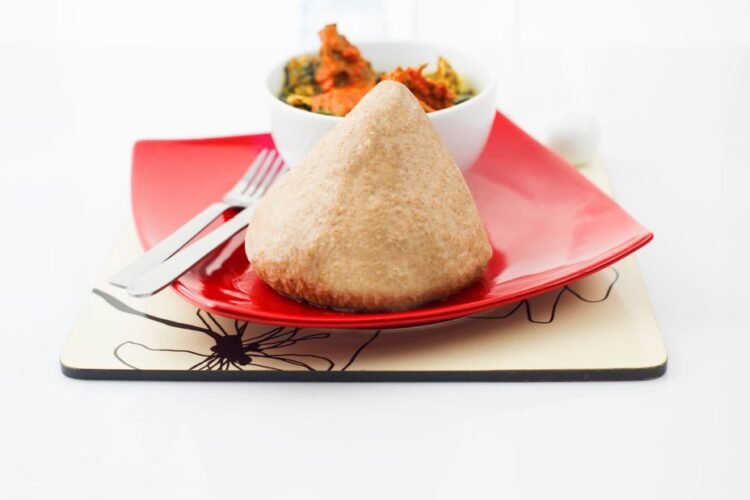
Pounded Yam with Egusi Soup is one of Nigeria's most beloved comfort meals, pairing smooth, stretchy white yam with a deeply savory melon seed stew loaded with assorted meats, smoked fish, and bitter greens. The richness of palm oil and toasted egusi creates an unmistakable aroma that fills the kitchen as it simmers. It is the kind of satisfying, hands-on meal traditionally eaten communally, with diners pinching off pieces of yam to scoop up the soup.
Prep Time20 mins
Cook Time50 mins
Total Time70 mins
Servings4
Yield4 servings
Nutrition Facts
Per serving (estimated)
- 720 kcalCalories
- 38 gFat
- 11 gSaturated Fat
- 58 gCarbs
- 7 gFiber
- 4 gSugar
- 36 gProtein
- 780 mgSodium
- 1120 mgPotassium
- 140 mgCalcium
- 6 mgIron
- 22 mgVitamin C
- 240 mcgVitamin A
Ingredients
For the Pounded Yam
- 2 lb white yam (poundo yam), peeled and cut into 2-inch chunks
- 1 teaspoon salt
- Water for boiling
For the Egusi Soup (Proteins and Base)
- 1/2 lb beef, cut into bite-size pieces
- 1/4 lb tripe (shaki), cleaned and sliced
- 1/4 lb cow skin (ponmo), scraped and cut
- 1 smoked mackerel, deboned
- 1/2 lb medium shrimp, peeled
- 1/2 cup palm oil
- 1 large onion, finely chopped
- 2 tablespoons ground dried crayfish
For the Egusi Soup (Seasonings and Greens)
- 1 cup ground egusi (melon seeds)
- 2 scotch bonnet peppers, blended smooth
- 1 tablespoon locust beans (iru/dawadawa), rinsed
- 2 Maggi or Knorr stock cubes, crumbled
- 1 teaspoon salt, plus more to taste
- 2 cups fresh bitter leaf, washed (or spinach)
- 1 cup ugu or pumpkin leaves, shredded
- 1 small onion, sliced
Directions
- Season the beef, tripe, and ponmo with salt and one chopped onion; boil in a pot with just enough water to cover for 25-30 minutes until tender, topping up water as needed. Add the smoked fish in the last 5 minutes, then set all proteins aside and reserve 2 cups of the stock.
- While the meats cook, place the yam chunks in a large pot, cover with cold water, add the salt, and boil for 15-20 minutes until a fork slides in easily. Drain and immediately pound in a mortar until smooth and stretchy, or pulse hot yam chunks in a food processor in batches with 2 tablespoons of hot water at a time until elastic.
- Heat the palm oil in a heavy pot over medium heat until clear, add the chopped onion and sauté for 3 minutes until soft and translucent.
- Stir in the ground egusi and fry for 4-5 minutes, stirring constantly, until the mixture looks slightly toasted and the raw flour smell disappears; this step is key for flavor.
- Add the crayfish, locust beans, blended scotch bonnet, crumbled stock cubes, and the cooked proteins with their reserved stock. Stir well, cover, and simmer for 10 minutes so the egusi absorbs the meaty flavors.
- Drop in the sliced onion, bitter leaf, and ugu leaves, stir gently, and simmer uncovered for another 5 minutes until the greens are wilted but still bright and the soup has thickened into a glossy, oily stew. Taste and adjust salt.
- Scoop a generous mound of pounded yam into a bowl, make a well in the center, and ladle the hot egusi soup over and around it. Eat by pinching off yam with the right hand and using it to scoop up the soup and proteins.
Cook’s Notes
- If you cannot pound by hand, a stand mixer with the dough hook works well on hot yam chunks, adding hot water a tablespoon at a time until elastic.
- Always fry the egusi in palm oil first; this removes the raw, bitter taste and creates the signature rich flavor of authentic egusi soup.
- Substitute spinach or kale for bitter leaf if unavailable, but bitter leaf gives the most traditional and authentic taste.
- Use ripe, starchy white yam (poundo variety) rather than watery yam for the best stretchy, smooth pounded texture.
- Leftover pounded yam can be wrapped in plastic and reheated by steaming for 5-10 minutes; it will firm up but regain elasticity once warmed.