 (No Ratings Yet)
 Loading...
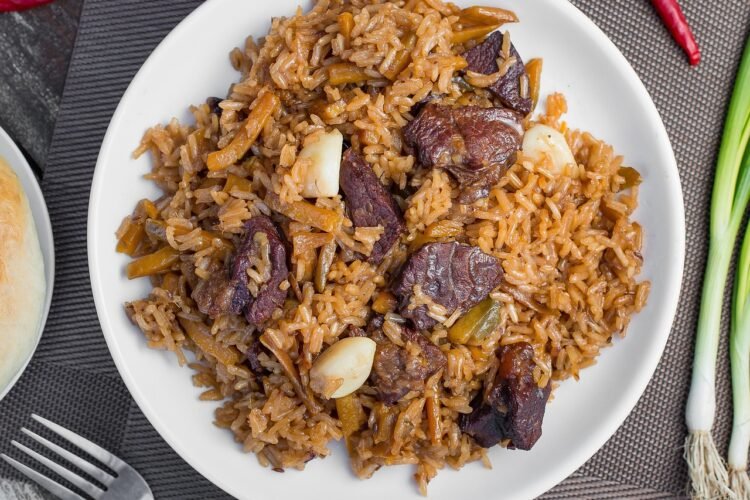
Persian Noodle Rice is a festive Iranian pilaf traditionally served at Nowruz, the Persian New Year, where the long toasted noodles symbolize wishes for a long and prosperous life. The rice is layered with golden reshteh noodles and steamed together to produce a fragrant saffron-kissed base crowned with caramelized onions, jewel-like tart barberries, and toasted pistachios. Each forkful balances earthy basmati with tangy berries and a buttery crunch for a deeply comforting centerpiece.
Prep Time25 mins
Cook Time60 mins
Total Time85 mins
Servings6
Yield6 servings
Nutrition Facts
Per serving (estimated)
- 490 kcalCalories
- 18 gFat
- 5 gSaturated Fat
- 72 gCarbs
- 4 gFiber
- 6 gSugar
- 11 gProtein
- 780 mgSodium
- 320 mgPotassium
- 70 mgCalcium
- 2 mgIron
- 8 mgVitamin C
- 120 mcgVitamin A
Ingredients
For the rice and noodles
- 3 cups long-grain basmati rice
- 8 oz dried Persian reshteh noodles (or thin egg noodles, broken into 1-inch pieces)
- 3 tablespoons salt (for parboiling)
- 3 tablespoons unsalted butter, divided
- 1/2 teaspoon ground cumin
For the saffron water
- 1/2 teaspoon saffron threads
- 3 tablespoons hot water
- 1 tablespoon granulated sugar
For the caramelized topping
- 2 large yellow onions, halved and thinly sliced
- 1/2 cup dried barberries (zerehsak), rinsed
- 1/2 cup slivered pistachios or almonds
- 1/4 cup chopped fresh dill
- 1/4 cup chopped fresh parsley
- 1/4 cup neutral oil (such as canola)
- 1 teaspoon salt, plus more to taste
- 1/2 teaspoon freshly ground black pepper
Directions
- Rinse the basmati rice in cool water until the water runs clear, then soak in warm salted water for 30 minutes and drain well before cooking.
- Bring a large pot of water to a rolling boil with 3 tablespoons of salt; add the drained rice and parboil for 6 to 8 minutes until just tender but still firm at the core, then drain and rinse briefly with cool water.
- While the rice parboils, melt 1 tablespoon of butter in a dry nonstick skillet over medium-low heat and add the broken reshteh noodles; toast, tossing frequently, until the noodles turn deep golden brown and smell nutty, about 4 to 5 minutes, then transfer to a plate.
- In the same skillet, heat the 1/4 cup oil over medium heat and cook the sliced onions with a pinch of salt, stirring often, until deeply caramelized, about 18 to 20 minutes; remove half for garnish and leave the rest in the pan.
- Bloom the saffron by crushing the threads with the sugar in a small bowl, pouring over 3 tablespoons of hot water, and letting it steep for 10 minutes until a vivid ruby color develops.
- To assemble, melt the remaining 2 tablespoons of butter in a heavy nonstick pot; spread a layer of parboiled rice on the bottom, dust with cumin, then add the toasted noodles and another layer of rice on top.
- Sprinkle half the saffron water, half the dill, and half the parsley over the rice; drizzle 2 tablespoons more oil around the inside edges to encourage a golden tahdig crust, then cover tightly and cook over very low heat for 45 minutes to steam the rice through.
- In a small skillet, toast the pistachios in 1 teaspoon of butter until fragrant, then add the barberries and 1 tablespoon of water and cook for 30 seconds to plump them; remove from the heat immediately so the berries do not burn.
- Fluff the steamed rice gently with a fork, folding in the reserved half of caramelized onions, the remaining herbs, and the toasted barberry-pistachio mixture; taste and adjust salt.
- Spoon onto a warm platter, top with the reserved caramelized onions, drizzle with the remaining saffron water, and serve immediately with plain yogurt or grilled meats.
Cook’s Notes
- Toast the reshteh noodles over low heat and watch them closely because the thin strands burn within seconds and will turn the entire batch bitter.
- If you cannot find Persian reshteh, substitute with thin Japanese ramen noodles or spaghetti snapped into 1-inch lengths, omitting any seasoning packets.
- Barberries are very tart and often harbor grit, so always rinse them under cool water and pat dry before frying; dried cranberries tossed with a squeeze of lemon juice make a workable substitute.
- Resist the urge to lift the lid during steaming because releasing the trapped steam prevents the bottom layer from crisping into the prized tahdig crust.
- Persian rice is best served the moment it is fluffed because the contrast between the crispy golden crust and the soft, fluffy upper grains is fleeting once the pot is opened.