 (No Ratings Yet)
 Loading...
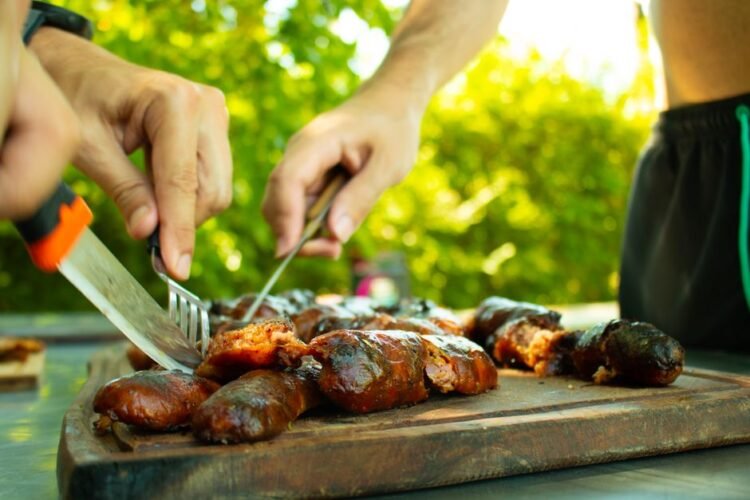
Kupati is a beloved Georgian street-food sausage with roots in the Samegrelo region, stuffed with pork fat and loaded with warm spices like coriander and blue fenugreek. It is traditionally grilled over hardwood coals and served piping hot with raw onion, torn bread, and a splash of tangy tkemali. The result is smoky, juicy, and aromatic with a bright herbal finish that defines Georgian home cooking.
Prep Time30 mins
Cook Time20 mins
Total Time50 mins
Servings4
Yield8 sausages (4 servings)
Nutrition Facts
Per serving (estimated)
- 560 kcalCalories
- 42 gFat
- 14 gSaturated Fat
- 9 gCarbs
- 2 gFiber
- 3 gSugar
- 32 gProtein
- 1180 mgSodium
- 640 mgPotassium
- 60 mgCalcium
- 3 mgIron
- 6 mgVitamin C
- 40 mcgVitamin A
Ingredients
For the sausage
- 2 lb (900 g) ground pork, about 20% fat
- 1 large yellow onion, finely grated on a box grater
- 5 garlic cloves, minced
- 2 tbsp ground coriander seed
- 1 tbsp ground blue fenugreek (utskho suneli)
- 1 tsp ground regular fenugreek
- 1 tsp dried marigold petals (optional but traditional)
- 1 tsp ground cumin
- 2 tbsp white wine vinegar
- 1 1/2 tbsp kosher salt
- 1 tsp freshly ground black pepper
- 1/4 tsp hot red pepper flakes
- 3-4 ft natural hog casings, soaked in warm water 30 minutes
For serving
- 1 large red or white onion, thinly sliced
- 4 pieces Georgian-style flatbread (shoti or mchadi)
- 1 cup fresh cilantro and basil leaves
- 1/2 cup pomegranate seeds
- Tkemali or adjika sauce, for dipping
Directions
- Rinse the soaked hog casings under cold running water, then slip them onto the sausage-stuffer nozzle or a wide piping tip, tying a knot at the end.
- In a large bowl, combine the ground pork, grated onion, garlic, coriander, blue fenugreek, regular fenugreek, marigold petals, cumin, vinegar, salt, black pepper, and red pepper flakes. Mix with your hands for 2-3 minutes until the mixture becomes slightly sticky and the spices are evenly distributed.
- Cover the bowl and refrigerate the meat mixture for at least 1 hour, or up to overnight, to let the flavors meld and the spices bloom.
- Thread a casing onto the stuffer, then pack the seasoned meat into the canister. Hold the tail of the casing loosely and crank slowly, allowing the casing to fill evenly without bursting, leaving it slightly under-stuffed so the links stay plump and juicy.
- Twist the filled tube into 6-inch links, then prick each link twice with a needle or pin to release trapped air pockets. Rest the sausages on a tray in the refrigerator for 30 minutes to firm up.
- Preheat a charcoal grill to medium-high heat (about 400°F), arranging the coals for direct cooking. Lightly oil the grate to prevent sticking.
- Place the sausages over the hot coals and grill for 6-8 minutes per side, turning frequently with tongs until the casings are blistered and golden-brown and the internal temperature reads 150°F on an instant-read thermometer.
- Transfer the grilled sausages to a platter, cover loosely with foil, and let rest for 3-4 minutes. Serve hot with sliced onion, fresh herbs, bread, pomegranate seeds, and a small bowl of tkemali sauce for dipping.
Cook’s Notes
- Blue fenugreek (utskho suneli) is the signature spice of Kupati and cannot be skipped, but if you cannot find it, use a 50/50 mix of regular fenugreek and dried tarragon.
- If you do not have a sausage stuffer, use a heavy-duty piping bag fitted with a 1/2-inch round tip, or hand-roll the meat into oblong patties (a popular shortcut for home cooks).
- Grilling over fruit wood or beech gives the most authentic flavor, but pan-searing in a dry cast-iron skillet over medium heat works beautifully indoors.
- Kupati is best eaten the day it is made, but uncooked stuffed sausages keep well wrapped in the refrigerator for up to 2 days, or frozen for up to 3 months.
- Always soak natural casings in warm water for at least 30 minutes and rinse them once or twice to remove any residual salt before stuffing.