 (No Ratings Yet)
 Loading...
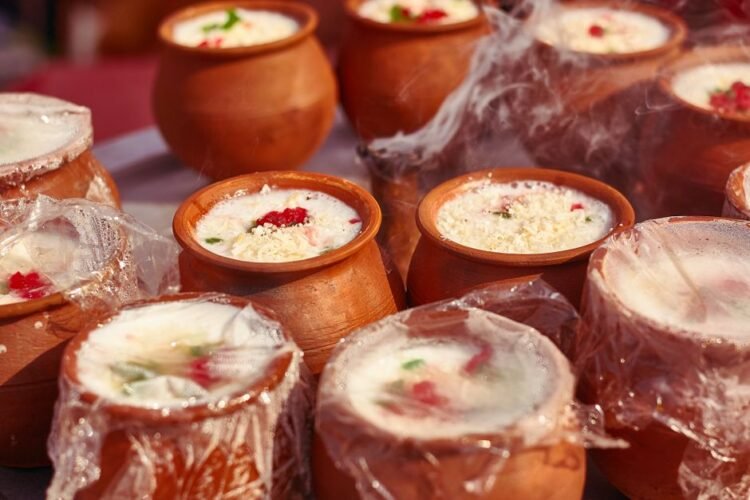
A beloved Bengali sweet thickened with reduced milk, sugar, and jaggery, then gently caramelized for a deep amber color and butterscotch-like aroma. Traditionally poured into small clay pots and fermented overnight, it sets into a silky, lightly tangy custard that is served chilled.
Prep Time15 mins
Cook Time45 mins
Total Time60 mins
Servings6
Yield6 small clay pots (about 120 ml each)
Nutrition Facts
Per serving (estimated)
- 210 kcalCalories
- 7 gFat
- 4 gSaturated Fat
- 29 gCarbs
- 0 gFiber
- 27 gSugar
- 7 gProtein
- 95 mgSodium
- 310 mgPotassium
- 270 mgCalcium
- 0.3 mgIron
- 1 mgVitamin C
- 110 mcgVitamin A
Ingredients
For the caramel and sweetened milk
- 1 liter (about 4 cups) full-fat whole milk
- 3/4 cup (150 g) granulated sugar
- 1/4 cup (50 g) date jaggery or palm jaggery, grated
- 1/2 teaspoon green cardamom powder (optional)
- 2 tablespoons (25 g) granulated sugar, for the dry caramel
For setting and garnishing
- 2 tablespoons (30 g) plain whole-milk yogurt with live cultures
- Pinch of fine salt
- 1 tablespoon crushed pistachios, for serving (optional)
- 1/4 teaspoon extra cardamom powder, for dusting (optional)
Directions
- Pour the milk into a heavy-bottomed saucepan and bring it to a gentle boil over medium heat, skimming off the skin if you prefer a smoother texture. Reduce the heat and simmer for about 30 minutes, stirring often, until the milk thickens and reduces by roughly one quarter.
- While the milk reduces, make a light caramel: place the 2 tablespoons of sugar in a small dry skillet over medium heat and let it melt without stirring until it turns a deep amber. Immediately swirl in 2 tablespoons of the hot reduced milk to stop the cooking, then pour this caramel back into the saucepan.
- Add the 3/4 cup sugar, grated jaggery, and cardamom to the thickened milk. Stir continuously over low heat for 5 to 7 minutes until every grain dissolves and the milk takes on a pale caramel color.
- Remove the pan from the heat and let the milk cool to about 43°C (110°F). It should feel comfortably warm on the inside of your wrist, not hot, or it will kill the yogurt cultures.
- Whisk the 2 tablespoons of plain yogurt with the pinch of salt in a small bowl until smooth. Pour a little of the warm milk into the yogurt to temper it, then whisk the yogurt mixture back into the saucepan, stirring gently in one direction.
- Rinse six small clay pots (bhar or kulhad) or heat-proof ramekins with warm water and shake off the excess. Pour the sweetened milk into each pot, filling about three quarters full, and cover loosely with foil.
- Set the pots in a warm, draft-free place to ferment for 6 to 8 hours, or until the yogurt has just set with a slight jiggle in the center. An oven with only the light on (heat off) or a large picnic cooler with a hot water bottle works perfectly.
- Once set, transfer the pots to the refrigerator and chill for at least 3 hours. Serve straight from the pot, garnished with crushed pistachios and a light dusting of cardamom if desired.
Cook’s Notes
- Use full-fat whole milk; lower-fat milk yields a thinner, less creamy set with a sharper tang.
- Authentic earthen pots (matka, bhar, or kulhad) absorb excess whey and lend a subtle earthy aroma. Rinse them with warm water before pouring so the clay does not crack from thermal shock.
- Never add the yogurt starter to milk hotter than about 45°C (113°F), or the live cultures will die and the yogurt will not set properly.
- If you do not have live-culture yogurt on hand, use 2 tablespoons of an existing batch of sweet yogurt as your starter for the most authentic, slightly tangy flavor.
- For a deeper butterscotch note, increase the dry caramel to 3 tablespoons of sugar and let it darken slightly before tempering with the hot milk.